disorder
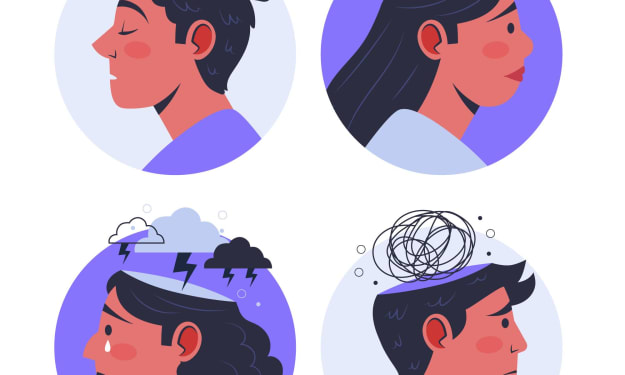
The spectrum of Mental Health disorders is incredibly vast; we showcase the multitude of conditions that affect mood, thinking and behavior.
Seven Myths About Mental Illness
People living with mental illness experience stigma everywhere. We are often faced with stigma at home, in the workplace, at school, in hospitals and doctors offices, and in public settings. People living with mental illness struggle with discrimination in a world that is largely still unaccepting of mental illness diagnoses, even today.
By Slgtlyscatt3red10 months ago in Psyche
Why I Feel Like I Can’t Do Anything
There are days when I wake up already exhausted, when the weight of simple tasks feels too heavy to lift. I look at my to-do list, stare at the passing hours, and wonder—why can’t I manage anything? Why do I feel stuck, numb, and overwhelmed, even when nothing seems drastically wrong?
By Leesh lala10 months ago in Psyche
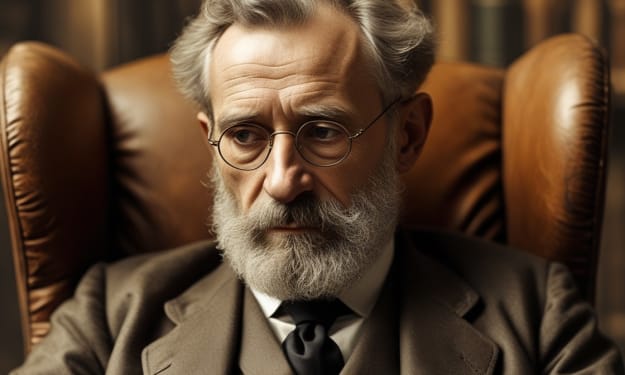
Sigmund Freud: The Father of Psychoanalysis and His Impact on Psychology
Sigmund Freud, an Austrian neurologist born in 1856, is widely recognized as one of the most influential and controversial figures in the history of psychology. As the founder of psychoanalysis, Freud revolutionized how we think about the human mind, behavior, and mental health. His theories have had a profound and lasting impact not only on psychology but also on art, literature, and popular culture.
By Bobi Dutch10 months ago in Psyche
The Hidden Psychology of Connection
In a world more digitally connected than ever, loneliness is paradoxically thriving. As we scroll through social media feeds and interact with AI companions, we find ourselves surrounded by virtual connections that, in reality, leave us feeling more isolated than before. Eric Solomon, Ph.D., explores this paradox and reveals how the very tools meant to keep us connected might be deepening our sense of isolation.
By SophiaSoso10 months ago in Psyche
The 3 Etiologies of Mental Illness: the Supernatural, Somatogenic, and Psychogenic
The concept of mental illness dates all the way back to the Stone Age. However, our modern perception of what this means is far from the general understanding of mental illness in the past. Unlike other fields of medicine and science which usually follow a more linear pattern of discovery and research, the field of mental illness has taken a more cyclical pattern throughout history, with philosophers, doctors, and psychiatrists through the years circling between different theories of etiology relating to mental illness. Etiology is the study of finding the specific cause for a disease or condition. In general, there are three theories of etiology surrounding mental illness: the supernatural, somatogenic, and psychogenic.
By Slgtlyscatt3red10 months ago in Psyche
Can Anxiety Be Cured?
Anxiety is one of the most common mental health issues in the world, affecting millions of people across all walks of life. Whether it appears as occasional worry or a chronic mental health disorder, anxiety can feel overwhelming and exhausting. A question many people ask is: “Can anxiety be cured?” The answer isn't a simple yes or no — but there is hope.
By Syira Husairi 10 months ago in Psyche