
Sigmund Freud: The Father of Psychoanalysis and His Impact on Psychology
The Psychiatrist

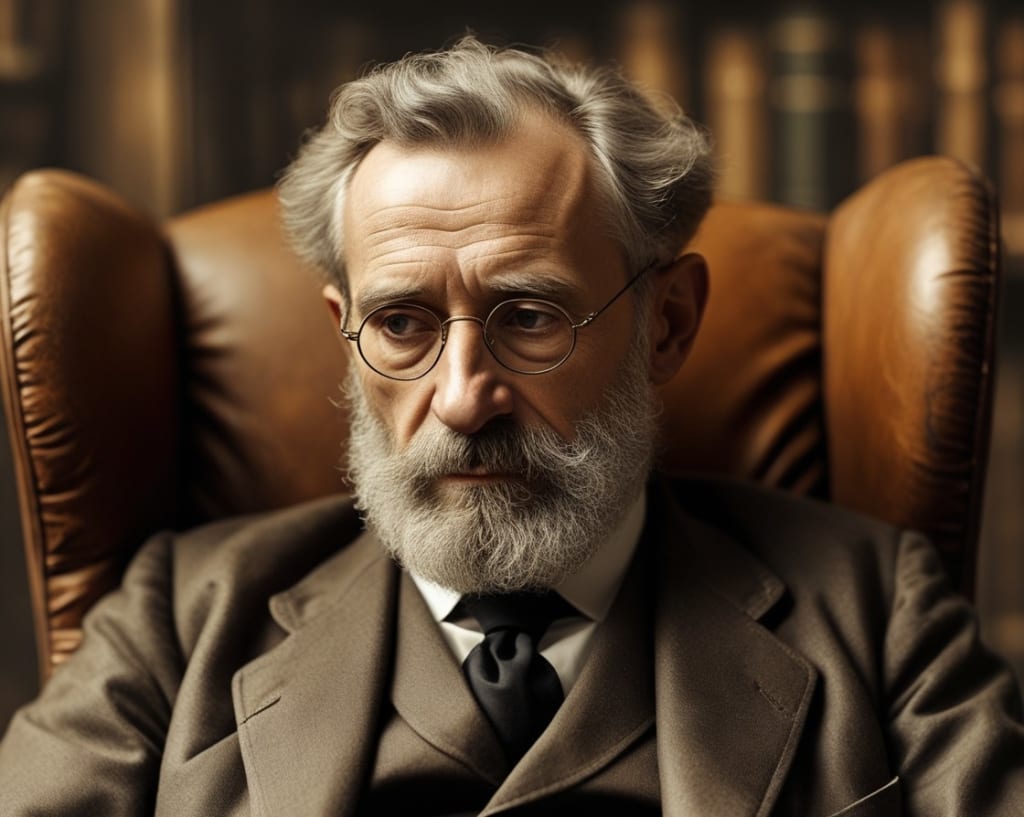
Sigmund Freud, an Austrian neurologist born in 1856, is widely recognized as one of the most influential and controversial figures in the history of psychology. As the founder of psychoanalysis, Freud revolutionized how we think about the human mind, behavior, and mental health. His theories have had a profound and lasting impact not only on psychology but also on art, literature, and popular culture.
Freud’s most groundbreaking contribution was his theory of the unconscious mind. He proposed that much of human behavior is influenced by thoughts, memories, and desires that lie outside of conscious awareness. According to Freud, the mind is divided into three parts: the conscious, the preconscious, and the unconscious. The unconscious, he argued, is a repository of repressed thoughts and emotions, particularly those related to sexuality and aggression.
Central to Freud’s theory was the concept of repression—the idea that painful or socially unacceptable thoughts are pushed into the unconscious. He believed that these repressed thoughts could manifest in dreams, slips of the tongue (often called "Freudian slips"), and neurotic symptoms. To explore these hidden aspects of the mind, Freud developed psychoanalysis, a method of treatment that involves talking through one’s thoughts and feelings with a trained therapist.
Freud’s model of personality is another key element of his work. He introduced a structural model that divides the psyche into three parts: the id, ego, and superego. The id represents primal desires and operates on the pleasure principle, seeking immediate gratification. The ego, governed by the reality principle, mediates between the desires of the id and the constraints of the external world. The superego represents internalized societal and parental standards, functioning as a moral conscience. According to Freud, mental health depends on the dynamic balance among these three components.
One of Freud’s most controversial theories is the psychosexual stages of development. He argued that early childhood experiences play a critical role in shaping personality and that children pass through a series of stages—oral, anal, phallic, latency, and genital—each characterized by the focus of pleasure on a different part of the body. Fixation at any stage, he believed, could lead to personality problems in adulthood.
Despite the boldness of his ideas, Freud's work has faced significant criticism. Many of his theories, particularly those regarding sexuality and development, have been criticized as being unscientific, overly deterministic, and based on a narrow sample of patients. Modern psychology generally considers many of his specific claims outdated or unsupported by empirical research.
However, Freud's influence cannot be understated. He introduced the idea that mental disorders could be treated through dialogue and emotional insight rather than purely medical interventions. His work laid the foundation for psychotherapy and inspired later schools of thought, including Jungian psychology, object relations theory, and humanistic psychology. Many concepts he introduced—such as defense mechanisms, transference, and the talking cure—remain central to psychotherapeutic practice today.
Freud’s legacy also extends beyond psychology. His ideas helped fuel movements in literature, film, and philosophy. Writers like James Joyce and Virginia Woolf were influenced by his theories of consciousness, while filmmakers like Alfred Hitchcock incorporated Freudian themes into their storytelling. Even today, references to the unconscious mind, Freudian slips, and repressed desires are common in everyday language.
In the later part of his life, Freud fled Nazi-occupied Austria and moved to London, where he died in 1939. Despite the controversies surrounding his work, Freud’s pioneering efforts to explore the depths of the human psyche changed the course of psychology forever. His emphasis on the inner life, the complexity of human motivation, and the importance of childhood experiences continues to influence how we understand ourselves and others.
About the Creator
Bobi Dutch
I'm passionate about exploring educational phenomena, focusing on innovation, equity, and the evolving dynamics of learning. I analyze trends, strategies that shape modern education and aim to drive impactful, research-based improvements.
Keep reading
More stories from Bobi Dutch and writers in Psyche and other communities.
From Surviving to Living: When Rest Becomes an Act of Courage
When Survival Becomes a Lifestyle — And You Forget How to Live There is a quiet shift that happens when survival lasts too long. At first, it’s temporary. You tell yourself, “I just need to get through this phase.” Then weeks become months. Months become years. And without realizing it, survival stops being a response — it becomes a lifestyle. You don’t notice the moment it happens. There’s no clear breaking point. Just a gradual narrowing of life. Your goals become smaller. Your dreams become practical. Your emotions become controlled, managed, muted. You stop asking what brings you joy and start asking what is necessary. What is efficient. What is acceptable. And slowly, living turns into managing. The Hidden Cost of Constant Coping When someone lives in survival mode for too long, their nervous system adapts. It learns to stay alert. It learns to expect pressure. It learns that rest is risky and stillness is unsafe. So even when external threats disappear, the body doesn’t get the message. This is why many people feel exhausted without knowing why. Why calm moments feel uncomfortable. Why success doesn’t bring satisfaction. Why peace feels strangely empty. It’s not because something is missing. It’s because your system was never taught how to receive ease. You learned how to endure. Not how to enjoy. Why Letting Go Feels Harder Than Holding On Letting go sounds simple in theory. But for someone who survived by holding everything together, letting go feels like failure. You weren’t rewarded for resting. You were rewarded for coping. For staying strong. For not needing too much. So your identity formed around function, not feeling. This is why slowing down can trigger anxiety. Why saying “I can’t” feels shameful. Why doing less feels like becoming less. Your worth became linked to effort. And effort became constant. Healing Is Not Becoming Softer — It’s Becoming Safer Healing from long-term survival is not about becoming fragile. It’s about becoming safe. Safe enough to pause without panic. Safe enough to feel without rushing to fix. Safe enough to rest without preparing for collapse. This kind of healing doesn’t happen through motivation or discipline. It happens through permission. Permission to stop performing strength. Permission to disappoint expectations — including your own. Permission to exist without proving anything. At first, this feels unnatural. Because survival trained you to believe that safety must be earned. But safety is not earned. It is allowed. Relearning What Living Actually Feels Like Living is not dramatic. It doesn’t always feel exciting or intense. Sometimes, living feels quiet. Neutral. Ordinary. And for someone used to survival, that can feel unsettling. But calm is not emptiness. It is space. Space to notice yourself again. Space to feel preferences instead of obligations. Space to choose, not react. You don’t suddenly become a new person. You simply return to parts of yourself that were postponed. A Different Measure of Progress Progress is often measured by how much you do. How fast you move. How productive you appear. But healing progress looks different. It looks like stopping before burnout instead of after. Like resting before you collapse. Like saying “enough” without explaining yourself. It looks like choosing sustainability over intensity. Truth over performance. Presence over pressure. This kind of progress is quiet. And because it’s quiet, it’s often overlooked. But it is real. A Closing Truth If survival shaped you, it’s not your fault. You adapted the way you had to. But you are not meant to live your entire life in adaptation mode. You are allowed to soften without losing strength. To rest without guilt. To live without constantly preparing for impact. You don’t need to become more. You need to feel safe enough to be. And that shift — from surviving to living — is not weakness. It is the most honest form of courage there is.
By Med Abdeljabbar7 days ago in Psyche




Comments