Latest Stories
Most recently published stories in Psyche.
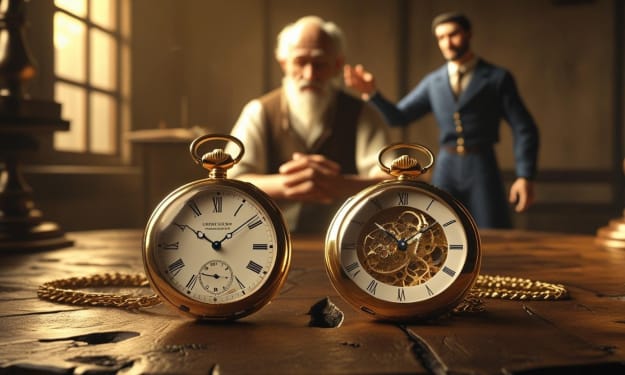
Why we fear something — even if it’s not dangerous
When Calla was seven years old, she screamed at the sight of a rope in her grandfather’s barn. It wasn’t just a small cry or a startled jump—it was a full-bodied, blood-draining scream that echoed through the rafters. Her grandfather, a quiet man who rarely raised his voice, came running so fast he dropped his hammer. But when he reached her, all he saw was a piece of old rope curled on the dusty floor, half-covered in hay.
By Farid Ullah7 months ago in Psyche
Why we trust some people and not others
A story of instincts, quiet observation, and the subtle signals of character. --- In the heart of the valley, where the hills rolled like sleeping giants and the river carved stories through the land, stood a village called Eldenbrook. It was a quiet place—steady, honest, unhurried. Life moved to the rhythm of the seasons, and the people valued truth like gold.
By Waleedkhan7 months ago in Psyche
The Day Google Forgot Me
The Day Google Forgot Me At first, it was small. I woke up late, no alarm buzzing. My phone lay cold and silent on the nightstand. I frowned—odd, considering I never forget to set it. When I picked it up, the screen flickered once and went black.
By Muhammad Ahmar 7 months ago in Psyche
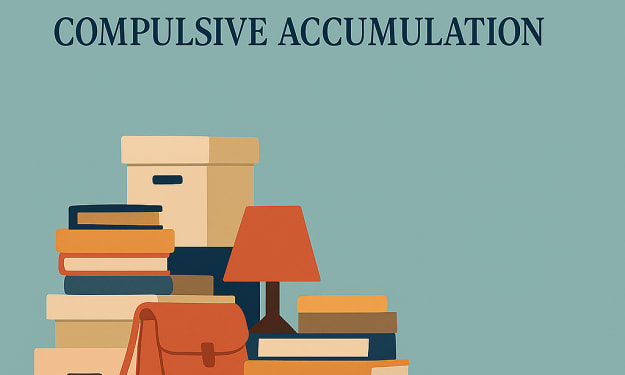
The Psychology of Hoarding: Inside the Mind of Compulsive Accumulation
Introduction In today’s society, where minimalism and decluttering are often glorified, the reality of Hoarding Disorder stands in stark contrast — a condition that disrupts lives, endangers health, and challenges the boundaries of our understanding of mental illness. Far from being a lifestyle choice or mere disorganization, Hoarding Disorder is a serious psychological condition now formally recognized in the Diagnostic and Statistical Manual of Mental Disorders, Fifth Edition (DSM-5). Despite its prevalence, the disorder remains largely misunderstood, stigmatized, and underdiagnosed.
By Siria De Simone7 months ago in Psyche
Best
Measuring sticks are useful, but don't account for everything. Lately, I have been hearing people talk about being the best. The first, was an immigrant in the food industry, explaining how he wanted to come to the USA and prove he is the best chef. The second, was a teacher talking about teaching students to be their best. The third, was generic sayings about being your best self and being the best in the business. I couldn't help but think, what is this obsession with being the best.
By simplicity7 months ago in Psyche
The Age of Secondhand Emotions: How Social Media Has Turned Us Into Borrowers of Other People’s Feelings. AI-Generated.
There was a time when feelings were private. Grief happened behind closed doors, joy was shared over phone calls, and anger was reserved for real-world confrontations. Now, all of it is broadcast, looped, liked, and commented on. In the age of Instagram Reels and TikTok For You pages, feelings are no longer just felt—they are performed, consumed, and echoed. We are living in the age of secondhand emotions, where we experience feelings not through our own lives, but through the curated and choreographed lives of others.
By Ahmet Kıvanç Demirkıran7 months ago in Psyche
How TikTok Changed the Way We Think About Fame
There was a time when fame came wrapped in decades of effort. Musicians performed in empty bars before stadiums. Actors climbed theater steps before the red carpet. Writers survived rejection letters stacked like towers before seeing print. Time was the currency fame demanded—years, sometimes lifetimes.
By Mehtab Ahmad7 months ago in Psyche
Offline Mode
The procedure was supposed to be safe—temporary, reversible, and liberating. At least, that’s what the brochure said. “Offline Mode,” it promised in sleek, glassy font, “is the ultimate reset. A retreat from the digital fog. Silence for the soul.”
By Muhammad Tayyab 7 months ago in Psyche