
The Age of Secondhand Emotions: How Social Media Has Turned Us Into Borrowers of Other People’s Feelings
How Social Media Has Turned Us Into Borrowers of Other People’s Feelings

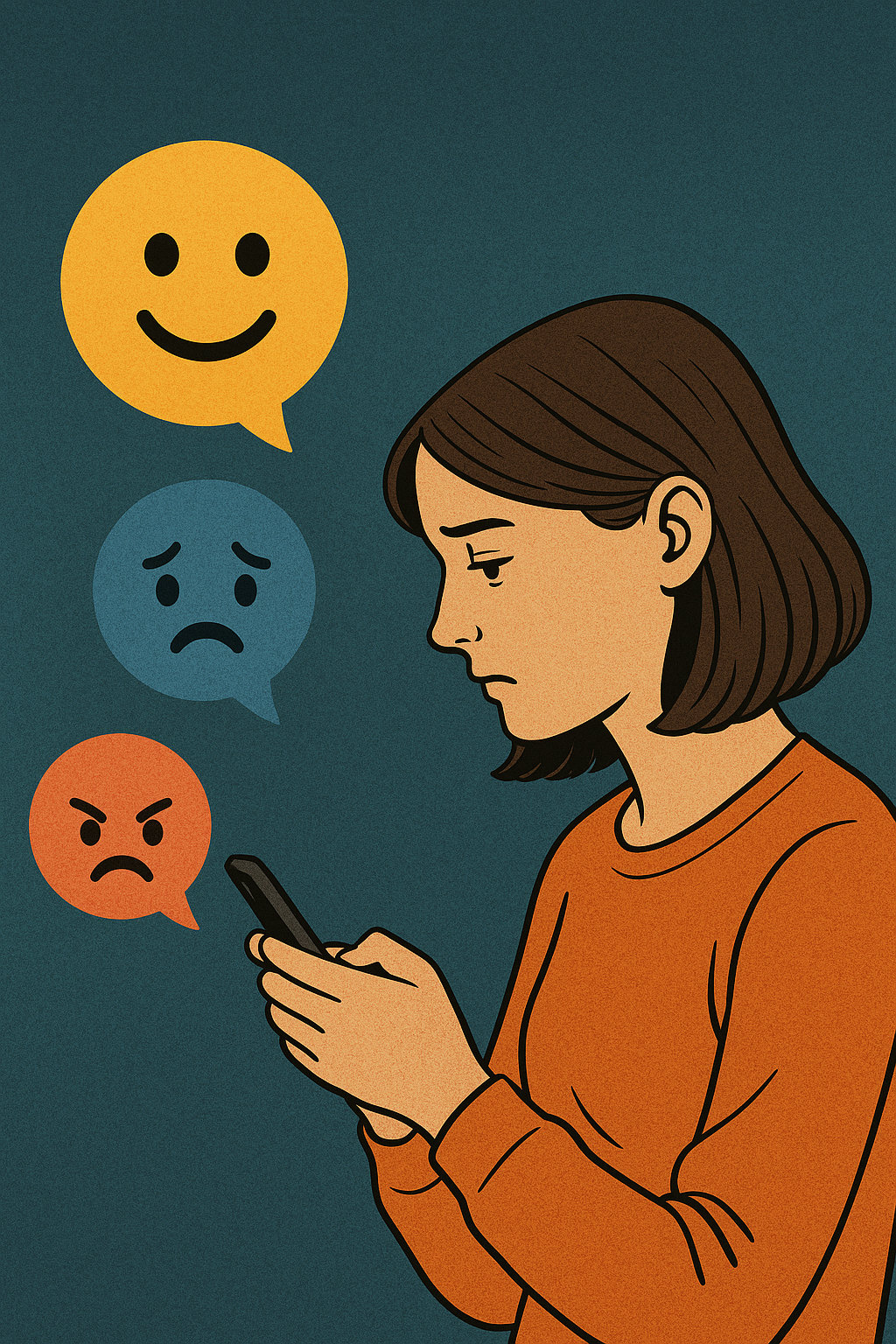
There was a time when feelings were private. Grief happened behind closed doors, joy was shared over phone calls, and anger was reserved for real-world confrontations. Now, all of it is broadcast, looped, liked, and commented on. In the age of Instagram Reels and TikTok For You pages, feelings are no longer just felt—they are performed, consumed, and echoed. We are living in the age of secondhand emotions, where we experience feelings not through our own lives, but through the curated and choreographed lives of others.
This shift hasn’t made us more empathetic—it’s made us emotionally exhausted.
We Don’t Feel—We Scroll
You open TikTok and watch a teenager crying over their dog’s death. The next video is a wedding proposal. Then a woman recounting her trauma. Then a baby’s first laugh. It’s an emotional rollercoaster condensed into 60-second increments. There is no time to process. We feel joy, sorrow, shock, and then laughter, all in a span of minutes, over stories that don’t belong to us.
What we’re consuming isn’t connection—it’s emotional noise.
We don’t feel deeply. We feel frequently.
This leads to something strange: our brains respond to these feelings as if they were our own, but our lives don’t change. We become spectators of intensity. The emotional climax belongs to someone else, but we carry the fatigue.
Emotional Fatigue in the Digital Age
Have you ever felt drained after a 20-minute Instagram scroll? That’s not just screen fatigue—it’s emotional residue. Psychologists call it vicarious trauma or empathic distress—the result of being exposed to intense emotional content without any agency or resolution.
You're watching a stranger mourn their parent. You feel their pain for a second. Then, swipe. Now you’re watching a prank video. Your brain can't tell the difference between real life and digital life fast enough. There’s no time to reset, no emotional boundary.
In the past, emotional labor was shared with close ones—family, friends, therapists. Now, millions participate in each other’s highs and lows, without context, support, or closure. We are left overstimulated and undernourished.
The Rise of Emotional Performances
In this digital climate, even our own feelings are shaped by how they might look to others. We don't just feel sadness—we think, how would this look in a story?
Should I cry on camera?
Would this moment go viral?
Platforms reward emotional visibility. The rawer, the better. Pain becomes content. Healing becomes a narrative arc. What once was intimate is now staged. And the audience? Us. We applaud. We comment, “This made me cry.” Then scroll to the next tragedy.
We're not just feeling anymore—we're watching people feel and mistaking that for our own emotional lives.
The Illusion of Empathy
You might think this widespread exposure to emotions has made us more empathetic. But there's a difference between performative empathy and real empathy.
Performative empathy ends with a like, a comment, a repost. Real empathy leads to connection, action, or change.
In secondhand emotion culture, we begin to commodify even our care. A crisis somewhere becomes another content piece. We may genuinely feel for the victims of a disaster or a heartbreak story, but with no outlet to help or act, that emotion turns inward, becoming guilt or numbness.
The Algorithmic Manipulation of Feeling
It’s important to remember: algorithms don’t care about your emotional well-being. They care about retention. Content that elicits strong emotions—rage, shock, sadness—is more likely to keep you hooked. So that’s what you see.
And when emotional spikes are fed to us repeatedly, our emotional threshold shifts. What once shocked us now barely registers. We need more dramatic content to feel anything. It's emotional inflation—and it leaves us desensitized in real life.
Emotional Individualism Is Dying
In a world where everyone's emotions are streamed and shared, what happens to personal feeling?
We start to second-guess ourselves.
Am I really sad, or just mimicking that breakup video I watched?
Am I angry because of my life, or because I just consumed five rants in a row?
We become emotional mirrors, not emotional selves.
This is not connection. This is simulation.
How to Reclaim Your Emotional Autonomy
It’s not all doom and gloom. Awareness is the first step. Here’s how to begin reclaiming your own emotional life:
Pause before reacting. When a video moves you, ask: Why? Is this my story, or theirs?
Curate your feed. Follow creators who bring peace, not chaos. Choose content that makes you feel grounded, not hijacked.
Sit with your own feelings. Spend time offline. Journal, meditate, walk without music. Re-learn your own emotional rhythms.
Practice digital boundaries. Emotional health requires limits. You wouldn’t invite 50 strangers into your living room to cry and scream. Don’t let your feed do it either.
The Power of Firsthand Feeling
There’s something radical today about feeling your own life. About laughing at something unshared, crying without filming it, grieving in silence. It’s a form of emotional rebellion to say, my feelings are enough, even if no one sees them.
Because in a world that thrives on secondhand emotions, maybe the most human thing you can do… is feel something real.
About the Creator
Ahmet Kıvanç Demirkıran
As a technology and innovation enthusiast, I aim to bring fresh perspectives to my readers, drawing from my experience.
Keep reading
More stories from Ahmet Kıvanç Demirkıran and writers in Psyche and other communities.
The Age of Digital Solitude
There’s a peculiar irony in the fact that we’ve never been more connected—and never felt more alone. At any given moment, you can message a friend, join a group chat, scroll through countless lives on your feed, or video call someone halfway across the globe. Technology has dissolved distances, collapsed borders, and placed entire communities in our palms. But something’s missing. Something very human. Something we forgot to feel.
By Ahmet Kıvanç Demirkıran6 months ago in Psyche
Society Often Teaches Us to Suppress Our Sad Feelings, Branding Them as Negative.
Allow yourself the time to feel, process, and let go. What a journey we’ve traveled together. You can relate to that pain that appears out of nowhere and wants to linger in our minds. Once fear moves in, it takes root—spreading doubt, loneliness, and confusion It’s that kind of pain that overtakes your mental health, gradually making a home within you. Your thoughts can create a space filled with fear, a feeling that we often cling to because it’s the one our minds use against us—leading to a fierce battle between your thoughts and your feelings. It’s a struggle no one wants to lose, yet losing yourself feels like an ever-present threat. Isn’t that a trick life plays on us?
By Johana Torres10 days ago in Psyche
The Psychology of Losing Interest in Life
I didn't notice when I stopped caring. It wasn't a decision, wasn't a moment. It was a gradual dimming, like someone slowly turning down the lights in a room so incrementally that you don't realize you're sitting in darkness until you can barely see anymore.
By Ameer Moavia6 days ago in Psyche


Comments (4)
your all story emotional
Nice bro
Great article and for highly sensitive and empaths it gets even worser we no only see or feel what we dont ask for but we are thrown into the reality of insensitive world where even adds traumatize your focus peace and energy field not telling about whole other but in it all we need find our own way I for example limited use of some social media for far too long and the environment and people i met in reality whether i like their energy or no they also steal the privacy of the being of us so often music dance healing walking are great but thanks to social media we also encounter positive people real human and we can let go of lots of unhealthy horrible emotions other entirely trap us into of course once we heal them within ourselves on our own but i agree we dont need more horror and pain in our life and it should be limited in sharing and posting brutal things as its too much of it in real life experience to go through and to digest
Nice story♦️♦️