
The Psychology of Hoarding: Inside the Mind of Compulsive Accumulation
Exploring DSM-5 Criteria, Treatment Approaches, and Support Strategies for Families and Caregivers
Introduction
In today’s society, where minimalism and decluttering are often glorified, the reality of Hoarding Disorder stands in stark contrast — a condition that disrupts lives, endangers health, and challenges the boundaries of our understanding of mental illness. Far from being a lifestyle choice or mere disorganization, Hoarding Disorder is a serious psychological condition now formally recognized in the Diagnostic and Statistical Manual of Mental Disorders, Fifth Edition (DSM-5). Despite its prevalence, the disorder remains largely misunderstood, stigmatized, and underdiagnosed.
This article aims to offer a comprehensive and compassionate overview of Hoarding Disorder, shedding light on its clinical features, emotional underpinnings, and available treatment approaches. It also provides guidance for those who live alongside someone affected by hoarding, equipping families and caregivers with strategies to foster empathy, maintain safety, and encourage meaningful recovery. By examining the current scientific literature, therapeutic practices, and lived experiences, we hope to foster a more informed and humane approach to this deeply complex mental health issue.
Exploring DSM-5 Criteria, Treatment Approaches, and Support Strategies for Families and Caregivers
The concept of hoarding has long been misunderstood or oversimplified as mere messiness, laziness, or eccentricity. Popular media often portray hoarding as a quirky behavior or sensationalize it for entertainment. However, behind the clutter and chaos lies a complex psychological condition known as Hoarding Disorder (HD) — a recognized mental health diagnosis that deeply affects those who suffer from it and the people around them. This article delves into the clinical nature of Hoarding Disorder as defined in the DSM-5, exploring its symptoms, underlying psychological mechanisms, treatment options, and how loved ones can offer effective and compassionate support.
The Nature of Hoarding Disorder
Hoarding Disorder is a relatively new standalone diagnosis in the field of mental health. Prior to the publication of the Diagnostic and Statistical Manual of Mental Disorders, Fifth Edition (DSM-5) in 2013, hoarding was often seen as a symptom of Obsessive-Compulsive Disorder (OCD) or other conditions. However, further research revealed that hoarding presents with unique features and deserves independent classification.
According to the DSM-5, Hoarding Disorder is characterized by a persistent difficulty discarding or parting with possessions, regardless of their actual value. This difficulty arises from a strong perceived need to save the items and the distress associated with discarding them. The result is an accumulation of items that congest and clutter living areas, compromising their intended use and, in many cases, creating health and safety risks.
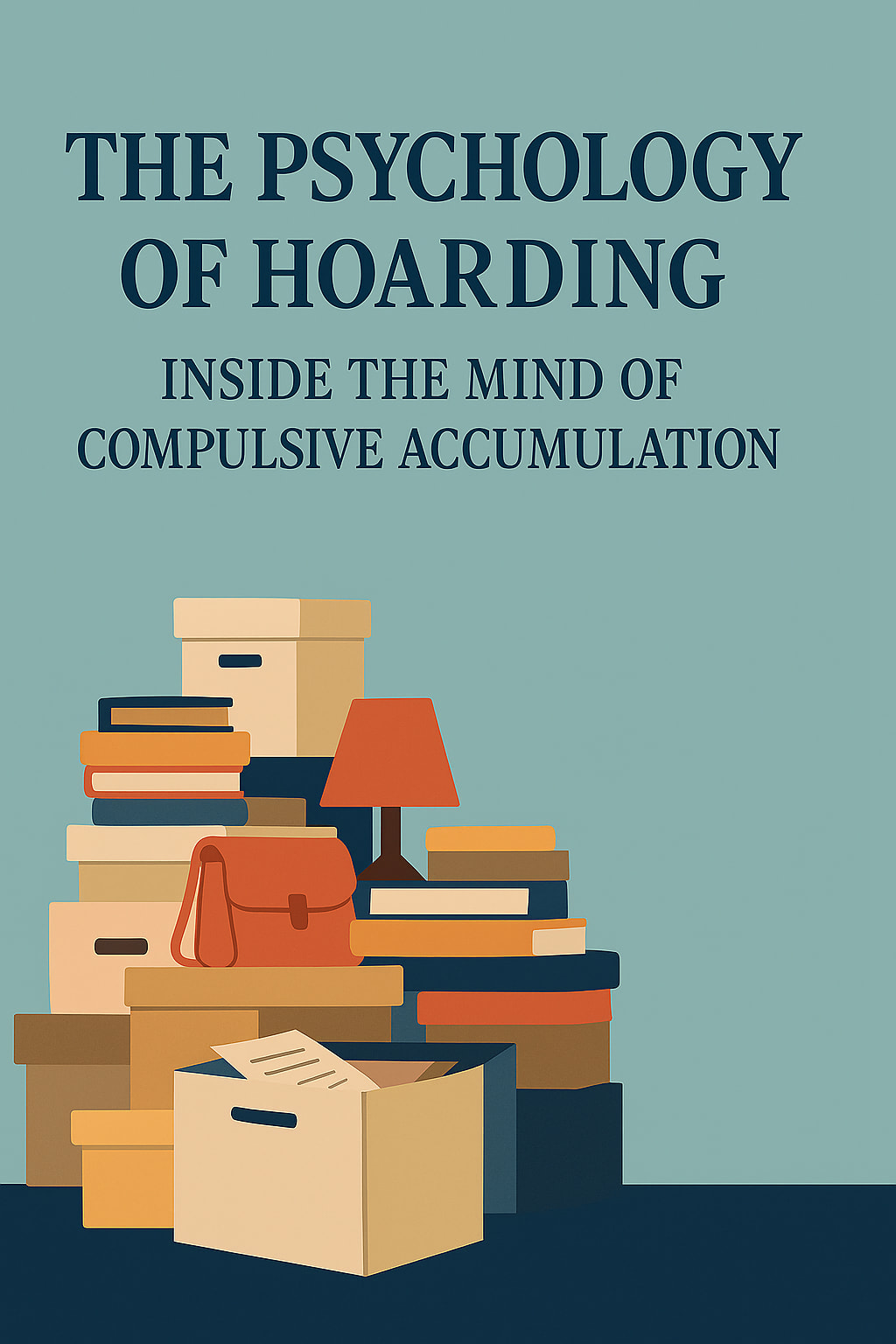
Unlike occasional disorganization or collecting, hoarding involves chronic and compulsive behaviors that interfere significantly with daily functioning. Individuals with Hoarding Disorder often live in spaces that are rendered unusable — kitchens where cooking is impossible, bathrooms filled with boxes, or bedrooms overtaken by stacks of newspapers. Over time, the accumulation of objects can pose serious hazards, including fire risks, infestations, structural damage, and impaired mobility within the home.
Clinical Criteria According to the DSM-5
The DSM-5 outlines specific diagnostic criteria for Hoarding Disorder, emphasizing that the behaviors must not be better explained by another mental disorder, medical condition, or cultural norm. The main criteria include:
- Persistent difficulty discarding or parting with possessions, regardless of their actual value.
- A perceived need to save the items and distress associated with discarding them.
- The accumulation of possessions that congest and clutter active living areas and substantially compromise their intended use.
- The hoarding behavior causes clinically significant distress or impairment in social, occupational, or other important areas of functioning.
- The hoarding is not attributable to another medical condition (e.g., brain injury) or better explained by the symptoms of another mental disorder (e.g., OCD, major depressive disorder, psychosis).
Interestingly, hoarding behaviors often begin during adolescence but may not become clinically significant until later in adulthood. Many individuals suffer for years before the disorder is identified or treated, largely due to shame, denial, or lack of awareness.
The Emotional Landscape Behind Hoarding
Understanding Hoarding Disorder requires going beyond the observable symptoms to explore the emotional and cognitive processes that drive the behavior. For many individuals, hoarding is not simply about the objects, but rather about the intense emotional attachments and meanings ascribed to those objects.
Some may believe that discarding items will result in loss, regret, or identity erosion. Others might attribute a sense of safety or comfort to their possessions, especially in cases where past trauma or abandonment has occurred. The clutter can become a shield from the outside world, a tangible representation of security and control in a life that feels unpredictable.
Additionally, many people with hoarding tendencies struggle with decision-making, organizational difficulties, and intense anxiety. The act of choosing what to discard can be paralyzing, often triggering overwhelming fear, self-doubt, or guilt. For this reason, what seems like a simple cleaning task to others can become a psychological battleground for someone with HD.
It's important to note that insight varies among individuals with Hoarding Disorder. Some recognize that their behavior is problematic, while others deny any issue at all. This lack of insight can pose challenges in treatment and often creates tension with family members or housemates who are directly affected by the disorder.
Co-Occurring Conditions
Hoarding Disorder frequently co-occurs with other mental health conditions. Research shows strong associations with major depressive disorder, anxiety disorders, and attention-deficit/hyperactivity disorder (ADHD). In fact, the executive functioning deficits common in ADHD — such as problems with planning, organizing, and impulse control — are also present in many individuals with HD.
In some cases, hoarding may be secondary to trauma or bereavement. For example, a person who begins hoarding after the death of a spouse or a personal loss may be using accumulation as a way to cope with grief and emotional pain. Therefore, a comprehensive psychological assessment is essential to identify underlying factors and tailor the treatment accordingly.
Treatment Approaches: Evidence-Based Interventions
Hoarding Disorder is a chronic condition, and treatment can be challenging. However, progress is possible, especially with structured, compassionate, and individualized interventions. The most evidence-based treatment for HD is Cognitive Behavioral Therapy (CBT) specifically adapted to hoarding.
CBT for hoarding focuses on helping individuals understand the thoughts and beliefs that underlie their behaviors. It includes training in decision-making, organizing skills, and exposure to discarding items in a gradual, supportive manner. Patients are encouraged to test their catastrophic fears ("If I throw this away, something terrible will happen") and learn to tolerate the anxiety that arises during the process.
Another key component is motivational interviewing, which helps enhance the individual's readiness for change. Given that many hoarders have low motivation or poor insight, therapists often begin by building trust and addressing ambivalence rather than insisting on immediate decluttering.
While medication is not a first-line treatment, selective serotonin reuptake inhibitors (SSRIs) have shown modest benefits, especially in cases where hoarding is accompanied by depression or anxiety. Nonetheless, psychotherapy remains the cornerstone of intervention.
In recent years, digital tools and home-based interventions have been developed to increase accessibility. In-home therapy sessions can be particularly beneficial, as they allow therapists to observe the environment directly and support clients during real-time decision-making.
The Role of Loved Ones: How to Support Without Enabling
Supporting someone with Hoarding Disorder can be emotionally draining and complex. Family members often feel helpless, angry, or desperate as they witness the decline in living conditions and the resistance to change. However, there are ways to offer effective support without falling into patterns of enabling or confrontation.
First and foremost, judgment must be replaced by empathy. Hoarding is not a lifestyle choice or a character flaw. It is a mental health condition that requires compassion and clinical attention. Expressing concern without shaming the individual is essential. Language such as "You're a slob" or "Just throw everything away" is not only unhelpful but can deepen the person's shame and defensiveness.
Instead, try framing conversations around safety, health, and quality of life. For example, discussing the risk of falling, the inability to access a bathroom, or the stress caused by clutter may be more effective than debating the value of a specific item.
Avoid the temptation to clean or discard items without the person's consent. Forced clean-outs are rarely successful and often backfire, resulting in trauma, increased mistrust, and a rapid return to hoarding behaviors. Even well-intentioned "surprise interventions" can cause lasting psychological damage.
Encouraging the person to seek professional help — and offering to accompany them to appointments — can make a significant difference. Support groups for hoarders or family members can also provide insight, reduce isolation, and offer strategies for coping.
Patience is crucial. Recovery from hoarding is not linear, and relapses are common. Celebrate small victories, acknowledge progress, and maintain open lines of communication.
A Path Toward Healing
Hoarding Disorder remains a deeply stigmatized and misunderstood condition. Yet with growing awareness, research, and clinical resources, there is increasing hope for recovery. For those who suffer from hoarding, the journey often begins not with a garbage bag or a cleaning crew, but with the quiet courage to seek help — and the knowledge that they are not alone.
For families and caregivers, offering support means navigating a delicate balance of empathy, boundaries, and advocacy. It is about seeing beyond the piles of objects to the human being underneath — someone who, like all of us, longs for dignity, safety, and connection.
By understanding the psychological dimensions of Hoarding Disorder, we can replace judgment with insight, fear with compassion, and isolation with support — paving the way for healing, one step at a time.
References
American Psychiatric Association. (2013). Diagnostic and statistical manual of mental disorders (5th ed.). Arlington, VA: American Psychiatric Publishing.
Frost, R. O., & Hartl, T. L. (1996). A cognitive-behavioral model of compulsive hoarding. Behaviour Research and Therapy, 34(4), 341–350. https://doi.org/10.1016/0005-7967(95)00071-2
Frost, R. O., Steketee, G., & Tolin, D. F. (2012). Hoarding: Basic science to clinical practice. Oxford University Press.
Gilliam, C. M., Norberg, M. M., Villavicencio, A., Morrison, S., & Tolin, D. F. (2011). Group cognitive-behavioral therapy for hoarding disorder: An open trial. Behavioral Sciences, 1(1), 14–24. https://doi.org/10.3390/bs1010014
Grisham, J. R., Frost, R. O., Steketee, G., Kim, H. J., & Hood, S. (2006). Age of onset of compulsive hoarding. Journal of Anxiety Disorders, 20(5), 675–686. https://doi.org/10.1016/j.janxdis.2005.07.004
Mataix-Cols, D., Frost, R. O., Pertusa, A., Clark, L. A., Saxena, S., Leckman, J. F., ... & Wilhelm, S. (2010). Hoarding disorder: A new diagnosis for DSM-5? Depression and Anxiety, 27(6), 556–572. https://doi.org/10.1002/da.20693
Steketee, G., & Frost, R. O. (2007). Compulsive hoarding and acquiring: Therapist guide. Oxford University Press.
Tolin, D. F., Frost, R. O., & Steketee, G. (2010). A brief interview for assessing compulsive hoarding: The Hoarding Rating Scale-Interview. Psychiatry Research, 178(1), 147–152. https://doi.org/10.1016/j.psychres.2009.05.001
Tolin, D. F., Frost, R. O., & Steketee, G. (2014). Buried in treasures: Help for compulsive acquiring, saving, and hoarding (2nd ed.). Oxford University Press.
About the Creator
Siria De Simone
Psychology graduate & writer passionate about mental wellness.
Visit my website to learn more about the topics covered in my articles and discover my publications
https://siriadesimonepsychology.wordpress.com
Keep reading
More stories from Siria De Simone and writers in Psyche and other communities.
Understanding PTSD: A Comprehensive Psychological Overview of Post-Traumatic Stress Disorder
Introduction Post-Traumatic Stress Disorder, commonly known as PTSD, is a deeply impactful psychological condition that can emerge after a person has lived through or witnessed a traumatic event. Although the term is often linked to soldiers returning from war, the reality is that PTSD can affect anyone — survivors of abuse, accidents, natural disasters, medical trauma, or even secondary exposure to traumatic events through loved ones or professional work.
By Siria De Simone7 months ago in Psyche
The Age of Solitude: Why More People Are Choosing to Be Alone—and What It Means for Society
Introduction: The Quiet Revolution of Being Alone Being alone has never been easy. Throughout history, solitude has been conceived as loneliness—something to be pitied or feared, a condition of the rejected or unwanted. It was the opposite of belonging, an shadow cast by human failure to connect.
By The Chaos Cabineta day ago in Psyche
Miss Persephone's Manual to a Seemingly Ordinary Life
Miss Persephone was found at the dining table, her blue eyes swollen, her tears arriving and retreating like the tides of the ocean. Earlier that day, her family had visited her in the retirement home where she had lived for eight years. It was her eightieth birthday.
By Imola Tóth4 days ago in Fiction




Comments
There are no comments for this story
Be the first to respond and start the conversation.