
The Day Google Forgot Me
A woman wakes up to find that all digital traces of her life — social media, government records, even family photos — have been wiped. No one remembers her. A slow unraveling psychological mystery.
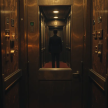

The Day Google Forgot Me
At first, it was small.
I woke up late, no alarm buzzing. My phone lay cold and silent on the nightstand. I frowned—odd, considering I never forget to set it. When I picked it up, the screen flickered once and went black.
Dead battery? No—dead identity.
I plugged it in and booted up my laptop, sipping lukewarm coffee as I opened my browser. Gmail wouldn't load. A blank white screen, then: This account does not exist. I blinked, tried again. Same result.
Facebook. Twitter. LinkedIn. Instagram.
Gone.
Each login attempt was met with indifference. “No such email.” “Account not recognized.” I checked Google. Searched my full name: Emily Hartley. It spat back results for other Emilys—an artist, a real estate agent, a teenager who posted about K-pop. But not me.
I wasn’t there. Not even in the third or fourth page of results.
No blog posts. No Reddit comments. No wedding photos. No profile pictures.
No trace.
I told myself it was a glitch. A sync error. Some massive outage. I even laughed at one point, a dry, echoing chuckle that didn’t reach my eyes.
Then I called IT at my office.
“Hi, this is Emily Hartley,” I said. “My company email isn’t working. Can you check?”
There was silence. Then a man’s voice said, “I’m sorry… who?”
I froze. “Emily. From Marketing. I’ve worked here six years.”
“I think you have the wrong number,” he said. Click.
I called HR. The same. Confusion. Disbelief. Eventually, irritation.
“Are you trying to scam us?” the HR woman snapped. “We don’t have any record of an Emily Hartley ever working here.”
I opened my banking app. Access denied. Tried my debit card. Declined. Three times.
It wasn’t a glitch. It wasn’t a hack.
It was as if I had never existed.
---
By noon, I was sweating in my apartment, digging through drawers for paper. Physical proof.
There were still things here. A birth certificate. Old journals. Printed photos of me with friends, at work parties, on vacation. But every person I contacted denied knowing me. Or didn’t respond. My mother’s number rang once, then went dead.
I took a cab to her house. She opened the door with wary eyes.
“Can I help you?” she asked, her voice cautious.
“Mom,” I said.
She recoiled slightly. “I’m sorry… do I know you?”
I laughed, a trembling sound that cracked mid-way.
“It’s me. Emily. Your daughter.”
She frowned, stepping back. “I don’t have a daughter. Please leave.”
She shut the door in my face.
---
I wandered the city like a ghost.
No job. No family. No bank. I tried to go to the police, but what could I report? Theft of identity? What if I was the thief, and the world was right? What if I had made it all up?
I checked into a dingy motel under cash and silence. At night, I stared at the ceiling and questioned everything.
Was I losing my mind?
The human brain is fickle. It forgets faces. Rearranges memories. I had once read about a woman who believed an entire year of her life never happened. Another thought her children were imposters.
What if that was me now?
But each time I doubted, I found something else. My name engraved on an old necklace. A half-written manuscript on my hard drive. A voicemail I had once saved from my father—now deceased. It began with “Hi Em.”
My reality existed.
The world just didn’t agree.
---
On the third day, I found someone.
A man on an obscure forum where I posted a last-ditch plea titled “Has anyone else been erased?”
His username was NullEcho. He replied: “Yes. 3 years ago. I remember everything. No one remembers me.”
We talked in encrypted emails. He told me how it started: a moment of erasure, digital first, then personal. His story mirrored mine. And like me, he could prove it—only to himself.
“It’s not a glitch,” he said. “It’s a filter. Something, somewhere, is cleaning the record. People like us—we’re the dust.”
He believed it was part of a covert system, a quiet test in selective memory erasure. Maybe to cover up a crime. Maybe to control dissent. Or maybe just to see if it could be done.
“Someone is pulling threads from reality,” he wrote. “You and I—our threads are snipped.”
I asked him what to do.
He said, “You survive. You remember. You write it all down.”
---
So I do.
By hand. Pen on paper. I leave pages in coffee shops. In laundromats. In library books. One day someone might find one. Maybe they’ll remember me. Maybe they’ll recognize the story.
Or maybe they’ll just think it’s fiction.
But if you’re reading this—and you remember an Emily Hartley—then I’m still real.
Aren’t I?
About the Creator
Keep reading
More stories from Muhammad Ahmar and writers in Psyche and other communities.
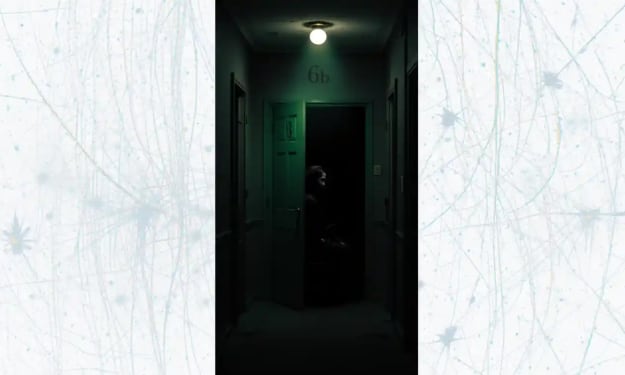
The Silence in Apartment 6B
It sat at the end of the hallway in the old Briarwood Complex, behind a chipped green door that hadn’t opened in years. The light above it flickered constantly, humming like a dying bee. People passed it quickly. Even the building super, Mr. Hartley, who had worked there for over two decades, claimed the apartment was just “storage space.”
By Muhammad Ahmar 8 months ago in Art


Comments
There are no comments for this story
Be the first to respond and start the conversation.