fact or fiction
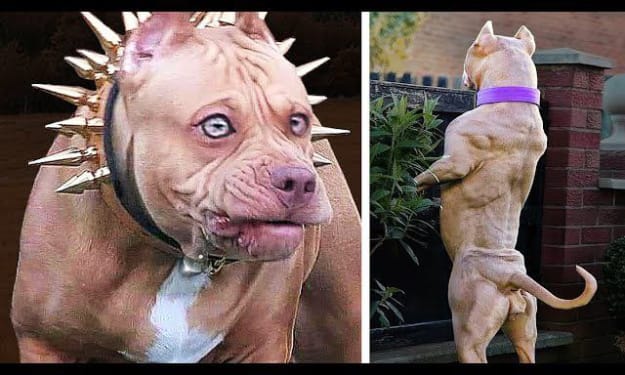
Is it fact or merely fiction? Fact or Fiction explores the myths and beliefs we hold about our pets, like why dogs wag their tails and cats purr.
"The Crimson Sunbird: Beauty, Balance, and Biodiversity"
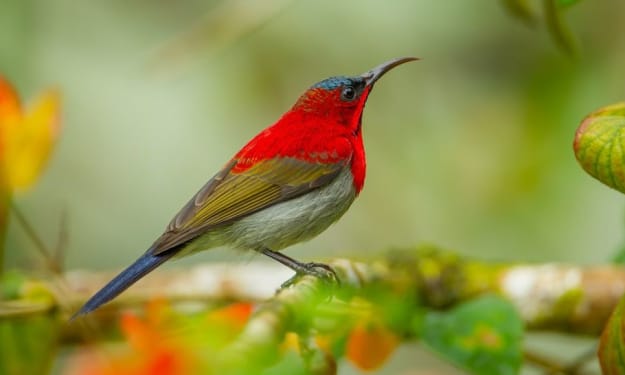
The Crimson Sunbird: Southeast Asia’s Tiny Jewel with a Hummingbird’s Heart In the tropical landscapes of Southeast Asia, where jungles pulse with color and life, a tiny bird shines like a ruby in the sunlight. Meet the crimson sunbird (Aethopyga siparaja), a dazzling little creature that might be small in size but leaves a big impression wherever it flits.
By Wow Genius11 months ago in Petlife
Nature's Wisdom for a Better Life
Listen to Nature: In this era of increasingly busy, disconnected living, it's easy to forget that nature has always been the greatest teacher of all. Animals, plants, and the rhythms of the natural world were ripe for emulation well before science had strategies for separating what's good for us from all the rest. In the silent wayward habits of animals and the logic of the natural world are held secrets of health, peace, and balance. Sometimes the wisest advice is the oldest, passed down through generations, witnessed in silence.
By Rohitha Lanka11 months ago in Petlife
I still remember ! he became our third child
It was a rainy night in 2019. The sky seemed to wash away the earth with tears, and raindrops created a soft rhythm everywhere. A little story developed in our lives on this damp, misty evening - a story that still remains in my heart.
By Sajibibon8411 months ago in Petlife
The School of Life
This is the story of a boy born in a small village—his name was Mihan. Though born into a humble family, his dreams were anything but ordinary. He saw life as a vast school, where each day offered a new lesson, a new realization.Mihan’s father was a farmer. He would go to the fields early in the morning, working tirelessly under the sun. His mother took care of the house and his younger siblings. From an early age, Mihan understood that life was not easy. Poverty, scarcity, and limitations surrounded him, yet he always searched for rays of hope within them.He wasn’t a top student in school, but he had a deep thirst for knowledge. His favorite subjects were Bengali literature and moral stories. He often thought, “There must be something meaningful I’m meant to do in this world.”One day, his teacher said in class, “Life is a school where the learning never ends. Those who truly want to learn will always find a way.” Those words struck deep in Mihan’s heart. From that day forward, he made a promise to himself: He would learn something new every single day.After completing 10th grade at the village school, Mihan wanted to go to the city for college. But due to his family's financial situation, many discouraged him. “What will you do in the city? Stay here and work,” they said. But Mihan knew that if he didn’t walk toward his dreams, they would remain nothing more than dreams.With a little money borrowed from his father, he left for the city. He found a tiny mess to live in, studied during the day, and worked at a shop at night. Every day was a battle—but the fire within him never faded.One day, during a college seminar, a guest speaker said, “Life is failure. But life is also about new beginnings. If you can’t ..do it today, you might do it tomorrow—only if you try.”Those words gave Mihan even more strength. He knew his struggles would be worth it. In between classes, he would sit in the library, reading stories of people who had turned their lives around, who had turned pain into purpose.After college, he got a small job at a local newspaper. His role was to gather stories and write columns. The beginning was humble, but Mihan gave his best to every word he wrote. His writing carried truth, emotion, and raw reality.One day, he wrote a feature called “A Farmer’s Diary,” .which was published in a national newspaper. People were amazed at how beautifully he portrayed the struggles and pride of a simple farmer’s life. That story went viral, and from there, a new journey began.Today, Mihan is a well-known journalist. He travels the country, collecting and telling real-life stories—stories of struggle, ..hope, courage, and humanity.But Mihan has never forgotten his roots. Sometimes he visits his old village school, sits with the kids under the same trees, and tells them, “Life will test you. Sometimes it will try to break you. But if you keep learning and moving forward, life will one day bow down to you.”One curious student once asked him, “Why did you work so hard? Why didn’t you give up when life was so difficult?”Mihan smiled and replied, “Because life is a school, and I am a student. I was never perfect, but I never stopped learning.”---Conclusion:Life teaches us every day—through our failures, struggles, love, and moments of silence. It is sometimes harsh, sometimes gentle. But those who respect each chapter of life, who keep learning through it all, never get lost.Mihan teaches us that life is not just about being big or successful—it’s about becoming wiser through learning. If you keep learning with heart and honesty, one day, life will lead you exactly where you’re meant to be….
By Sumaiya’s Wordbox11 months ago in Petlife
To Kill a Mockingbird
To Kill a Mockingbird is one of the most loved novels in American literature. It was written by Harper Lee and published in 1960. The story is powerful, emotional, and full of important lessons that still matter today. Set in a small town in Alabama during the 1930s, the book talks about racism, injustice, courage, growing up, and the importance of doing what is right—even when it’s hard.
By Muhammad Hayat11 months ago in Petlife
The line story
--- The Line It was a cold, gray morning when Sarah joined the line. She didn’t know what it was for. The line stretched down the street, around the corner, and vanished into the mist. No signs, no announcements—just people, standing quietly, waiting.
By Animals Lifestyle11 months ago in Petlife
The cat story
--- Whiskers’ Big Adventure Whiskers was not an ordinary cat. With snow-white fur, eyes like emeralds, and a tail that curled like a question mark, he had an adventurous heart that beat louder than any purr. He lived in a quiet little house at the edge of Willow Lane with his human, Mrs. Potts, a retired schoolteacher who spoiled him with sardines and hand-knitted sweaters.
By Animals Lifestyle11 months ago in Petlife
7 Bird Beaks That Look Painted by an Artist
Nature is the ultimate artist, blending colors and shapes in ways that even the most imaginative human minds could never dream up. Among its most striking canvases are bird beaks—yes, those tools for feeding, grooming, and defending that, in some cases, look like they've been dipped in a palette of vivid colors. These beaks are not only functional marvels but also masterpieces of design that seem as if painted by a skilled hand. Let’s take a look at seven bird species whose beaks are so dazzling, they belong in an art gallery.
By Fazly Rabbi Taimur11 months ago in Petlife