
7 Bird Beaks That Look Painted by an Artist
When Evolution and Aesthetics Collide

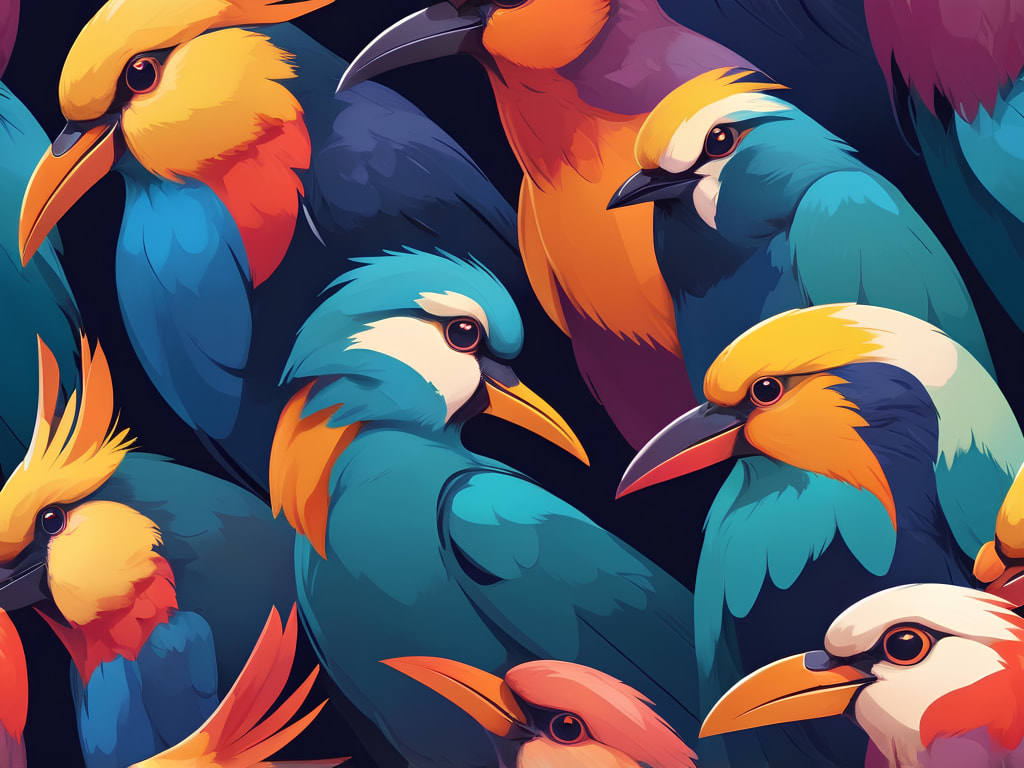
Nature is the ultimate artist, blending colors and shapes in ways that even the most imaginative human minds could never dream up. Among its most striking canvases are bird beaks—yes, those tools for feeding, grooming, and defending that, in some cases, look like they've been dipped in a palette of vivid colors. These beaks are not only functional marvels but also masterpieces of design that seem as if painted by a skilled hand. Let’s take a look at seven bird species whose beaks are so dazzling, they belong in an art gallery.
1. Toucan – The Living Rainbow
No list of beautiful beaks would be complete without the iconic toucan. Found in the rainforests of Central and South America, the toucan’s oversized beak is a kaleidoscope of colors—neon greens, fiery oranges, radiant reds, and electric blues, all flowing into each other like a gradient painting. What’s even more fascinating is that the beak, despite its size, is lightweight and packed with air pockets, making it both flamboyant and functional.
2. Atlantic Puffin – The Clown of the Sea
Dubbed the “clown of the sea,” the Atlantic puffin sports a beak that truly comes alive during mating season. Its triangular beak flashes with bright orange and red hues, accentuated by yellow ridges that give it a painted-on appearance. Against its black and white plumage, the beak pops like a splash of color on a minimalist canvas. After breeding, the puffin actually sheds the colorful outer layer, revealing a duller beak underneath—like a painting being temporarily covered.
3. Hornbill – The Bejeweled Blade
Hornbills are known for their large, curved beaks often adorned with a casque—a hollow structure on top. Some species, like the Rhinoceros Hornbill, feature bright orange and yellow beaks with a natural gloss that makes them look lacquered. Others, like the Southern Ground Hornbill, sport red and black beaks that resemble polished obsidian tipped with fire. The color patterns often vary between sexes and ages, adding to the complexity of their natural artwork.
4. Keel-Billed Toucan – A Painter’s Daydream
A cousin of the common toucan, the keel-billed toucan appears to have been assembled from spare parts of a painter’s palette. Its beak sports multiple colors—lime green, turquoise, bright yellow, orange, and even a streak of maroon. Each shade is sharply defined yet blends seamlessly into the next, as if airbrushed. This bird’s beak is like a surrealist painting come to life—bold, bizarre, and utterly beautiful.
5. Black Skimmer – The Sliced Flame
The black skimmer has one of the most unique beaks in the avian world—not only in function but also in form and color. Its lower mandible is longer than the upper, perfect for skimming the water’s surface for fish. But it’s the coloration that captures the eye: a sharp combination of deep black and a striking, flame-like orange that seems to glow. The contrast is so sharp it looks digitally enhanced, like a photo filter applied in real life.
6. Mandarin Duck – Elegance in Every Detail
While not as widely known for its beak as for its stunning plumage, the mandarin duck deserves mention for its beak’s vivid pink-red color. In males especially, the beak looks almost like it has been dipped in rose-colored wax, smooth and saturated. Its simplicity contrasts beautifully with the complex patterns on its feathers, like a painter’s signature in one solid stroke.
7. Inca Tern – The Mustachioed Marvel
Native to the coasts of Peru and Chile, the Inca tern is a sleek gray seabird with a bold, crimson-red beak that stands out like lipstick on a monochrome portrait. Add to that its white mustache-like facial feathers, and you get a bird that looks like it was designed by a whimsical cartoonist. The beak is often glossy, reflecting light in a way that makes it look wet and freshly painted.
Nature’s Masterpieces
These birds remind us that evolution doesn't just select for survival—it also seems to have a flair for style. While each of these beaks serves a practical purpose, their beauty makes them memorable, inspiring awe in birdwatchers, artists, and biologists alike. In a world that sometimes seems gray and repetitive, these painted beaks offer a vibrant reminder of nature’s creativity and the art that exists in the everyday lives of animals.
So next time you see a bird, take a closer look. You might just be staring at a beak that belongs in the Louvre.
About the Creator
Fazly Rabbi Taimur
Writer of quiet truths and raw reflections. I explore the emotions beneath the surface to create connection and comfort through soul-centered storytelling—for the feelers, the seekers, and those still finding their way.
Keep reading
More stories from Fazly Rabbi Taimur and writers in Petlife and other communities.
Dune: Part Two — A Sci-Fi Masterpiece That Earns Its Epic Status
In an age dominated by reboots, remakes, and rehashed franchises, Denis Villeneuve’s Dune: Part Two arrives not just as a sequel, but as a cinematic event. Picking up where the first installment left off, this chapter doesn’t just raise the stakes — it explodes them across the desert landscape of Arrakis in a symphony of sand, prophecy, and power.
By Fazly Rabbi Taimur11 months ago in Fiction
The Ones Left Behind:
Shelters overflow every week with wagging tails and hopeful eyes. The young ones—the puppies and kittens—disappear within hours, scooped up by families eager for a blank slate. The old ones stay behind. They wait days, then weeks, often in silent confusion, still listening for footsteps they recognize.
By Dr. Mozelle Martin3 days ago in Petlife




Comments
There are no comments for this story
Be the first to respond and start the conversation.