
Is licking a submissive behavior in dogs?
Dogs don’t just lick because they like the taste of your skin (though let’s be honest — sometimes it’s that too). Licking is a powerful form of communication, and in many cases, it’s a submissive gesture rooted in instinct, emotion, and pack behavior. Whether your pup is saying “You’re the boss,” “Please don’t be mad,” or “I’m a little nervous right now,” there’s always a reason behind the slobber. In this guide, we’ll break down when licking is submissive, when it’s not, and how to respond in a way that builds your dog’s confidence—not confusion.

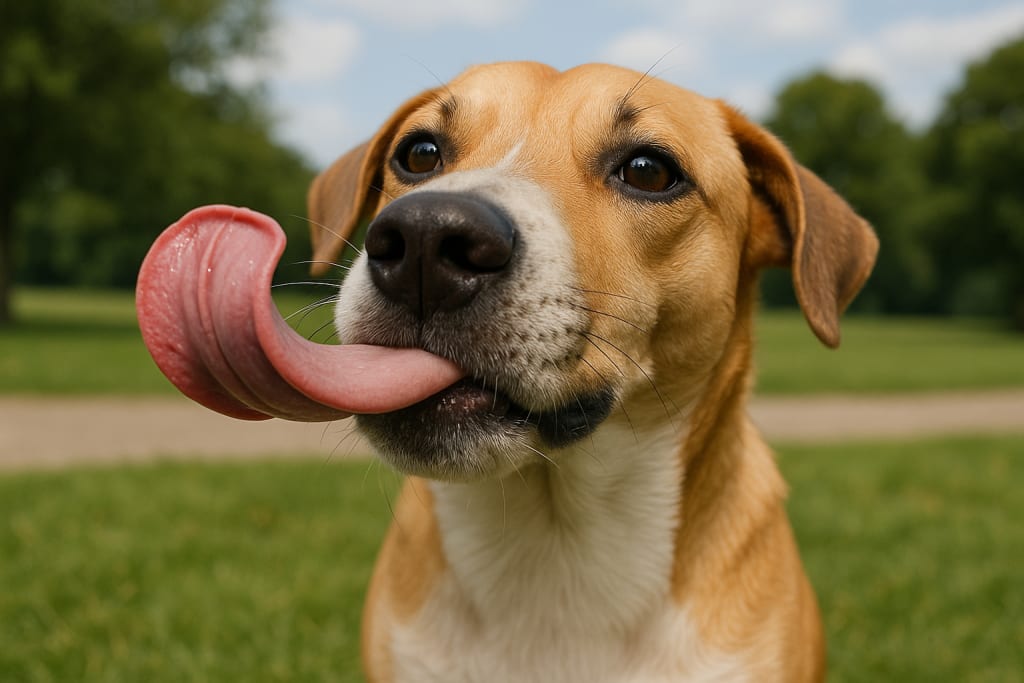
A Trainer’s Guide to What That Slobbery Tongue Really Means
Dogs lick everything. Your face, their paws, the couch cushion you just cleaned. But if you’ve ever wondered, “Is my dog trying to tell me something by licking?” — the answer is yes. Dogs never just “do” things. There’s always a reason, even if it’s buried under layers of fur, feelings, and instinct.
So, let’s break it down like a pro who’s spent years with paws on the ground — and drool on the jeans.
The Origins: Why Do Dogs Lick in the First Place?
Before we get to the whole submission thing, we need to understand why licking exists in the dog world. It’s not random. It’s not a quirk. It’s hardwired.
Puppy Programming: The First Licks Matter
From day one, licking is life. Mother dogs lick their pups to clean them, stimulate breathing, and form bonds. In return, puppies lick their mom’s mouth to say, “Feed me!” This turns into a submissive signal as they grow — kind of like saying, “Hey, you’re the boss. I’m just here for milk and love.”
Licking as Canine Communication
To a dog, a lick is a message. It can mean:
- “I respect you.”
- “You’re in charge.”
- “I’m nervous.”
- “Please don’t eat me.”
- “You taste amazing.”
- “I missed you!”
And yes — sometimes it just means, “This is my version of hugging you.”
Is Licking Really a Submissive Behavior?
Short answer: Yes — sometimes.
Long answer: It depends on the situation, the dog, and the body language that goes along with it. A lick is never just a lick. It’s a piece of the puzzle.
When Licking Is Submissive
Dogs will often lick the muzzle or face of a more dominant dog — or person — as a peace offering. It's their way of saying:
- “I come in peace.”
- “You’re the top dog.”
- “Please don’t correct me.”
- “I know I messed up, let’s be cool.”
In pack dynamics, you’ll see the lower-ranking dogs initiate licking. It’s like bowing in dog culture.
Real-Life Example: Buddy and Tank
I worked with two Labradors: Buddy, the nervous licker, and Tank, the chill alpha. Buddy would lick Tank’s face anytime Tank walked into the room. But Tank never licked back. Why? Because Tank didn’t need to prove anything. Buddy was clearly showing deference.
When Licking Is Not About Submission
Here’s the catch — licking isn’t always submission. That’s like saying every human hug is romantic. Dogs also lick when they’re:
Feeling Affectionate
That happy tail-wag, face-licking combo when you come home from work? That’s love. Pure and simple. No anxiety. No drama. Just joy.
Dealing with Anxiety
Some dogs lick compulsively when stressed. Their paws, the floor, the air. It’s like a coping mechanism. These are the dogs who need confidence, not corrections.
Exploring Tastes
Sometimes you just spilled popcorn salt on your knee. Your dog doesn’t love you more — they just love snacks.
How to Tell What Kind of Lick You’re Dealing With
The key is to look at the rest of the body. Licking alone tells part of the story. Add in ears, tail, posture, and eyes, and the message becomes clear.
Signs of Submissive Licking
- Tail tucked or low
- Ears back or flattened
- Avoiding direct eye contact
- Licking paired with crouching posture
- Licking during/after being corrected
Signs of Affectionate or Playful Licking
- Loose, wiggly body
- Tail wagging mid-height or high
- Eye contact or wide puppy eyes
- Jumping up, face licking
- Zoomies afterward!
Signs of Anxiety-Driven Licking
- Excessive paw licking or chewing
- Licking surfaces like walls, floors, furniture
- Whining, pacing, drooling
- Licking with no social interaction happening
Knowing which category your dog falls into? That’s the difference between being a confused pet parent and a calm, confident leader.
What Should You Do If Your Dog Licks Too Much?
Licking itself isn’t a crime. But why your dog is licking — that’s worth your attention. Here’s what I tell every client:
Step 1: Identify the Cause
Ask yourself:
- Is this social licking?
- Is my dog scared or submissive?
- Is it anxiety-related?
- Is it attention-seeking?
This isn’t guesswork. Watch the context and body language like a detective.
Step 2: Build Confidence
If your dog is licking because they feel insecure, help them stand taller — emotionally speaking. You can:
- Teach basic obedience (sit, stay, place)
- Give them jobs (fetch, carry, tug)
- Avoid harsh corrections
- Reward calm, neutral behavior
A confident dog doesn’t feel the need to lick as a plea for acceptance. They know they’re good.
Step 3: Redirect, Don’t Reprimand
If licking becomes annoying or obsessive, gently redirect. Don’t yell “No!” and send them running.
Instead:
- Hand them a chew toy
- Ask for a “sit” or “down”
- Distract with training or food puzzles
- End the attention (walk away briefly)
Dogs learn fast when they understand what you want from them — not just what you don’t.
Case Study: Max the Anxious Licker
Let me tell you about Max, a sweet but shaky German Shepherd. His owner thought Max was being “loving” — licking feet, hands, arms, the couch. Turns out, Max was on edge 24/7. He licked to self-soothe.
We cut back the stimulation, added structure, and practiced calm exposure to the world. Within two weeks, licking dropped by half. Max didn’t stop loving his humans — he just learned he didn’t have to beg for their approval every second.
Other Common Submissive Dog Behaviors
Licking is just one of the ways dogs say “You’re the boss.” Let’s round it out with the rest of the signals:
Cowering or Lowered Posture
A submissive dog often walks low to the ground, as if saying, “Please don’t notice me.”
Avoiding Eye Contact
Dogs don’t like direct stares — especially from more dominant beings. A submissive pup might glance away, or blink a lot.
Rolling Onto Their Back
Exposing the belly can mean submission — or it can be a trap. Some dogs hate belly rubs despite asking for them!
Peeing When Greeted
Known as “submissive urination,” this is common in puppies or insecure adult dogs. Don’t scold — it only makes it worse.
Excessive Licking of You or Other Dogs
Yep — we’re back where we started. This isn’t just annoying; it’s a request: “Please like me.”
Confidence Is the Cure for Submissive Licking
Let’s be honest: a little submissiveness isn’t a bad thing. We want our dogs to respect boundaries, listen to commands, and understand the pecking order.
But when a dog is licking constantly out of fear, insecurity, or anxiety? That’s not balance. That’s a dog who needs your leadership.
Confidence Comes from Clarity
Dogs crave structure, routine, and clear signals. Training builds confidence because it gives them purpose — and predictability.
Here’s what I teach all my clients:
- Rules + affection = balance
- Freedom must be earned
- Confidence comes through challenge, not comfort alone
So go ahead — teach that “place” command. Set the boundary. Celebrate the win.
Final Summary: What Your Dog’s Lick Really Means
Let’s bring it all home.
✅ Yes, licking can be submissive — especially when paired with low body posture, tucked tail, or appeasement behavior.
✅ But it can also be a sign of love, stress, or habit.
✅ Understanding the why behind licking is more important than just stopping the behavior.
✅ Don’t punish. Observe. Lead. Train. Re-direct.
✅ The goal isn’t to stop licking completely — it’s to create a calm, confident dog who communicates without anxiety.
Because at the end of the day...
A lick isn’t just a lick. It’s your dog’s version of talking. And the more you listen, the better you’ll lead.
Thanks for your reading.




Comments
There are no comments for this story
Be the first to respond and start the conversation.