
Why does my dog keep sniffing my other dog's face?
If you’ve ever caught your dog nose-deep in your other dog’s behind and thought, "Seriously, again?"—you’re not alone. This behavior may seem awkward or even gross from a human perspective, but in the dog world, it’s basically the equivalent of a handshake, a conversation, and a background check all rolled into one. So, let’s get down to the bottom (pun intended) of why your dog just can’t stop sniffing their housemate—and what you, as a responsible and possibly mildly embarrassed dog owner, can do about it.

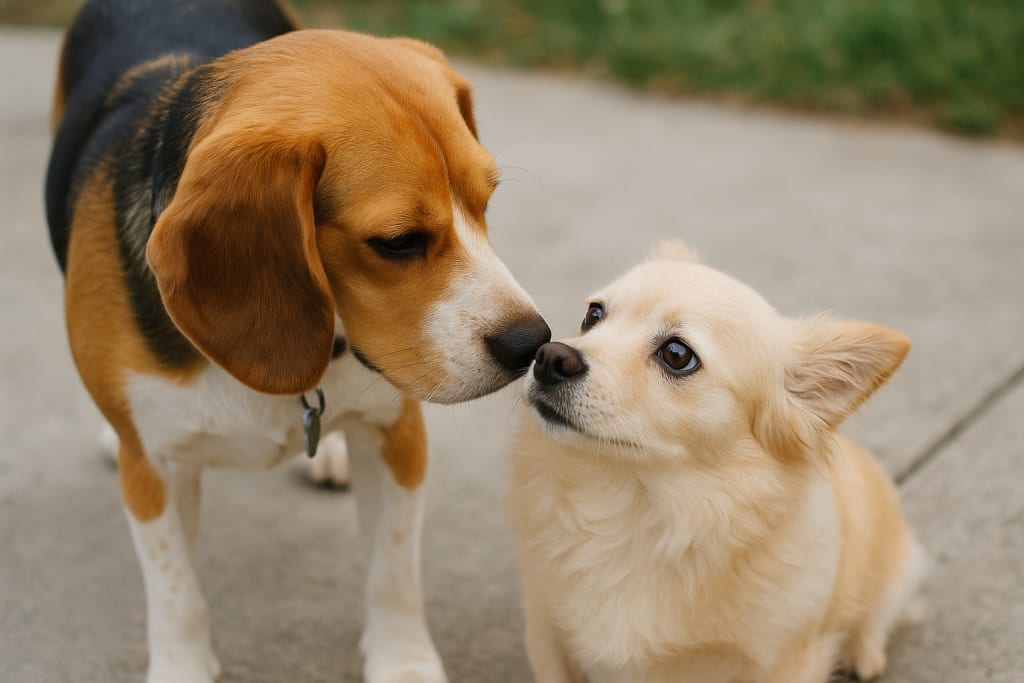
Understanding Dog Communication: A Nose for Details
Dogs don’t gossip. They sniff.
And that nose? It’s no ordinary tool. It’s a biological marvel with up to 300 million scent receptors, compared to our meager 6 million. Your dog’s nose doesn’t just detect smells—it decodes them like a supercomputer, extracting information like sex, age, diet, mood, stress levels, and even health issues.
In dog society, sniffing isn’t just acceptable—it’s required. It’s how they:
- Say hello
- Reassure themselves
- Maintain harmony in the pack
- Gather intel like furry little detectives
Their behavior is deeply tied to their wolf ancestors. In a pack, sniffing maintains social order, forms bonds, and prevents unnecessary conflict. Before your dogs bark or bite, they sniff.
Why Dogs Sniff Each Other: The Main Reasons
1. Establishing Dominance and Social Rank
Dogs are social animals. Like humans sizing each other up in a boardroom or a bar, dogs sniff to figure out who’s who. If one dog is constantly sniffing the other—especially around the rear—it may be trying to reinforce its status or confirm that the pack dynamics haven’t changed.
Submissive dogs might even lift a leg or crouch to make themselves more sniffable. Not exactly polite dinner party behavior, but in the canine world, it's just good manners.
2. Health Check (Yes, Really)
Dogs can smell sickness. Their noses can pick up on subtle changes in body chemistry that might signal illness or injury. If one of your pups suddenly becomes a sniffing machine, especially focused on a certain body part, it could be a sign they’re detecting something abnormal.
This isn’t a replacement for a vet, of course, but it is a good reason to call one.
3. Sexual Maturity and Mating Signals
If one or both dogs are hitting puberty, sniffing can take on a whole new vibe. Male dogs, in particular, are driven to check if a female is in heat. The scent of pheromones from glands around the rear end is basically nature’s dating app.
Spaying or neutering can help dial this down, but hormones are hormones.
4. Anxiety or Stress Coping Mechanism
Some dogs sniff obsessively because they’re anxious. The scent of their familiar canine companion might be calming. It’s like clinging to your favorite hoodie during finals week. If one dog is particularly clingy with their nose, look at changes in the home: new pet, loud noises, routine disruption?
5. Play and Affection
Sniffing isn’t always serious. Sometimes it’s just playful or affectionate. Dogs often follow sniffing with licking or a play bow. If both dogs seem relaxed and happy, this may be part of a healthy, goofy bond.
Is It Normal? When Sniffing Crosses the Line
Normal sniffing is mutual, respectful, and brief.
Red flags:
- One dog growls, snaps, or walks away repeatedly
- Sniffing becomes obsessive and disruptive
- There’s excessive licking of wounds or sensitive areas
If your dog turns into a 24/7 scent sponge and the other dog looks fed up, it’s time to step in.
What You Can Do: Managing Excessive Sniffing
1. Get a Vet’s Opinion
When in doubt, rule out medical issues first. Sudden changes in behavior could mean:
- Infection
- Hormonal changes
- Stress or anxiety
Have both dogs checked if needed. Sometimes the sniffer is healthy, but the sniffee has something going on.
2. Training: "Leave It" is Your New Best Friend
Use positive reinforcement to teach your dog that they don’t need to sniff every 3 seconds.
- Practice "leave it" with treats
- Redirect with toys or puzzles
- Reward calm behavior and disengagement
Dogs aren’t robots—you don’t need to erase sniffing. You just want to teach boundaries.
3. Respect Personal Space
Give your dogs space to retreat and relax. Use baby gates or crates to allow decompression time. Separate feeding areas, toys, and beds help reduce friction.
If you just brought home a new dog, give both time to adapt. The urge to sniff may fade as familiarity grows.
4. Tackle Anxiety
Is the constant sniffer also the dog who freaks out during fireworks or when you leave the house? Then sniffing might be anxiety-driven.
Try:
- Calming pheromone diffusers
- Anxiety wraps
- More walks, more play, more structure
- A consistent routine
You can also consult a certified trainer for behavioral plans.
The Lick Question: What About Face Licking?
Sniffing isn’t the only weird love language dogs use. Licking is the next level.
Face licking can mean:
- Respect or submission ("You're the boss, bud.")
- Affection ("I missed you all day!")
- Curiosity or leftover crumbs ("Did you eat peanut butter?")
Young dogs often lick older ones as a sign of deference. Moms lick pups to stimulate them and keep them clean, and pups return the favor. It’s a lifelong behavior rooted in survival.
When Licking Becomes Too Much
Sometimes licking can cross into obsessive territory:
- One dog pesters the other constantly
- The licked dog growls, avoids, or gets irritated
- Licking happens around wounds, which can cause infection
Train redirection here is key. Reward the licking dog when they disengage. If it’s serious or seems compulsive, consult a trainer.
Preventing Future Issues
Regular Vet Visits
A healthy dog is a happy sniffer. Regular check-ups ensure there’s no underlying issue triggering obsessive behavior.
Socialization
Introduce dogs to new people, animals, and environments early. Dogs who know how to greet calmly and read body language are less likely to get stuck in compulsive sniff/lick loops.
Supervise Play and Introductions
Especially in the early days of a dog relationship. Watch for signs of stress or tension. Separate dogs if play gets too intense.
Provide Plenty of Enrichment
A bored dog gets weird. Puzzle toys, sniff walks, training games—all help redirect that busy nose.
Separate When Needed
No shame in creating boundaries. Some dogs love constant contact. Others need alone time. You’ll figure out the balance.
Summary: What’s That Smell? It’s Communication.
Dogs sniff. It’s how they make friends, assess threats, and say, "Hey, I missed you." It’s not gross to them—it’s essential.
But excessive sniffing, especially focused and intense, can mean something more: dominance plays, health changes, stress signals, or just poor manners.
As their human, your job isn’t to stop it completely. It’s to understand it, guide it, and manage it in a way that respects both dogs’ needs.
So next time your pup’s nose is glued to your other dog’s rear like it’s the best-smelling candle at Bath & Body Works, remember: he’s not being rude. He’s being a dog.
Still, feel free to say, “Okay buddy, that’s enough.” And hand him a chew toy instead.
Thanks for your reading.
About the Creator
Off the Leash: The Essential Gear Guide for Adventurous Dogs
There’s something wildly freeing about unclipping the leash and letting your dog move the way they were built to. If you’re hiking in areas that truly allow off-lead exploration, your gear list shifts. No harness. No leash dragging through dust. Instead, it’s about smart, lightweight essentials that keep your dog safe, hydrated, and easy to manage when adventure gets messy. Long walks off lead are less about control and more about preparation.
By Shabbir Ahmad3 days ago in Petlife


Comments
There are no comments for this story
Be the first to respond and start the conversation.