
How to stop your dog from running up to people and barking
Your dog sees a stranger. The ears twitch. The butt wiggles. And then—blastoff. They sprint like they’ve just spotted a squirrel with a criminal record, barking like they’ve been personally betrayed. You shout. You sprint. The stranger either laughs awkwardly or looks like they’re about to call animal control. And your dog? Proud as ever. Let’s call it what it is: frustrating, embarrassing, and unsafe.

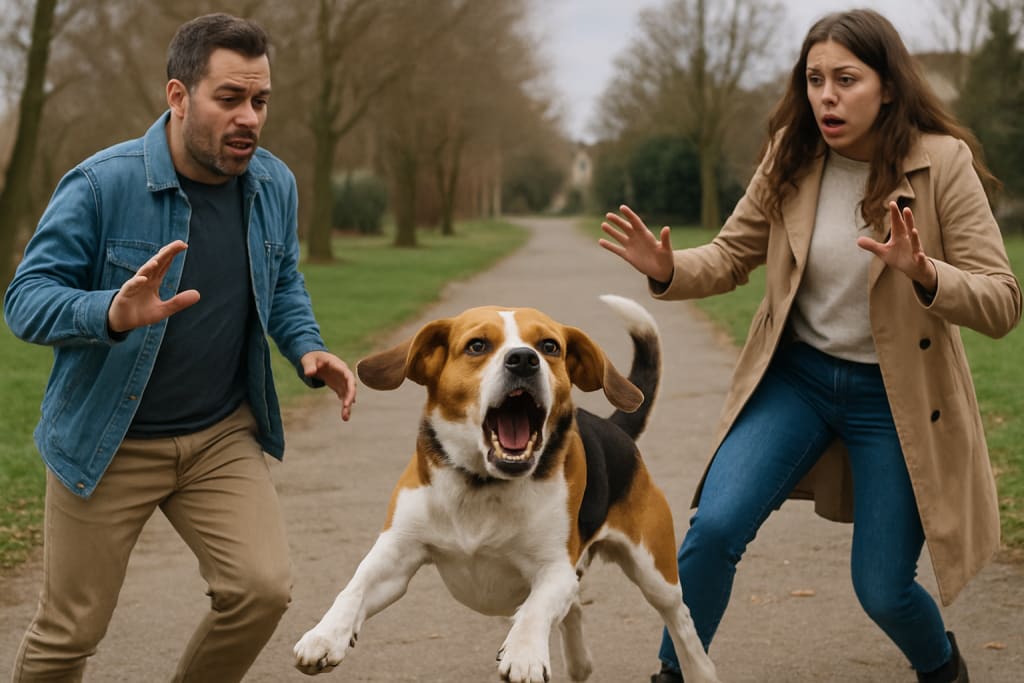
Your Dog’s Not Broken. But They’re Not Right Either.
Dogs aren’t robots. They’re not apps with settings you can toggle on and off. They’re living, emotional creatures—and when they charge strangers barking, they’re not being evil.
But that doesn’t make it okay.
What they’re doing is natural—but natural behavior needs boundaries. Wolves howl. We don’t want that at 3 a.m. in suburbia. So let’s fix it.
This is a training problem. And good news: that means it’s a solvable problem.
The Root Cause: Why Your Dog Is Barking and Charging
Let’s start with the real question: Why is your dog doing this in the first place?
They’re Excited
Some dogs just can’t handle the joy. A person = stimulation = bark = zoom. They’re like toddlers in Disneyland.
They’re Anxious
For other dogs, barking is their version of saying “Go away!” They don’t want to attack. They just want space. Barking gets it.
They’ve Been Accidentally Trained
Yup, you might be the problem. Don’t take it personally. It happens to all of us.
- You laugh when they bark.
- You let them “say hi” after charging.
- You shout “NOOOO!” (which can sound like a fun invitation if you're not careful).
Whatever gets attention gets repeated.
Step 1 – Stop the Rehearsal of Chaos
Let me say this loud and clear:
What gets practiced gets permanent.
The more your dog charges people and barks, the more skilled they get at it.
Management First
Before you train anything, you prevent the behavior.
- No more off-leash time unless you’re in a fenced yard.
- Leash walks only.
- Avoid crowded areas while training.
- Use barriers (baby gates, crates, distance).
Every bark = rehearsal.
Every charge = reinforcement.
Every person your dog scares = a lost opportunity to fix this.
Step 2 – Teach a Killer Recall
Let’s talk about the single most underrated command in dog training: Come.
If your dog doesn’t come when called, you have no leash—even when they’re off-leash.
How to Build It
- Use one cue only: “Come” or “Here.” No mixing.
- High value rewards: not kibble—chicken, liver, cheese.
- Start indoors with ZERO distractions.
- Progress slowly: backyard → quiet park → busier areas.
- Reward like they just saved your life every time they get it right.
Common Mistake
Don’t call your dog and then do something they hate—like putting on the leash, ending playtime, or trimming their nails. That’s like giving them a ticket for listening.
Step 3 – Desensitize and Counter-Condition
Big words. Simple goal: change your dog’s emotional reaction to people.
How to Start
- Bring your dog somewhere where they can see people at a distance but not react.
- Every time they notice someone and stay calm, mark with “Yes!” and feed a treat.
- Gradually reduce the distance—but only as your dog stays relaxed.
- If they bark or lunge, you’re too close. Back up.
Bonus Tip – Use the “Look at That” Game
Teach your dog that looking at a person = reward. Not reacting. Just looking.
That builds calm curiosity instead of panic or hyperdrive.
Step 4 – Teach an Incompatible Behavior
Here’s the magic: a dog can’t bark and sit calmly at the same time.
Pick a New Habit
Choose one:
- Sit and make eye contact.
- Touch your hand with their nose.
- Walk beside you (heel).
- Lie down.
Train this separately. Then ask for it when people appear. Pay big. Repeat. Make it automatic.
Dogs don’t need lectures. They need options.
Step 5 – Use Fair Corrections (Not Fear)
Corrections aren’t cruel. Lack of guidance is.
But correction only works if the dog knows what’s right first. If they don’t know what to do, yelling is just noise.
What Correction Should Look Like
- A calm, firm “No” or “Ah-ah.”
- A gentle leash interruption.
- A redirection to a known cue.
No yelling. No leash-yanking rage. No emotional meltdowns.
What Correction Should NEVER Be
- Physical punishment.
- Screaming.
- Chasing the dog.
- Hitting or “alpha-rolling.”
You’re a guide, not a bully.
Step 6 – Respect the Breed You’ve Got
Here’s the hard truth: breed matters.
Some Dogs Were Built to Bark
- Herding dogs? They’re alert, reactive, motion-sensitive.
- Guardian dogs? They’re naturally suspicious of strangers.
- Terriers? Small, loud, and fearless.
You can’t train instincts out, but you can redirect them into something better.
Give them a job: obedience, scent work, flirt pole, structured games.
A fulfilled dog is a focused dog.
Step 7 – Be Consistent Like a Monk
Dogs don’t need genius owners. They need consistent ones.
If one day you let them bark and run up “just this once,” and the next day you’re yelling at them, you’ve just turned training into a slot machine.
House Rules = Everyone’s Job
- Everyone uses the same words.
- Everyone rewards the same behaviors.
- Everyone enforces the same boundaries.
Dogs don’t follow democracy. They follow patterns.
Step 8 – Practice in the Real World (Not Just the Backyard)
It’s easy to train at home. The floor smells like your socks. No distractions. Easy wins.
But barking at strangers doesn’t happen on your couch.
Take Your Training on Tour
- Practice in parking lots, parks, sidewalks.
- Start at a distance. Work your way in.
- Use your cues: recall, focus, sit.
- Reward calm behavior constantly.
You’re not just teaching obedience. You’re building real-life skills.
What NOT To Do (Trust Me on This)
Let’s save you time and regret. Here are the mistakes that sabotage everything:
Don’t “Let Them Say Hi” to Fix It
That teaches them: bark + lunge = reward. It’s like giving a raise to someone who crashed the company car.
Don’t Wait for Them to Grow Out of It
They won’t. They’ll grow into it. Fast.
Don’t Joke It Away
“He’s just friendly!”
“He’s harmless!”
“She’s never bitten anyone… yet.”
This may comfort you, but it doesn’t help your dog. Or the people they scare.
Real Talk – How This Looks in Everyday Life
Picture this:
You’re walking your dog. A jogger appears. Your dog stiffens. You say, “Look at me.” They turn their head. You reward. You cross the street. They stay calm. You exhale.
That’s not obedience.
That’s trust.
That’s a dog who knows you’ve got it handled.
You didn’t just stop a behavior. You built a relationship.
Conclusion: What This Is Really About
Stopping your dog from running up to people and barking isn’t about being strict or mean. It’s not about dominance or alpha-theories or internet myths.
It’s about this:
- Clear rules.
- Calm guidance.
- Fair correction.
- Consistent practice.
- Real understanding of your dog’s brain.
And above all, mutual respect.
You’re not raising a soldier. You’re raising a partner. You want your dog to look at you in a tough moment and think: “They’ve got this. I don’t need to freak out.”
That’s not magic. That’s training.
That’s possible. And it starts today.
Thanks for your reading.
About the Creator
A Dart at Dusk
Seconds ago, the sullen sun set on the two of us… my exuberant furry companion and me. A fresh breeze embraces us, delivering welcome relief from the day’s oppressive heat. His typical stumbling and staggering along — apace with a sloth — has turned into trip-trapping, high-stepping, almost skipping along.
By Angie the Archivist 📚🪶5 days ago in Petlife
A Shocking Fact: Puppies Learn Love Before Rules
Why Puppies Bond With You Emotionally First—and Obey Second --- It happens in an instant. A tiny ball of fur stumbles into your life, tripping over its own paws, eyes wide, tongue lolling. You laugh, scoop it up, and suddenly feel a rush of affection that seems almost primal. But here’s the shocking truth scientists have uncovered: before your puppy learns “sit” or “stay,” it already knows how to love you.
By Ahmed aldeabella3 days ago in Petlife



Comments
There are no comments for this story
Be the first to respond and start the conversation.