
How to train a dog to be calm around people (Without Losing Your Mind)
Teaching your dog to stay calm around people isn’t about dominance, tricks, or endless yelling—it’s about trust, timing, and clear communication. Whether your dog jumps like a maniac or hides under the table, there’s a method to help them stay balanced. This guide breaks down why dogs struggle with people and how to build real calm—step by step. You don’t need to be a dog whisperer. You just need structure, patience, and a leash. Training calm isn’t flashy, but it works—and it changes everything about how your dog moves through the world.

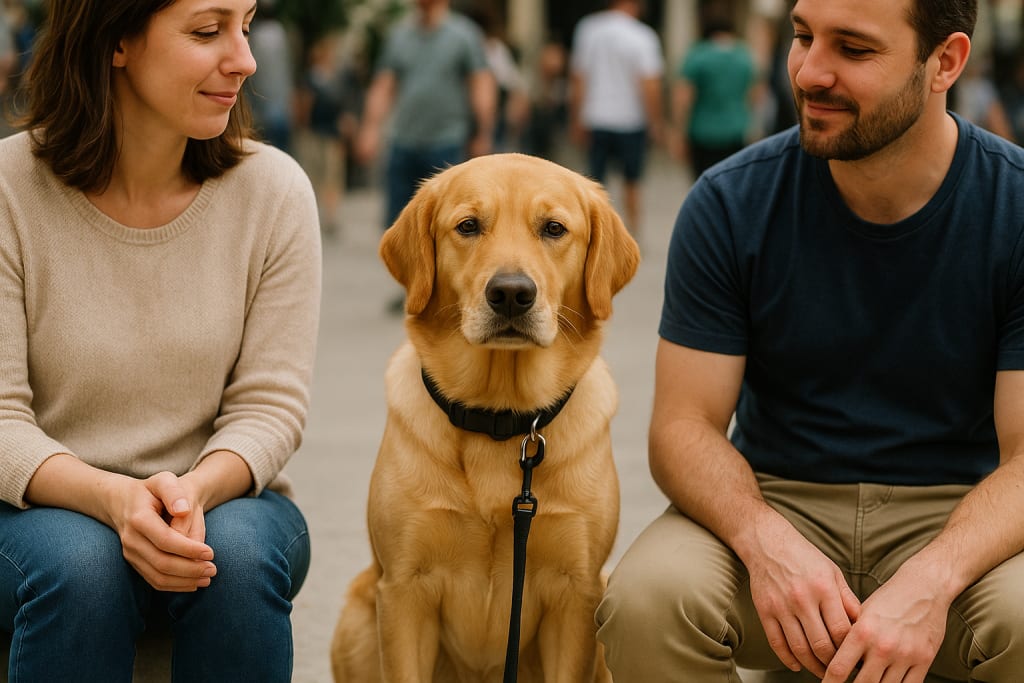
Not Every Dog Is a Social Butterfly
Some dogs are naturally calm. Most are not. A lot of dogs get overwhelmed, overstimulated, or just plain nuts around people. They bark, they jump, they spin like furry tornados. This doesn't make them bad dogs. It makes them dogs. Dogs who need direction. Dogs who need help.
The calm dog walking beside its owner, ignoring strangers? That didn't happen by accident. It happened because someone took the time to teach that dog how to be okay in a noisy, chaotic, human world. This article is about how to do exactly that: help your dog stay calm when people are around, whether it's a quiet neighbor or a house full of weekend guests.
Why Dogs Lose It Around People
Dogs don’t automatically know how to behave with humans. Especially not ones they don’t know. Here are a few of the most common reasons dogs go into overdrive:
Overstimulation
People smell different, sound different, move different. For a dog, that’s a lot to process. Some dogs get so excited by the newness that they can't settle. Their brains go into fast-forward mode.
Lack of Socialization
Puppies need to meet people during their early development window (about 3 to 14 weeks old). If that doesn't happen in the right way, they can grow up unsure or even scared of people.
Guarding Instincts
Many breeds have a built-in alert system. That’s great if you want a watchdog, but tricky when guests come over and your dog thinks every visitor is a potential threat.
Reinforced Behavior
Every time a dog jumps on someone and gets a laugh, a pet, or even a shove, it learns that jumping works. Most dog behavior problems are human-rewarded problems.
Calm Starts With You
Dogs take emotional cues from their humans. If you're tense when a friend visits, your dog will sense that. If you tighten the leash when someone approaches, your dog reads that as a sign something's wrong.
Before you train your dog to be calm, check your own posture, energy, and tone. Are you relaxed? Confident? Consistent? Dogs notice everything. Your calm is the foundation of theirs.
The Basics of Training Calm Behavior
Teach a Solid "Place" Command
This is the one command every excitable dog needs. It gives your dog a clear job: go to that mat, lie down, and stay there. That mat becomes a calm zone.
- Start with short sessions: 2-3 minutes.
- Reward your dog for staying calmly.
- Gradually increase distractions: noises, movements, doors opening.
- Use it every day, not just when people are around.
Consistency is the secret. If your dog knows that place means calm no matter what, they’ll default to calm more often.
Desensitize to People Step-by-Step
You can't fix fear or excitement by overwhelming your dog. Bring the excitement level down. Create neutral experiences with people.
- Have a friend stand across the street.
- When your dog sees them and stays calm, reward.
- If your dog reacts, increase distance and try again.
- Gradually move closer only if your dog is staying under threshold.
Every session is a building block. You're not trying to "expose" your dog to people. You're building calm associations with people.
Use the Leash Inside the House
Many dog owners only use the leash for walks. Use it as a communication tool indoors, especially during training.
- When guests arrive, clip on the leash.
- Guide your dog to place, calmly.
- Use light leash pressure if needed. Don’t yank.
- Keep your energy quiet and neutral.
Leash pressure is like a steering wheel. It’s not about control. It’s about direction.
Reinforce Calm, Not Crazy
Every interaction you have with your dog is a chance to reinforce something. Many people accidentally reinforce high energy.
- Dog jumps: you say "No!" but touch them anyway.
- Dog barks: you try to soothe them.
- Dog sits quietly: you ignore them.
Flip the script.
- Reward calm postures: sitting, lying down.
- Ignore attention-seeking behaviors.
- Praise with calm words and slow pets.
Guests Should Follow the Rules Too
You can train your dog perfectly, but if your guests ignore your rules, you’ll be undoing your own work.
- Ask guests to ignore the dog until calm.
- No eye contact, no squeaky greetings.
- Once the dog is calm, allow limited interaction.
- If your dog gets overexcited again, end the greeting.
It might feel awkward to enforce, but your dog needs consistency. This isn’t about making guests comfortable. It’s about teaching your dog safety and predictability.
Manage the Situation When Needed
Training takes time. In the meantime, manage situations that are too hard.
- Use baby gates or crates when the excitement is too high.
- Avoid setting your dog up to fail.
- Keep training sessions short and successful.
Management isn't failure. It’s part of responsible training.
What to Avoid
Don’t Punish Fear
A growl or bark isn’t misbehavior. It’s communication. If your dog is afraid of people, punishing them will only deepen the fear.
Don’t Ignore Problem Behavior
Saying "He’ll grow out of it" doesn’t work. Dogs grow into patterns. If you ignore it, it becomes a habit.
Don’t Wait Until Guests Arrive to Train
Training should happen when the stakes are low. Don’t start teaching "place" while the pizza guy is at the door. Practice when it’s just you and your dog.
Breed-Specific Considerations
Yes, breed matters. But not the way most people think.
A Jack Russell will be more energetic than a Bulldog. A Rottweiler may be more suspicious of strangers than a Golden Retriever. But any dog can be taught calm behavior.
What matters more than breed is routine, clarity, and practice. Don't let breed be your excuse. Let it be your context.
Helpful Tools
- Training Mat or Cot: Creates a consistent calm zone.
- Treat Pouch: Rewards need to be ready and fast.
- Clicker or Marker Word: Helps mark the right moment.
- Drag Leash: Keeps communication open indoors.
- Crate or Gate: Helps manage overwhelming situations.
These tools don’t train the dog. You do. But they help make your communication clearer and your dog’s choices easier.
A Realistic Timeframe
Changing behavior takes time. Think weeks or months, not days. Expect setbacks. Celebrate tiny wins. One day, your dog won’t jump when the neighbor stops by. That day is coming. Keep showing up.
Training isn’t a straight line. It’s a path with curves. Stick to the path.
Conclusion: Calm Is a Skill
Calm is not a personality trait. It’s a skill you teach your dog through repetition, structure, and patience. It's not about removing your dog’s energy. It’s about giving that energy a direction.
You’re not trying to turn your dog into a statue. You’re teaching them how to live alongside humans, politely, peacefully, without panic or hyperactivity.
Stay steady. Stay clear. Keep your expectations consistent. Your dog wants to understand. Your job is to make it possible.
The calm dog you're hoping for? That dog is already in there. Now it’s time to bring them out.
Thanks for your reading.
About the Creator
A Dart at Dusk
Seconds ago, the sullen sun set on the two of us… my exuberant furry companion and me. A fresh breeze embraces us, delivering welcome relief from the day’s oppressive heat. His typical stumbling and staggering along — apace with a sloth — has turned into trip-trapping, high-stepping, almost skipping along.
By Angie the Archivist 📚🪶5 days ago in Petlife
Center Stage with Paul Stewart
*** I'm keen to republish the interviews I did for my series with Vocal creators. It's been a few years and I thought it might be nice to revisit these wonderful conversations. I'll be releasing them one at a time for a few weeks/months.
By Heather Hubler4 days ago in Interview



Comments
There are no comments for this story
Be the first to respond and start the conversation.