
Building a Balanced Meal Plan for a Healthier You
Practical Meal Planning Tips and a Sample Menu for Daily Nutrition


As we conclude our 7-day series for National Nutrition Week, it's fitting to focus on the practical application of everything we've discussed: building a balanced meal plan. A well-structured meal plan is the cornerstone of a healthy lifestyle, ensuring that your body receives the necessary nutrients while fostering sustainable eating habits. In this blog, we’ll explore why a balanced meal plan is essential, provide a step-by-step guide to creating one, and offer an example that you can easily adapt to your daily life.
Why a Balanced Meal Plan is Important
- Nutrient Diversity: One of the primary benefits of a balanced meal plan is that it encourages nutrient diversity. By including a variety of food groups—proteins, carbohydrates, fats, fruits, and vegetables—you ensure that your body receives a wide array of essential nutrients. This diversity is key to supporting different bodily functions, from energy production to immune support. For instance, including leafy greens in your meals boosts your intake of vitamins A and C, while whole grains provide fiber and essential minerals.
- Portion Control: Another significant advantage of a balanced meal plan is portion control. In a culture where large portions are often the norm, managing the amount of food you consume can be a challenge. A well-planned meal ensures that you’re eating enough to meet your energy needs without overindulging. This helps in maintaining a healthy weight, reducing the risk of lifestyle-related diseases like diabetes and heart disease.
- Sustainable Eating: Fad diets often promise quick results, but they are usually not sustainable in the long term. A balanced meal plan, on the other hand, promotes long-term healthy eating habits. It’s not about restriction but rather about making informed choices that contribute to your overall well-being. By focusing on balance, you create a diet that’s enjoyable, diverse, and sustainable—key factors in sticking to healthy eating patterns over time.
Steps to Create a Balanced Meal Plan
Creating a balanced meal plan involves thoughtful consideration of food groups, portion sizes, meal timing, and variety. Here’s a step-by-step guide:
1. Incorporate All Food Groups
A balanced meal should include:
- Proteins: Lean meats, fish, eggs, dairy, legumes, and pulses. In India, dal (lentils) is a staple source of protein, especially for vegetarians.
- Carbohydrates: Whole grains like brown rice, quinoa, millet (bajra), and whole wheat. Rotis made from whole wheat or millets are excellent choices.
- Fats: Healthy fats from sources like ghee, mustard oil, olive oil, nuts, and seeds.
- Fruits and Vegetables: Aim for a colorful plate to ensure a variety of vitamins and minerals. Incorporate seasonal fruits and vegetables to keep it fresh and cost-effective.
2. Portion Sizes
Portion control is key to maintaining a healthy weight and preventing overeating. Here are some tips:
- Use visual cues: A portion of protein should be about the size of your palm, while carbs should take up about a quarter of your plate.
- Use a food scale if necessary to measure portion sizes, especially when starting.
Here, thalis can be a good way to practice portion control, as they naturally divide food into smaller portions.
3. Meal Timing
In Indian households, meal timing is often influenced by cultural practices, such as fasting and feasting during festivals. To maintain energy levels throughout the day:
- Start your day with a nutritious breakfast, like a bowl of oats or a plate of poha, to kickstart your metabolism.
- Space out meals: Plan for mid-morning and afternoon snacks to keep hunger at bay. A handful of nuts or a bowl of yogurt can be satisfying and nutritious.
- Avoid late-night meals: Eating too close to bedtime can disrupt digestion and sleep.
4. Variety is Key
Incorporating a variety of foods and recipes keeps meals interesting and ensures you get a broad spectrum of nutrients. Rotate your meals every week or try new recipes to avoid monotony. For instance, you could alternate between different types of dals, grains, and vegetables to keep your palate engaged.
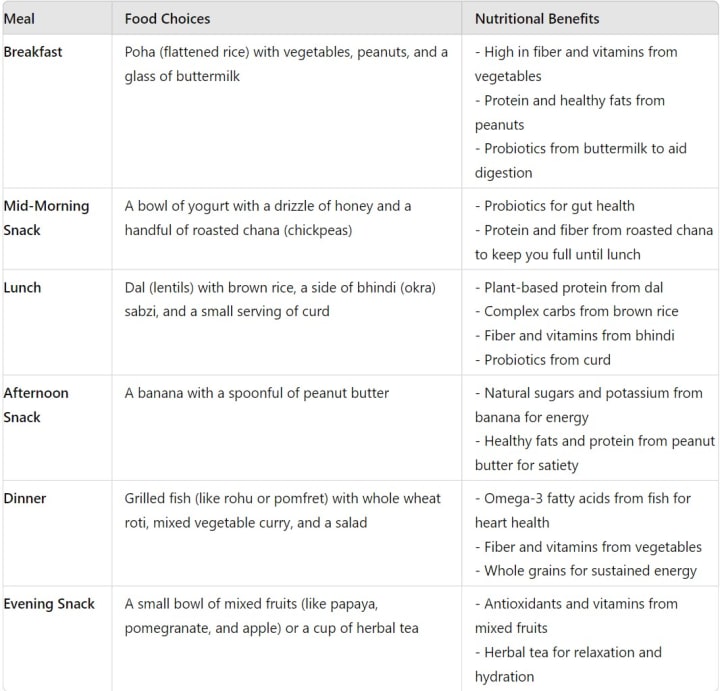
Table: Balanced Meal Plan Example
To illustrate how you can put these principles into practice, here’s an example of a balanced meal plan that’s both nutritious and delicious.
Practical Tips for Building and Maintaining a Balanced Meal Plan
Creating a balanced meal plan is a great start, but maintaining it consistently can be a challenge. Here are some practical tips to help you stick to your plan and make the process enjoyable and sustainable.
- Plan Ahead: Set aside time each week to plan your meals and snacks. This proactive approach helps you avoid last-minute unhealthy choices, especially when juggling a busy lifestyle. Planning also allows you to incorporate seasonal and locally available produce into your meals.
- Meal Prep: Cooking in bulk and storing meals in the refrigerator can be a lifesaver during hectic days. Preparing staples like dal, rice, and sabzi in advance ensures you have healthy, home-cooked meals ready to go, reducing the need to rely on takeout.
- Listen to Your Body: Honor your hunger and fullness cues by eating mindfully. Avoid eating out of habit or stress, which can lead to overeating. Instead, enjoy your meals in a calm environment, focusing on the flavors and textures, which enhance digestion and satisfaction.
- Stay Flexible: A balanced meal plan should be adaptable. Whether it’s a festival feast or an important dinner with friends, allow yourself the flexibility to enjoy these moments. You can always return to your regular routine without guilt or stress.
- Use Local Ingredients: Incorporate local grains, vegetables, and spices into your meal plan. Foods like millets, seasonal fruits, and traditional spices are nutrient-rich and more affordable, helping you create a balanced diet that’s aligned with cultural practices.
- Batch Cook Basics: Prepare basic ingredients like boiled lentils, roasted vegetables, and chapatis in larger quantities. This makes assembling meals easier throughout the week, ensuring you stick to your meal plan even on your busiest days.
- Mind Your Portions: Use traditional portioning techniques like the thali system, where small portions of various dishes are served. This approach naturally encourages balanced eating with the right mix of nutrients while preventing overeating.
- Hydrate Wisely: Drink plenty of water throughout the day. In addition to plain water, include herbal teas and fresh coconut water to stay hydrated, especially in hot climates. This helps in maintaining energy levels and aids digestion.
- Enjoy Seasonal Foods: Incorporate seasonal produce into your meal plan. Seasonal fruits and vegetables are often fresher, more nutritious, and less expensive. Plus, they help diversify your diet, ensuring a range of nutrients year-round.
Conclusion
Building a balanced meal plan is about more than just what you eat—it's about creating a lifestyle that supports long-term health and well-being. By incorporating diverse food groups, controlling portions, timing your meals effectively, and maintaining variety, you can enjoy a nutritious and satisfying diet. Remember, the key to success is consistency and flexibility. With the right approach, a balanced meal plan can be a powerful tool in achieving and maintaining good health.
Day 1 Blog on National Nutrition Week
Day 2 Blog on National Nutrition Week
Day 3 Blog on National Nutrition Week
Day 4 Blog on National Nutrition Week
About the Creator
Rajneesh Nirmalkar
Rajneesh is a digital marketing executive from India, who blogs on helpful topics. Though not a perfect writer, he uses tools to enhance his content. Driven by a love for books and humanity, he freely shares advice and insights.
Keep reading
More stories from Rajneesh Nirmalkar and writers in Longevity and other communities.
The Truth About Common Nutrition Myths
As National Nutrition Week progresses, it’s important to address the common misconceptions surrounding nutrition. It might be challenging to keep up a balanced and healthful diet because these beliefs frequently mislead people. In this session, we'll explore some of the most widespread myths around nutrition, eradicate them with genuine facts, and offer helpful advice to help you make wise dietry decisions.
By Rajneesh Nirmalkarabout a year ago in Longevity
Day 4 of Quitting
If this is how sobriety feels, maybe it’s better to go through life a little buzzed… this, along with other hits like, I want to kill myself, I wish I was dead, and I’m going to throw myself off a bridge have been the only thoughts on rotation these past few days. I promise myself that if, in a month, I still feel like this (‘this’ meaning despondent, full of rage, and simultaneously numb) I can go back to smoking. Until mid-February though? Nicotine is off the table.
By sleepy drafts17 days ago in Longevity
Kratom Capsules Explained. Uses, Benefits, Dosage, and What to Expect
Kratom capsules are one of the most popular ways to use kratom. Many people choose capsules because they are easy to take, taste free, and simple to measure. If you dislike the bitter flavor of kratom powder or want a cleaner option, capsules solve that problem.
By Jack Wilder5 days ago in Longevity
🅼🅸🅳🅽🅸🅶🅷🆃 🆂🅽🅰🅲🅺🆂
"It's 10 in Tuscon! We all know what that means... It's Time for Midnight Snacks with your man, Gerald Gee! Ready to spend the night together? Me too! I'm full of snacks and can't wait to regurgitate them all back into your hungry ears. Crack a brew! Pop some corn! Anything to get ready for one hell of a show where the talk maybe cheap but the words cut deep...
By Lamar Wigginsa day ago in Fiction




Comments
There are no comments for this story
Be the first to respond and start the conversation.