Latest Stories
Most recently published stories on Vocal.
GTA Evolution: Rockstar, Controversies, and the Upcoming Game Experience. AI-Generated.
Grand Theft Auto has never been defined solely by crime or chaos. From its earliest releases to the era of Grand Theft Auto V, the series has consistently explored what happens when players are given freedom without instruction. Over time, GTA evolved into a space where habits, instincts, and repeated decisions matter more than objectives or skill offering a revealing look at player behavior inside GTA’s open world, shaped by curiosity, repetition, and the absence of enforced rules.
By Enzo Marcelli15 days ago in Gamers
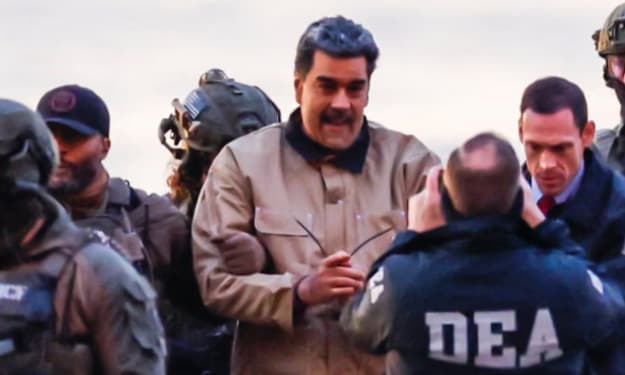
DoJ Deemed It ‘Unnecessary’ to Conclude Whether Seizing Maduro Violated International Law, Memo Reveals. AI-Generated.
A recently released Department of Justice (DoJ) memo has shed light on the controversial U.S. operation that led to the seizure of Venezuelan President Nicolás Maduro, revealing that the agency deemed it “unnecessary” to determine whether the action violated international law. This revelation adds a new dimension to an already politically and legally charged situation, sparking debate over the legality, ethics, and diplomatic implications of the operation.
By Aarif Lashari15 days ago in The Swamp
German Troops Deploy to Greenland: What This Means for Arctic Security. AI-Generated.
Germany is preparing to send military personnel to Greenland, a move that has captured attention across Europe and the Arctic region. While Greenland is an autonomous territory of Denmark, its strategic location in the Arctic has made it a focus of international interest. With climate change opening new shipping routes and nations eyeing untapped natural resources, the Arctic has transformed from a remote, frozen frontier into a geopolitical hotspot. Germany’s deployment signals a significant step in NATO’s Arctic strategy and raises questions about the purpose and implications of military activity in this once-quiet region. Why Greenland Matters Greenland is the world’s largest island, strategically positioned between North America and Europe. Its location makes it vital for transatlantic security, satellite monitoring, and potential shipping lanes that are increasingly accessible due to melting Arctic ice. The region is rich in natural resources, including rare earth minerals, oil, and gas. As global demand for these resources grows, nations are investing in Arctic presence to protect economic and strategic interests. Greenland’s vast ice sheets also make it an important area for scientific research and environmental monitoring. Germany’s Arctic Strategy Germany’s deployment of military personnel to Greenland is part of a broader NATO-led strategy to strengthen Arctic defense capabilities. While Germany does not have territorial claims in the region, its participation reflects concern over growing Russian and Chinese influence in the Arctic. Russia has long maintained a military presence along the Arctic coast, while China has invested in Arctic infrastructure and shipping routes under its “Polar Silk Road” initiative. By stationing troops in Greenland, Germany aims to: Enhance NATO Cooperation: Strengthening ties with Denmark and other NATO members ensures a coordinated defense posture in the Arctic. Joint training exercises and shared resources improve readiness for potential emergencies. Monitor Strategic Areas: Greenland is home to vital radar installations and early warning systems that are crucial for monitoring missile activity and airspace in the North Atlantic. German personnel can contribute to these operations, improving surveillance and intelligence sharing. Support Environmental and Scientific Missions: Military personnel often assist with logistical support for scientific research, providing expertise in remote operations, transportation, and communications in harsh Arctic conditions. Geopolitical Implications Germany’s move comes at a time of increasing tension and competition in the Arctic. With ice sheets melting faster than expected, new shipping routes like the Northwest Passage and the Northern Sea Route are becoming navigable for longer periods each year. This opens opportunities for international trade but also raises security concerns, including territorial disputes and the protection of critical infrastructure. The presence of German troops underscores the importance NATO places on collective security in the Arctic. It also signals to other global powers, particularly Russia and China, that European nations are committed to maintaining influence and stability in the region. Cooperation or Competition? While the deployment emphasizes defense, it also highlights opportunities for international cooperation. Arctic nations, including the U.S., Canada, Norway, and Denmark, have traditionally collaborated on scientific research, environmental protection, and maritime safety. Germany’s arrival could support these efforts, demonstrating that military presence does not necessarily mean conflict but can enhance shared operational capabilities. However, the deployment may also intensify geopolitical competition, especially if more countries begin stationing forces or conducting exercises in the Arctic. Observers note that maintaining a balance between security and cooperation will be key to avoiding tensions in a sensitive environment. Challenges of Arctic Deployment Stationing military personnel in Greenland is not without difficulties. The Arctic presents extreme weather conditions, logistical challenges, and limited infrastructure. German troops will need specialized training in cold-weather operations, survival skills, and mobility across ice and snow-covered terrain. Maintaining supply lines is another significant challenge. Remote bases in Greenland require careful planning for food, fuel, and equipment transport. Communication can also be difficult due to limited satellite coverage and harsh environmental conditions. Despite these challenges, Germany’s military has invested in Arctic training programs and has experience participating in NATO exercises in cold climates, ensuring that personnel are prepared for the operational demands of Greenland. Environmental Considerations Military activity in Greenland must also consider environmental impacts. The Arctic ecosystem is fragile, and increased human presence could affect wildlife, ice integrity, and local communities. German and NATO forces are expected to follow strict environmental guidelines to minimize their footprint and ensure that operations align with sustainability goals. What This Means for Local Communities Greenland’s local population, primarily Inuit, has expressed mixed reactions to increased foreign military presence. While some see it as a source of economic opportunities and infrastructure development, others are concerned about sovereignty, cultural impacts, and environmental risks. Danish authorities, in collaboration with Greenland’s government, aim to ensure that foreign deployments respect local laws and traditions while providing security and economic benefits. Conclusion Germany’s planned deployment of military personnel to Greenland reflects the growing importance of the Arctic in global geopolitics, environmental monitoring, and strategic security. While challenges in extreme conditions and environmental concerns must be addressed, the move underscores NATO’s commitment to collective defense and international cooperation in a rapidly changing region. As the Arctic continues to warm and new shipping routes emerge, nations will increasingly need to balance security, science, and sustainability. Germany’s presence in Greenland represents not just a military strategy but a signal that the Arctic is becoming a central arena for international collaboration and competition. The arrival of German troops in Greenland is more than a deployment—it’s a statement about the future of the Arctic, global security priorities, and the growing interconnection between climate, technology, and defense. How nations navigate this sensitive frontier will shape geopolitical and environmental outcomes for decades to come.
By Muhammad Hassan15 days ago in The Swamp
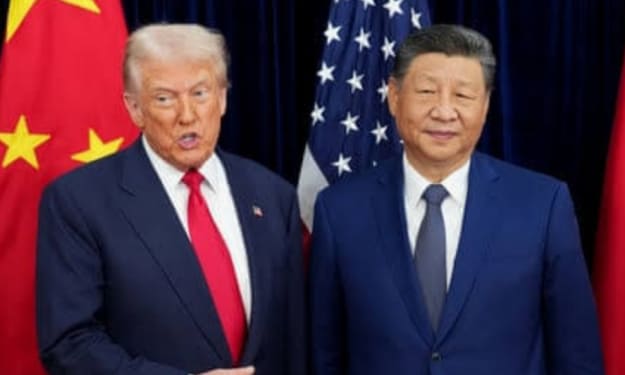
Trump Is Making China – Not America – “Great Again,” Global Survey Suggests. AI-Generated.
A recent international survey indicates that former President Donald Trump’s policies and rhetoric may have inadvertently strengthened China’s global standing, even as he aimed to bolster America. The survey, conducted across multiple continents, suggests that foreign public opinion increasingly views China as a rising power, while perceptions of U.S. leadership have seen a decline during Trump’s influence.
By Aarif Lashari15 days ago in The Swamp
A building's lifetime climate impact is mostly determined by its daily energy use.
The majority of a building's climate impact is not caused by its construction. As the heating, lighting, and ventilation systems continue to function year after year, it gradually accumulates.
By Francis Dami15 days ago in Earth
7 Books To Be More Positive And Confident. AI-Generated.
In a world that constantly tests our resilience, positivity and confidence are no longer optional—they are essential life skills. Whether we are navigating career challenges, personal relationships, or internal self-doubt, the way we think about ourselves shapes the way we live. The good news? Positivity and confidence can be learned, trained, and strengthened—just like a muscle.
By Diana Meresc15 days ago in BookClub