
DoJ Deemed It ‘Unnecessary’ to Conclude Whether Seizing Maduro Violated International Law, Memo Reveals
Background: The Maduro Operation
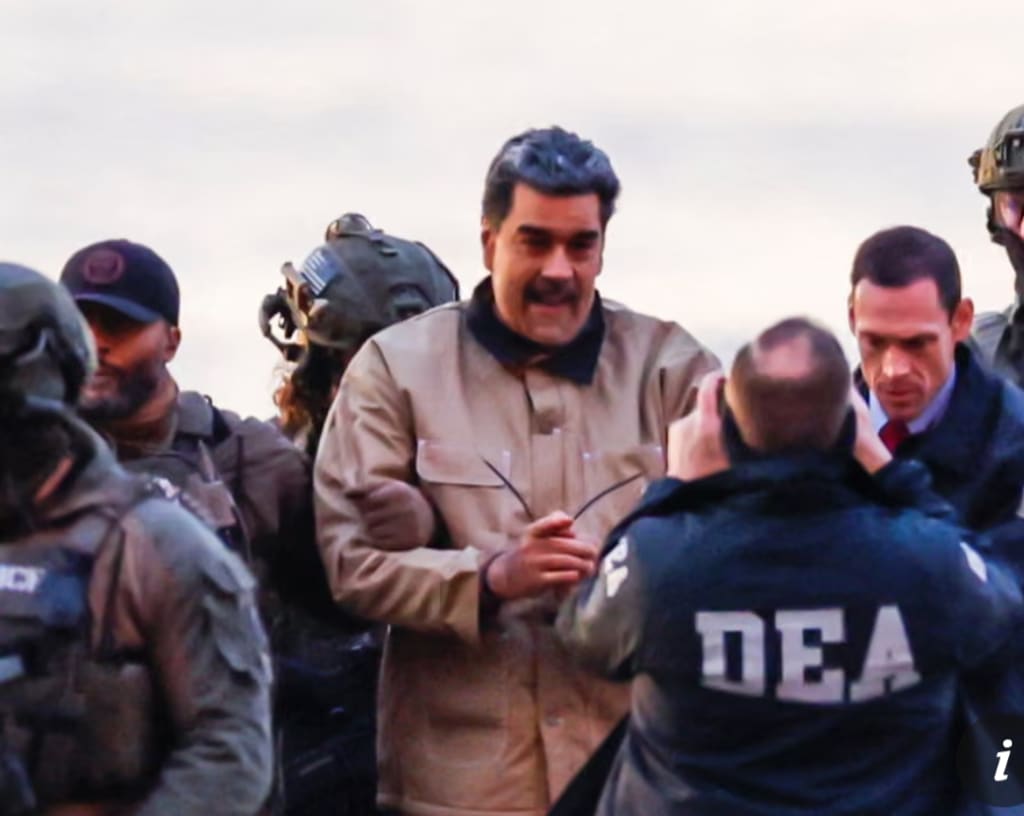
A recently released Department of Justice (DoJ) memo has shed light on the controversial U.S. operation that led to the seizure of Venezuelan President Nicolás Maduro, revealing that the agency deemed it “unnecessary” to determine whether the action violated international law. This revelation adds a new dimension to an already politically and legally charged situation, sparking debate over the legality, ethics, and diplomatic implications of the operation.
The operation, which involved U.S. military and intelligence assets, aimed to detain Maduro amid allegations of corruption, human rights abuses, and links to criminal organizations. While U.S. officials have defended the mission as a legitimate effort to uphold democracy and accountability, international legal experts have questioned whether such an action could contravene established norms of sovereignty and international law.
The DoJ Memo
According to the memo, obtained by investigative journalists, the Department of Justice explicitly chose not to issue a legal opinion on whether seizing Maduro violated international law. Officials reportedly concluded that determining the legality under international law was not necessary for the operational or prosecutorial goals of the mission.
Key points from the memo include:
The U.S. government focused primarily on domestic law and criminal prosecution.
Potential conflicts with international law were acknowledged but not adjudicated.
The decision reflects a broader U.S. approach of emphasizing operational priorities over international legal considerations in certain high-stakes scenarios.
Legal Experts Respond
International law scholars have expressed concern over the memo, highlighting that ignoring international legal obligations can set dangerous precedents. Professor Anne-Marie Wills, an expert in international law, commented:
“Operations involving the detention of foreign leaders carry significant legal and diplomatic risks. Choosing not to assess the legality under international law leaves the U.S. vulnerable to criticism and potential challenges in international forums.”
Critics argue that the absence of a formal determination could undermine U.S. credibility, especially in matters of human rights and rule of law. Supporters of the operation, however, stress that domestic legal frameworks and national security considerations often take precedence in urgent scenarios.
Sovereignty and Diplomatic Concerns
The seizure of a sitting head of state inherently raises sovereignty concerns. Venezuela has condemned the operation, calling it a violation of its territorial integrity and an act of aggression. International reactions have been mixed:
Latin American governments have expressed unease, with some calling for investigations and respect for diplomatic norms.
European nations have urged restraint, emphasizing the need for lawful, transparent processes.
U.S. allies have largely remained silent, perhaps reflecting a careful diplomatic balance between support and caution.
By deeming an international legal review “unnecessary,” the DoJ may have prioritized expediency over potential diplomatic fallout, raising questions about how future operations will be conducted.
The Political Dimension
The operation and the memo have reignited debates within U.S. political circles. Advocates argue that bold action against authoritarian regimes signals strength and commitment to democracy. Critics, however, view the decision as reckless, risking international isolation and undermining the rule of law.
Political analysts note that the memo could influence ongoing discussions about executive authority, checks and balances, and the role of law in high-stakes foreign operations.
Precedents and Comparisons
Historically, U.S. operations targeting foreign leaders have been rare and heavily scrutinized. Notable examples include the capture of Manuel Noriega in Panama and Osama bin Laden in Pakistan. In each case, legal considerations, operational urgency, and diplomatic consequences were weighed carefully.
Experts argue that failing to assess international legality explicitly in the Maduro case represents a significant deviation from precedent, potentially opening the door to future unilateral actions with limited accountability.
International Law Considerations
International law encompasses principles such as:
Sovereignty and non-interference
Use of force only under UN authorization or self-defense
Protection of heads of state from unlawful detention
While the U.S. may justify actions under domestic statutes or emergency powers, ignoring international frameworks can strain relations with allies, embolden adversaries, and weaken global norms. Legal scholars stress that even high-priority operations should consider international implications to maintain legitimacy.
Implications for U.S. Policy
The memo may signal a broader shift in U.S. operational strategy, prioritizing national security and prosecutorial goals over international legal analysis. This approach could influence:
Future interventions in politically sensitive regions
U.S. credibility in international forums
Legal scrutiny and potential challenges in global courts
Policy analysts emphasize that balancing operational effectiveness with international law is crucial for maintaining long-term diplomatic influence and global trust.
Looking Ahead
As Venezuela reacts and international observers assess the fallout, the DoJ memo serves as a reminder of the complex interplay between law, politics, and security. Questions remain about whether the U.S. will face formal legal challenges in international courts or if this precedent will shape future foreign operations.
While the operation’s immediate objectives may have been achieved, the broader consequences—diplomatic, legal, and reputational—are still unfolding, highlighting the delicate nature of modern international enforcement actions.
Conclusion: Law, Power, and Accountability
The Department of Justice’s decision to deem it “unnecessary” to conclude whether seizing Nicolás Maduro violated international law underscores the tension between legal prudence and operational urgency. While the U.S. may have achieved a tactical success, the memo raises fundamental questions about accountability, sovereignty, and the role of international law in modern global operations.
For policymakers, legal experts, and international observers, the case illustrates a critical challenge: how to balance the imperatives of security, justice, and diplomacy in a world where unilateral actions carry profound global consequences.
About the Creator
Keep reading
More stories from Aarif Lashari and writers in The Swamp and other communities.
Trump Is Making China – Not America – “Great Again,” Global Survey Suggests
A recent international survey indicates that former President Donald Trump’s policies and rhetoric may have inadvertently strengthened China’s global standing, even as he aimed to bolster America. The survey, conducted across multiple continents, suggests that foreign public opinion increasingly views China as a rising power, while perceptions of U.S. leadership have seen a decline during Trump’s influence.
By Aarif Lashari3 days ago in The Swamp
Bethany Beyond the Jordan: The Sacred Place of Jesus’ Baptism
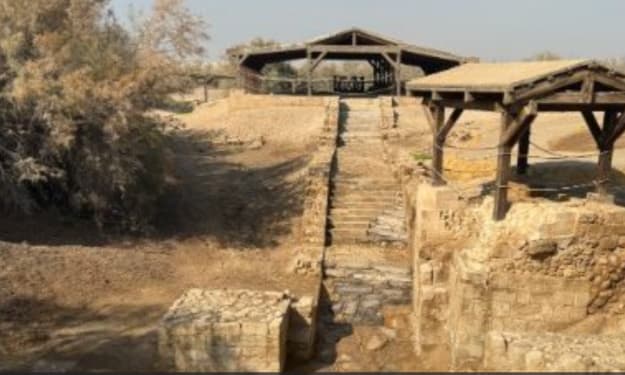
A Sacred Place Hidden in Plain Sight Along the eastern bank of the Jordan River, just a short distance from the Dead Sea, lies a place revered by millions of Christians around the world: Bethany Beyond the Jordan. Known in Arabic as Al-Maghtas, this site is widely recognized as the location where Jesus Christ was baptized by John the Baptist. Though modest in appearance, its spiritual weight is immense, making it one of the holiest places in Christianity. Unlike grand cathedrals or bustling pilgrimage cities, Bethany Beyond the Jordan offers something rare—silence, simplicity, and a powerful sense of sacred history. It is here, according to Christian tradition and strong archaeological evidence, that Jesus’ public ministry began. Biblical Roots of Bethany Beyond the Jordan The Gospel of John provides the clearest reference to this site, describing it as “Bethany beyond the Jordan, where John was baptizing.” For centuries, scholars debated the exact location of this biblical Bethany. Some believed it lay west of the river, while others argued for the eastern bank. Modern archaeology has largely settled the debate. Excavations in Jordan uncovered ancient baptism pools, churches, monasteries, and water systems dating back to the Roman and Byzantine periods—all pointing to this area as the original baptism site. Early Christian pilgrims also recorded journeys to this very location, strengthening its authenticity. John the Baptist and the Meaning of Baptism Bethany Beyond the Jordan is inseparable from the figure of John the Baptist, a prophet who preached repentance and spiritual renewal. His act of baptizing Jesus transformed baptism from a symbol of repentance into a cornerstone sacrament of Christianity. The baptism of Jesus represents humility, obedience, and divine affirmation. According to scripture, the heavens opened, the Holy Spirit descended like a dove, and a voice declared Jesus as God’s beloved Son. This moment marks the beginning of Jesus’ mission and gives the site its profound theological importance. For believers, standing near the waters of the Jordan is not just about history—it is about reconnecting with faith at its source. Archaeology That Brings Scripture to Life What sets Bethany Beyond the Jordan apart from many holy sites is the strength of its archaeological record. Researchers have uncovered: Ruins of early Christian churches built to honor the baptism site Monastic cells where early monks lived and prayed Large baptism pools used by pilgrims Ancient water channels connecting the site to the Jordan River These findings show that Christians revered this location from the earliest centuries of the faith. Rather than relying solely on tradition, Bethany Beyond the Jordan is supported by physical evidence that aligns closely with biblical descriptions. Recognition as a World Heritage Site In 2015, UNESCO officially recognized Bethany Beyond the Jordan as a World Heritage Site, citing its outstanding universal value and deep religious significance. This recognition placed the site alongside the world’s most important cultural and spiritual landmarks. Jordan’s role in preserving and promoting the site has been widely praised. Despite being located in a region often associated with conflict, Bethany Beyond the Jordan stands as a symbol of peace, coexistence, and shared heritage among Christians, Muslims, and Jews. A Place of Pilgrimage and Papal Visits Over the years, Bethany Beyond the Jordan has welcomed pilgrims from every corner of the world. Many describe their visit as deeply emotional, even transformative. The quiet landscape, combined with the slow flow of the Jordan River, creates an atmosphere of reflection rarely found at more crowded holy sites. Several popes, including Pope John Paul II, Pope Benedict XVI, and Pope Francis, have visited the site, reinforcing its importance within the global Christian community. These visits also elevated international awareness of Jordan as a custodian of Christian holy places. The Jordan River: More Than Just Water The Jordan River itself holds immense symbolic power. In the Bible, it represents transition, renewal, and divine intervention. From the Israelites crossing into the Promised Land to Jesus’ baptism, the river is a recurring setting for spiritual turning points. At Bethany Beyond the Jordan, the river becomes more than geography—it becomes theology. For many pilgrims, touching or seeing its waters is a reminder of spiritual cleansing and new beginnings, echoing the meaning of baptism itself. Interfaith Importance and Cultural Harmony While Bethany Beyond the Jordan is a Christian holy site, its significance extends beyond one faith. Jordan, a Muslim-majority country, has actively protected Christian heritage, offering a powerful example of interfaith respect. The site demonstrates how sacred spaces can unite rather than divide. In a region often portrayed through the lens of conflict, Bethany Beyond the Jordan tells a different story—one of shared history, mutual reverence, and peaceful coexistence. Visiting Bethany Beyond the Jordan Today Today, the site is carefully managed to preserve its spiritual atmosphere. Modern walkways guide visitors through ruins without disturbing the landscape. Informational signs explain both the biblical and archaeological significance, making the experience educational as well as devotional. Unlike many major pilgrimage destinations, Bethany Beyond the Jordan remains calm and uncluttered. This simplicity allows visitors to focus not on spectacle, but on meaning. Why Bethany Beyond the Jordan Still Matters In a fast-paced, modern world, Bethany Beyond the Jordan offers something timeless. It reminds believers of humility, faith, and beginnings. It reminds historians that ancient texts can align with physical evidence. And it reminds the global community that sacred heritage deserves protection, regardless of borders or beliefs. More than a historical landmark, Bethany Beyond the Jordan is a living testament to the moment when a quiet act in a river changed the course of religious history. Final Reflections Bethany Beyond the Jordan is not defined by grandeur, but by depth. It stands as a sacred bridge between scripture and soil, faith and history. For Christians, it marks the beginning of Jesus’ mission. For the world, it stands as a symbol of spiritual heritage preserved with dignity and care. In the stillness of the Jordan’s waters, the story of baptism continues to flow—inviting reflection, renewal, and reverence for generations to come
By Muhammad Hassan7 days ago in The Swamp


Comments
There are no comments for this story
Be the first to respond and start the conversation.