
Trump Is Making China – Not America – “Great Again,” Global Survey Suggests
Global Perception of U.S. Leadership Shifts
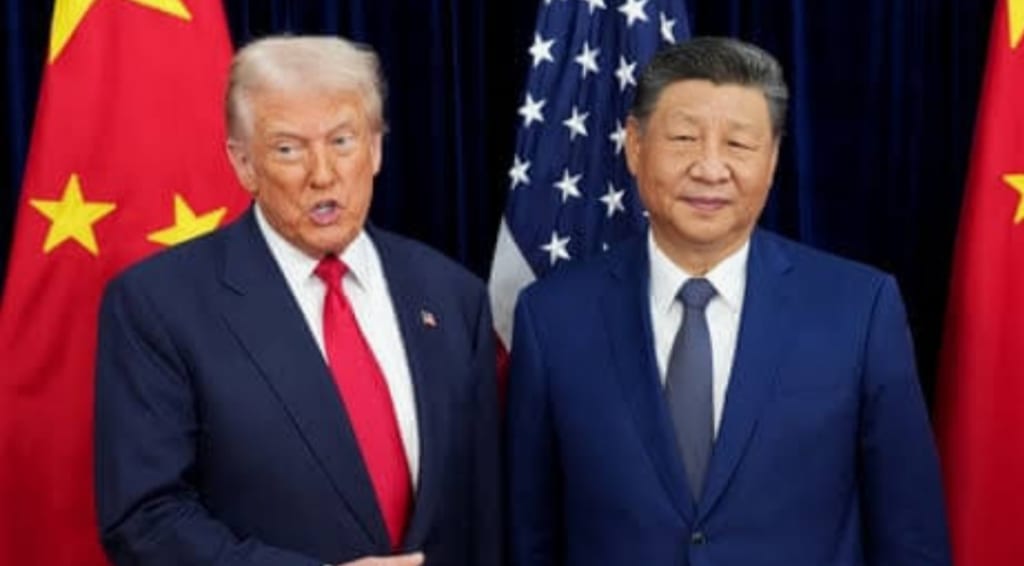
A recent international survey indicates that former President Donald Trump’s policies and rhetoric may have inadvertently strengthened China’s global standing, even as he aimed to bolster America. The survey, conducted across multiple continents, suggests that foreign public opinion increasingly views China as a rising power, while perceptions of U.S. leadership have seen a decline during Trump’s influence.
This finding highlights the complex interplay between domestic policy, international diplomacy, and global perception. While Trump championed slogans like “Make America Great Again,” experts argue that some actions may have amplified China’s geopolitical advantage.
Trade Policies and Economic Impact
Trump’s approach to trade, including the well-publicized tariff wars and sanctions against China, was intended to protect American industries. However, the survey indicates that these moves may have boosted China’s economic resilience and global partnerships.
Key outcomes include:
China diversifying its trade networks with Europe, Africa, and Southeast Asia
Strengthening domestic industries in response to U.S. tariffs
Expanding Belt and Road initiatives while U.S. engagement in infrastructure projects remained limited
While Trump aimed to curtail China’s economic rise, many analysts argue that the result has been a more self-reliant and internationally influential China.
Diplomatic Strategies and Global Influence
The survey also points to the impact of Trump’s diplomatic style. His “America First” approach often prioritized unilateral actions over multilateral cooperation, leading some allies to seek stronger ties with China.
Examples include:
European nations expanding economic cooperation with Beijing
Middle Eastern countries balancing U.S. relations with Chinese investments
Developing nations viewing China as a reliable partner for infrastructure and development
This trend suggests that Trump’s assertive stance, while popular domestically, may have opened space for China to strengthen its global influence.
Technology and Strategic Competition
Another key area highlighted by the survey is technology and innovation. China’s focus on 5G, artificial intelligence, and advanced manufacturing has gained momentum amid U.S. restrictions and competition.
Observers note that:
Chinese firms have accelerated development in areas where U.S. sanctions sought to slow progress
Strategic competition in semiconductors, AI, and renewable energy is shaping global supply chains
Other countries increasingly consider China a viable alternative for technology partnerships
The survey reflects a growing perception that China is positioning itself as a technological leader, potentially challenging American dominance.
Public Opinion Around the World
Survey results reveal striking trends in public perception:
Citizens in Europe, Asia, and Africa increasingly view China as a competent global actor
Perceptions of U.S. leadership have declined in some traditional allies, with concerns over reliability and consistency
Developing nations express interest in China-led investment and development projects, which they perceive as less politically conditional than U.S. aid
These trends suggest that global opinion does not always align with domestic political messaging, creating challenges for U.S. influence abroad.
Critiques and Counterarguments
Supporters of Trump argue that his policies:
Strengthened U.S. economic fundamentals and reduced trade deficits
Addressed unfair trade practices by China
Reasserted American sovereignty in international negotiations
Critics, however, point to unintended consequences, including China’s rising diplomatic influence and expanded trade reach, highlighting the gap between policy intent and global perception.
Strategic Implications for the U.S.
The survey’s findings carry important lessons for U.S. foreign policy:
Effective leadership requires balancing domestic priorities with global credibility
Overemphasis on unilateral action can create opportunities for rivals
Long-term strategic planning should anticipate perception-based consequences, not just economic metrics
Analysts warn that maintaining American influence requires both strength at home and engagement abroad, particularly in regions where China has gained traction.
Lessons for Global Diplomacy
Trump’s era demonstrates the complex dynamics of modern global leadership. Even policies aimed at domestic benefit can reshape international perceptions, alliances, and rivalries.
Key takeaways include:
Multilateral engagement remains crucial in maintaining global influence
Strategic communication shapes international opinion as much as tangible actions
Competitors can leverage perceived U.S. unpredictability to advance their own agendas
These lessons underscore the importance of diplomatic foresight and adaptability in a multipolar world.
Looking Ahead
As the world continues to watch U.S.-China relations, the survey suggests a shift in the balance of perception. While Trump’s domestic base may celebrate “America First,” globally, China is increasingly seen as the rising power shaping the 21st century.
Future administrations will need to navigate this landscape carefully, balancing economic interests, strategic competition, and international credibility to maintain U.S. influence.
Conclusion: Perception Shapes Power
The global survey highlights an important reality: perception can be as powerful as policy. Trump’s efforts to strengthen America have, in some areas, inadvertently enhanced China’s stature on the world stage.
Understanding this dynamic is crucial for policymakers, business leaders, and citizens alike. In the interconnected world of today, domestic actions reverberate internationally, shaping alliances, trade, and global influence. The survey serves as a reminder that making America great requires both domestic success and global strategic foresight.
About the Creator
Keep reading
More stories from Aarif Lashari and writers in The Swamp and other communities.
After Danish and U.S. Officials Meet on Greenland, Trump Remains Unmoved
Greenland, the world’s largest island, has long been recognized for its geopolitical and economic significance. Rich in natural resources, strategically located between North America and Europe, and home to vital Arctic sea routes, Greenland has become a focal point in global politics.
By Aarif Lashari5 days ago in The Swamp
What Is ICE and What Powers Do Its Agents Have to Use Force?
Immigration and Customs Enforcement, commonly known as ICE, is one of the most debated and scrutinized law enforcement agencies in the United States. Frequently appearing in headlines related to immigration enforcement, border security, and public protests, ICE often raises questions about what it does, how it operates, and the authority its agents have to use force. Understanding ICE’s role and legal powers is essential for grasping how immigration law is enforced in the US and where the limits of that enforcement lie.
By Salaar Jamali3 days ago in The Swamp
How to Succeed at the Benson Directory®
Congratulations and welcome to the Benson Directory® employee #22391! As our newest call handler, you will have the privilege of speaking with dozens of unique and interesting people on a daily basis as well as the opportunity to earn bonuses for high performance. Contained within this handbook you will find a set of ease to follow instructions designed to help you settle in to your new role and begin paving the way to success.
By S. A. Crawford3 days ago in Fiction



Comments
There are no comments for this story
Be the first to respond and start the conversation.