politics
Political figures, histories, and current events in the whole scope of modern and past politics. Work place politics.
Live as if you were to die tomorrow. Learn as if you were to live forever
Life is a fragile and fleeting gift, one that often gets taken for granted amidst the routines and distractions of daily living. The quote "Live as if you were to die tomorrow. Learn as if you were to live forever" serves as a profound reminder that living fully and embracing continuous learning are not separate pursuits but deeply intertwined aspects of a meaningful existence.
By Nora Ariana9 months ago in Journal
Pune airport opens Udaan Yatri Café with Rs 10 tea, Rs 20 snacks for flyers
In a significant move to make air travel more affordable and passenger-friendly, Pune International Airport has inaugurated the 'Udaan Yatri Café' at its new terminal. This initiative, under the Ministry of Civil Aviation's UDAN (Ude Desh ka Aam Naagrik) scheme, aims to provide budget-friendly refreshments to travelers, addressing long-standing concerns about exorbitant food and beverage prices at airports.
By Abjol Hussain Laskar9 months ago in Journal
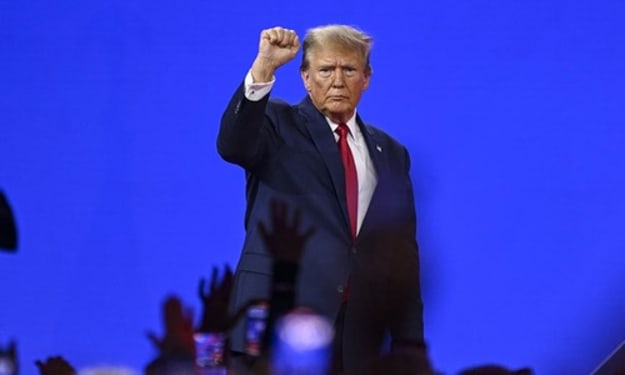
Trump Marks His First 100 Days in Office in Campaign Mode, Focused on Grudges and Grievances
As Donald Trump marked his first 100 days in office, it was clear that he had little interest in following the usual traditions associated with the presidency. Trump remained firmly in campaign mode, continuing to focus on the grievances, grudges, and combative style that had defined his political rise rather than celebrating the milestone by highlighting legislative accomplishments or laying out a clear vision for the future. Rather than hosting a formal event at the White House, Trump chose to return to the rally stage, holding a campaign-style event in Harrisburg, Pennsylvania — a crucial state in his 2016 election victory. Before a crowd of thousands of loyal supporters, he rehashed many of the same themes that propelled him to the White House: attacking the news media, blasting political opponents, and portraying himself as a fighter for the “forgotten men and women” of America.
By S M SAMITH9 months ago in Journal
CANADA ELECTION 2025
**Canada Election 2025: Liberal Party Wins Federal Election Under Mark Carney** In a dramatic and closely watched election, the Liberal Party of Canada has secured victory in the 2025 federal election, marking a significant political comeback under the leadership of former Bank of Canada and Bank of England governor Mark Carney. The party did not win a clear majority, but it did win the most seats and will continue to hold power for the fourth time in a row. ### Liberal Victory and Seat Distribution According to the latest results, the Liberal Party won **168 seats** in the House of Commons, falling just four seats short of the **172 required for a majority**. The Liberals are now in a strong position to form a minority government with the support of smaller parties like the Bloc Québécois or the New Democratic Party (NDP) in order to pass legislation. Mark Carney, who succeeded Justin Trudeau as party leader in 2024, has been credited with reviving the Liberal brand, focusing his campaign on economic recovery, social equity, climate action, and a firm stance on foreign policy—especially concerning recent trade tensions with the United States. ### A Campaign Shaped by International Tensions One of the defining features of this election was the surge in nationalist sentiment triggered by increasing friction with the United States. President Donald Trump’s return to power in 2024 brought with it a wave of aggressive protectionist policies, including tariffs on key Canadian exports such as aluminum, lumber, and dairy products. Trump also made inflammatory remarks suggesting territorial ambitions over Canadian Arctic territories, further alarming Canadians. Carney capitalized on this sentiment, presenting himself as a steady, experienced figure who could stand up to American pressure and protect Canada’s sovereignty. His background in international finance and central banking gave him credibility, and he used it to craft a campaign narrative that emphasized stability, competence, and national pride. ### Conservative Setback and Leadership Loss In contrast, the Conservative Party, led by **Pierre Poilievre**, failed to capitalize on discontent over inflation and cost-of-living issues. The party won fewer seats than expected, and Poilievre lost his own seat in **Carleton, Ontario**, to Liberal candidate Bruce Fanjoy. His defeat marks a turning point for the Conservative Party, which will likely face internal calls for new leadership and a strategic reset. Analysts say Poilievre’s aggressive tone and anti-government messaging failed to resonate with moderate voters who were more concerned with unity and diplomacy during a time of international tension. ### NDP Collapse and Singh’s Resignation The **New Democratic Party (NDP)**, led by **Jagmeet Singh**, suffered major losses across the country. Singh, who had served as leader since 2017, announced his resignation shortly after the results were confirmed. The party’s decline has been attributed to strategic voting by progressives who rallied behind the Liberals to block a Conservative government, as well as dissatisfaction with the NDP’s messaging on economic and foreign policy issues. ### Roles of the Green Party and the Bloc Québécois The **Bloc Québécois** maintained its stronghold in Quebec, gaining a few additional seats but remaining largely regional in influence. The **Green Party** made modest gains, emphasizing climate policy and sustainability, but continues to hold only a small presence in Parliament. ### International Reactions and Future Implications World leaders quickly responded to the news of Carney’s victory. French President Emmanuel Macron, UK Prime Minister Keir Starmer, and Ukrainian President Volodymyr Zelenskyy were among the first to congratulate Carney, expressing confidence in continued cooperation with Canada on global challenges such as climate change, economic development, and democratic governance. Carney, in his victory speech, struck a defiant yet hopeful tone: “Canada has spoken clearly. Progress, fairness, and sovereignty are our priorities. We will not be intimidated by threats or tariffs. We will move forward with confidence.” The Liberal leader emphasized unity, vowing to work with all parties to serve the national interest. He also reiterated key promises: a national housing strategy, further expansion of green energy investments, healthcare reforms, and bolstering Canada’s international standing. ### Next Steps The days ahead will see the formation of a new cabinet, and potentially coalition or confidence-and-supply negotiations with other parties to secure legislative support. Political observers suggest the Liberals may seek a formal or informal alliance with the NDP or Bloc to maintain stability in Parliament. Mark Carney’s success in this election may reshape Canadian politics for years to come. He takes office at a time of global uncertainty and high domestic expectations because of his technocratic background and firm public image.
By Siam Talukder 9 months ago in Journal
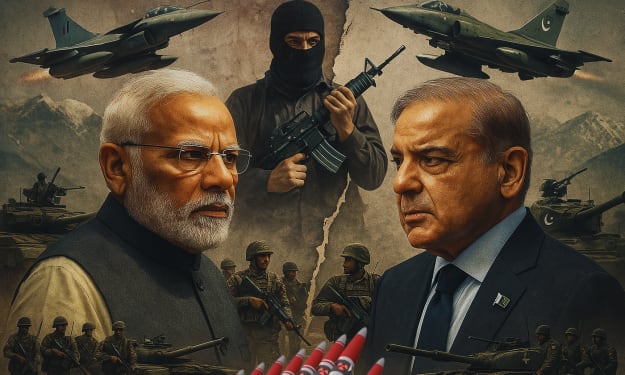
Did Pakistan Drop The Ball During a Possible War Situation?
In recent days, the relations between India and Pakistan have soured even more than in the past few years, following the Pahalgam terror attack, where 28 unarmed Indian civilians were massacred by terrorists in Kashmir, India, allegedly backed by Pakistan.
By Deepen Hiranwar9 months ago in Journal
Canadians Go to the Ballot in Election Shaken by Trump’s Shadow.
As Canadians head to the polls in a high-stakes federal election, the shadow of Donald Trump looms large, as his recent threats to Canada's sovereignty and the growing trade war with the U.S. stir deep fears across the nation.
By Syed Sarafat9 months ago in Journal
Clash between ISRAEL and Beirut
Regional Tension Escalation Introduction On [insert date], Israel conducted a targeted air strike in Beirut, Lebanon, marking a significant escalation in regional tensions. The attack reportedly hit a high-profile target linked to Hezbollah, a Iran-backed militant group that has been engaged in cross-border clashes with Israel since the outbreak of the Israel-Hamas war in October 2023. Israel defends its actions as necessary for national security, despite condemnation from Lebanon and other Arab nations for the strike, which has raised fears of a larger regional conflict. This article examines the details of the attack, the regional implications, the reactions from key stakeholders, and the potential for further escalation. Details of the Air Strike According to Lebanese security sources and Israeli military statements, the strike targeted a building in a southern suburb of Beirut, a known stronghold of Hezbollah. At least [X] people are said to have been killed in the attack, including a senior Hezbollah commander who was planning attacks on Israel. Target: The strike focused on a high-ranking Hezbollah official, similar to previous Israeli operations aimed at disrupting the group’s military capabilities. Method: Precision-guided missiles were reportedly used to minimize collateral damage, though civilian areas were still affected. Hezbollah’s Response: The group vowed retaliation, warning of "severe consequences" for Israel’s aggression. This attack follows months of escalating exchanges between Israel and Hezbollah along the Lebanon-Israel border, where near-daily rocket and drone attacks have displaced tens of thousands on both sides. Regional and International Reactions The Lebanese government The Lebanese government condemned the strike as a "blatant violation of sovereignty" and called for an emergency United Nations Security Council meeting. Prime Minister [Name] warned that such actions risk dragging Lebanon into a full-scale war. Hezbollah’s Stance Hezbollah leader Hassan Nasrallah has previously warned that any assassination of its leaders on Lebanese soil would trigger a massive response. The group has a vast arsenal of rockets and drones, posing a direct threat to Israeli cities. Israel’s Justification An "imminent threat" posed by Hezbollah's military activities, according to Israeli officials, prompted the operation. Israel would "not allow terrorist groups to operate freely along its borders," according to Defense Minister Yoav Gallant. International Responses United States: The Biden administration expressed concern over the escalation but reiterated support for Israel’s right to self-defense. Iran: Hezbollah’s main backer condemned the attack and warned of repercussions. United Nations: The UN called for restraint from all parties to avoid further destabilization. The Conflict Between Israel and Hezbollah The latest strike is part of a long-standing conflict between Israel and Hezbollah, which includes: 2006 Lebanon War: A 34-day war triggered by Hezbollah’s kidnapping of Israeli soldiers, resulting in heavy casualties on both sides. Ongoing Skirmishes: Since October 2023, Hezbollah has launched attacks in solidarity with Hamas, prompting Israeli counterstrikes. Assassinations: Israel has a history of targeting Hezbollah leaders, including the 2008 killing of Imad Mughniyeh and the 2020 death of a Hezbollah operative in Damascus. Risk of Wider War The Beirut strike increases the likelihood of a full-scale Israel-Hezbollah war, which could draw in Iran and other regional actors. Key risks include: Hezbollah’s Rocket Arsenal: The group possesses an estimated 150,000 rockets capable of hitting deep into Israel. Iran’s Involvement: Tehran may escalate support, including weapons transfers or direct intervention. Impact on the Gaza War: An additional front in Lebanon may put Israeli military resources under strain. Civilian Displacement: Further clashes could force more Lebanese and Israelis to flee border areas. Conclusion Israel’s air strike on Beirut marks a dangerous escalation in an already volatile region. Hezbollah and Lebanon view the attack as an act of aggression that calls for retaliation, while Israel portrays it as a necessary defensive move. The international community faces urgent calls to mediate and prevent a wider war that could destabilize the Middle East further. As tensions remain high, the coming days will be critical in determining whether diplomacy can prevail or if the region is headed toward another devastating conflict.
By Abdullah Al Sadik9 months ago in Journal