
Did Pakistan Drop The Ball During a Possible War Situation?
Following the Pahalgam terror attack in India. India suspended the Indus water treaty, in response to which, Pakistan haphazardly suspended the Simla Agreement

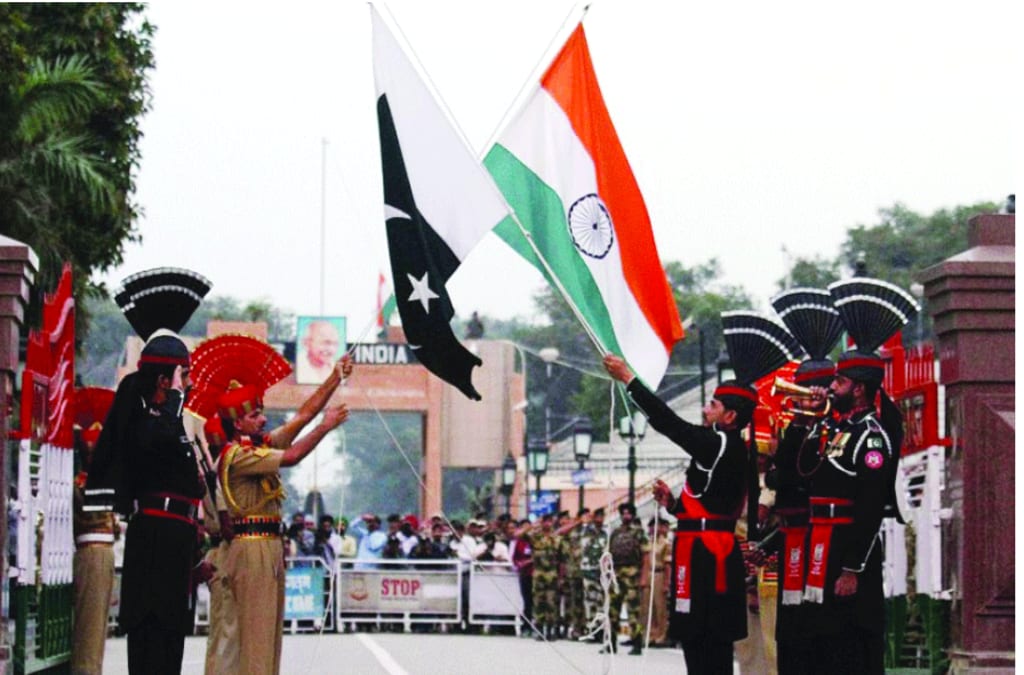
In recent days, the relations between India and Pakistan have soured even more than in the past few years, following the Pahalgam terror attack, where 28 unarmed Indian civilians were massacred by terrorists in Kashmir, India, allegedly backed by Pakistan.
As an initial step, India suspended the Indus water treaty, in response to which, Pakistan haphazardly suspended the Simla Agreement of 1972. Which would mean that the critical framework from which bilateral relations and the validity of the Line of Control (LoC) in Jammu and Kashmir have existed for more than half a century has now ceased to function. Although Pakistan has breached the Shimla Agreement multiple times in the past.
This perhaps marks the turning point. Experts hint that generally discarding this bilateral commitment has inadvertently opened broader avenues for diplomatic and military action by New Delhi.
What is the Shimla Agreement?
A deal made in July 1972, just after the Indo-Pak war of 1971, where India had 93,000 Pakistani soldiers surrender to Indian forces and were held as prisoners of war, India had also captured over 13,000 sq. kms of Pakistan’s land in Sindh province. The agreement aimed at opening possible avenues of peaceful bilateral relations, which are to prevent and define a ceasefire by bringing it to the designation of the Line of Control (LoC).
The crucial aspects about it include:
Settle differences peacefully and amicably of differences through bilateral dialogue.
Loyalty to the LoC and no unilateral changes.
General commitment to refrain from the use or threat of force.
Consequences of Suspending the Agreement:
With Pakistan's formal suspension of the Simla Agreement, the restrictions of bilateralism and respect for the LoC are lifted. Therefore:
- India is no longer obliged to restrict its actions to bilateral frameworks and may seek intervention by larger international frameworks.
- Military responses across the LoC are now justifiable under self-defense since they were previously seen as violations of the treaty.
- This further erodes the confidence that Pakistan would act in compliance with international or bilateral agreements.
- There is no more restriction on the LoC can now be changed unilaterally, giving India an upper hand, considering the situation and its military might.
Although Pakistan has publicly suspended the Shimla agreement now, but has violated it on multiple occasions in the past.
Historical Violations by Pakistan:
While Pakistan accuses India now of having moved away from bilateralism, its record of adherence to the Simla Agreement and linked accords is rather mixed. A few striking incidents in this regard are:
Intrusion in Siachen Glacier (1984):
Despite the Simla Agreement's condition to respect the LoC, Pakistan tried to occupy the Siachen Glacier, which is north of the demarcated LoC. Thus, India had to move Operation Meghdoot and capture important points on South Siachen. Since then, India has controlled it, and Siachen is the focal point of military deployment.
Kargil Conflict (1999):
Another one of the most brazen violations was Pakistani Army regulars posing as militants, infiltrating Indian positions in the Kargil sector of Jammu and Kashmir. This was in blatant violation of both the Simla Agreement and the Lahore Declaration of 1999 (rather, a separate peace initiative signed just a few months after the conflict). Trust would have taken great hits in the Kargil War, and perceptions of Pakistan's willingness to disregard signed agreements were reinforced.
Cross-Border Terrorism:
For a long time, India and the international community have charged Pakistan with directly or indirectly harboring terror organizations like Jaish-e-Mohammed and Lashkar-e-Taiba that cross over into Jammu and Kashmir. The Simla Agreement was to provide peaceful relations and renunciation of force, but what has usually been described as indirect violations of the spirit of the agreement included actions like this-often aimed at civilians and security forces.
Cease-fire violations:
These frequent exchanges of fire, most targeting Indian military posts and civilian regions, constitute direct contraventions of the commitment to maintain. With the passing years, Pakistan has repeatedly been seen along the Line of Control violating the cease-fire.
These are just a few examples, as the list is long.
Conclusion
By suspending the Simla Agreement, albeit with frequent violations on Pakistan's part, Pakistan renders itself a serious candidate for elevating tensions in the region and compromising these very diplomatic norms that are meant to protect its own sovereignty. In a nutshell, Pakistan has weaponized India by taking this step. In the absence of these restrictions, India could be rendered more aggressive and may go full throttle, considering the Indian Prime Minister's stern warning to “punish beyond imagination” anyone directly or indirectly involved in the Pehalgam attack. So, suspending the Indus water treaty, was it a strategic move by India to provoke Pakistan to take this self-flagellating decision?
About the Creator
Deepen Hiranwar
My life journey probably drove me into a strong passion for journalism, mainly investigations. A passion for human rights, overlooked/ whitewashed stories, geopolitics, and organized crime drive me—an avid animal lover.
Keep reading
More stories from Deepen Hiranwar and writers in Journal and other communities.
Unveiling “Pig Butchering” Scam- A Billion Dollar Industry
Criminals find advanced and inventive ways to deceive unsuspecting victims. Similar to a well-known technique of “Phishing” in which scammers use malicious links through email, text message, or social media platforms by posing as a trustworthy source with enticing requests, luring victims to reveal personal or confidential information, which the scammer then uses illicitly. A tactic is similar to a fisherman using bait to catch a fish, hence known as phishing!
By Deepen Hiranwarabout a year ago in Criminal
Smart phones, Humans and Aliens.
WARNING. I will be tapping into one of your favorite creative tensions: The absurdity of humans worshipping their glowing rectangles as if they were tiny oracles. There’s something deliciously poetic about that contradiction, and it lends itself beautifully to an instructive proviso.
By Novel Allen6 days ago in Poets


Comments
There are no comments for this story
Be the first to respond and start the conversation.