politics
Political figures, histories, and current events in the whole scope of modern and past politics. Work place politics.
How Polar Geopolitics Are Creeping Into the Arctic Winter Games. AI-Generated.
For decades, the Arctic Winter Games has symbolized cooperation among northern communities scattered across some of the world’s most remote regions. Athletes from Alaska, northern Canada, Greenland, and Nordic territories have gathered to celebrate sport, culture, and shared Arctic identity. Yet in recent years, the quiet camaraderie that once defined the games has increasingly been overshadowed by geopolitical tensions shaping the polar region. The Arctic is no longer viewed merely as a frozen frontier. Instead, it has become a strategic arena where global powers compete for influence, resources, and security advantages. As this competition intensifies, the ripple effects are beginning to reach even small regional sporting events. A Sporting Tradition Rooted in Cooperation First held in 1970, the Arctic Winter Games was designed to bring together athletes from northern regions that often felt disconnected from national sporting systems. Participants compete in sports such as cross-country skiing, biathlon, and hockey, alongside unique Indigenous events like the one-foot high kick and knuckle hop. The games emphasize friendship, youth development, and cultural exchange rather than fierce national rivalry. Many delegations represent subnational regions—such as Alaska or Yukon—rather than entire countries. This structure historically insulated the competition from the political tensions that sometimes affect larger international sporting events. But as global interest in the Arctic grows, maintaining that neutrality is becoming more difficult. The Arctic’s Rising Strategic Importance In recent decades, melting sea ice has transformed the Arctic from an isolated wilderness into a region of economic and strategic potential. New shipping routes, expanded fishing zones, and access to untapped oil and gas reserves have drawn attention from major powers. The eight countries represented in the Arctic Council—including the United States, Canada, Russia, and the Nordic nations—have long cooperated on environmental protection and scientific research. However, geopolitical tensions have increasingly strained this collaboration. The most dramatic turning point came after the Russian invasion of Ukraine in 2022. In response, several Western Arctic states suspended many forms of cooperation with Russia. While the Arctic Winter Games are not directly governed by the council, the broader political rift has influenced regional exchanges across the north. Russia’s Absence and Its Effects Historically, athletes from Russia’s Arctic regions occasionally participated in northern sporting exchanges, though they were never a consistent presence at the Arctic Winter Games. The deterioration of relations between Russia and Western countries has further reduced opportunities for such interactions. This absence has symbolic implications. The Arctic spans vast territory across Russia, and excluding athletes from these areas limits the sense of pan-Arctic unity that the games once aimed to foster. Officials involved in organizing the event often emphasize that sport should remain separate from political disputes. Yet in practice, travel restrictions, sanctions, and diplomatic tensions make participation increasingly complicated. Security and Infrastructure Concerns Geopolitics is also affecting how northern governments think about infrastructure in the Arctic. Investments in transportation, telecommunications, and military presence have increased in several regions, particularly in areas close to strategic waterways. For communities that host the Arctic Winter Games, these developments can be both beneficial and controversial. Improved infrastructure may make it easier to stage international sporting events, but it also reflects growing military and strategic competition in the region. For example, Arctic airports and ports used by civilian travelers—including athletes and spectators—are sometimes located near facilities with strategic importance. As governments strengthen their Arctic presence, the overlap between civilian life and geopolitical interests becomes more visible. Indigenous Perspectives One of the defining features of the Arctic Winter Games is its celebration of Indigenous culture. Many participants belong to Indigenous communities that span national borders across the Arctic. For these communities, geopolitical tensions can feel distant from everyday life yet still influence regional cooperation. Cross-border travel, cultural exchanges, and joint initiatives may become more difficult when relations between national governments deteriorate. Indigenous leaders often emphasize that the Arctic should remain a zone of peace and collaboration. They view cultural and sporting gatherings as important tools for maintaining unity among northern peoples despite the political divisions that exist at the state level. The Symbolic Power of Sport Throughout modern history, sports have often reflected global politics. Events such as the Olympic Games have experienced boycotts, diplomatic protests, and ideological rivalries during periods of international tension. The Arctic Winter Games was never intended to become part of that pattern. Its founders envisioned a friendly competition where northern youth could meet peers from similar environments and cultures. Yet even regional sporting events cannot remain entirely separate from geopolitical realities. As the Arctic becomes more central to global strategy, almost every form of cross-border cooperation—whether scientific, economic, or cultural—feels the impact. Preserving the Spirit of the Games Despite these challenges, organizers remain determined to preserve the cooperative spirit that has defined the event for more than half a century. Many believe that maintaining dialogue through cultural and sporting exchanges is more important than ever. Youth athletes who travel to the Arctic Winter Games often experience their first opportunity to meet people from other Arctic regions. These connections help build a shared identity that transcends national boundaries. In a time when the Arctic is attracting increasing geopolitical attention, that sense of unity may prove invaluable. While global politics continue to reshape the polar region, the games stand as a reminder that the Arctic is not only a strategic frontier—it is also home to communities determined to celebrate cooperation, culture, and friendship on the ice and snow.
By Fiaz Ahmed about 7 hours ago in Journal
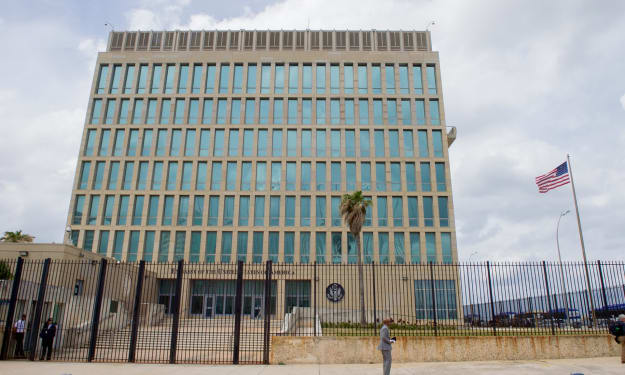
Havana Syndrome Unmasked: The Black Market Russian Microwave Weapon Captured In a DHS Sting
For nearly a decade, American diplomats, intelligence officers, and military personnel have reported a terrifying experience: an invisible attack that leaves them with debilitating brain injuries, chronic pain, and life-altering neurological damage.
By James Marineroabout 13 hours ago in Journal
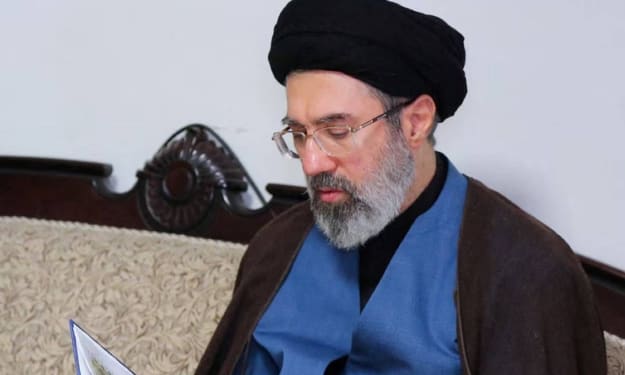
The Shadow Successor: The Rise of Mojtaba Khamenei as Iran’s New Supreme Leader
The political landscape of the Middle East shifted tectonically this Sunday as Iran’s Assembly of Experts officially announced the election of Mojtaba Khamenei as the country’s third Supreme Leader. This historic transition follows the sudden death of his father, Ali Khamenei, who was killed during the opening stages of a major military escalation involving American and Israeli strikes on Tehran on February 28th. For decades, the question of who would sit atop the pyramid of the Islamic Republic’s power remained a subject of intense speculation. Now, the ascension of the 56-year-old Mojtaba marks the end of an era and the beginning of a highly controversial hereditary transition in a system that once prided itself on its revolutionary departure from monarchy.
By Alex Sterling a day ago in Journal
Ukraine's P1SUN Drone Interceptor Sold to the US for Gulf Defence
Oh, the irony of it all. The sale of Ukrainian P1SUN interceptor drones to the US is a hugely significant event. This agreement, which involves the delivery of an initial 1,000 units to the Middle East, reflects the urgent requirement for cost-effective solutions to counter prolific loitering munitions such as the Iranian-designed Shahed series.
By James Marinero2 days ago in Journal
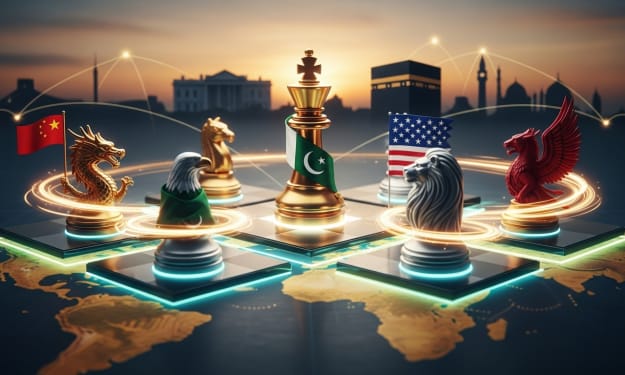
Pakistan's Geopolitical Chess Master
Pakistan: The Chess King Who Keeps the Whole World Guessing ♟️ On the world's most complex geopolitical chessboard, Pakistan is currently making moves so unconventional that even grandmasters are scratching their heads. General Asim Munir sits like a king on the throne, yet his strategies are keeping ministers, ambassadors, generals, and diplomats alike in a state of delightful confusion. In a game where every nation plays for survival, Pakistan isn't just surviving—it's orchestrating.
By Literary fusion3 days ago in Journal
US Submarine Torpedos and Sinks Iranian Frigate: Periscope Footage
The sinking of an Iranian naval vessel by a US submarine is a step change in contemporary maritime engagement and increases the already huge stakes in the Iran-US conflict. This event involved the deployment of advanced underwater ordnance against a surface combatant.
By James Marinero4 days ago in Journal
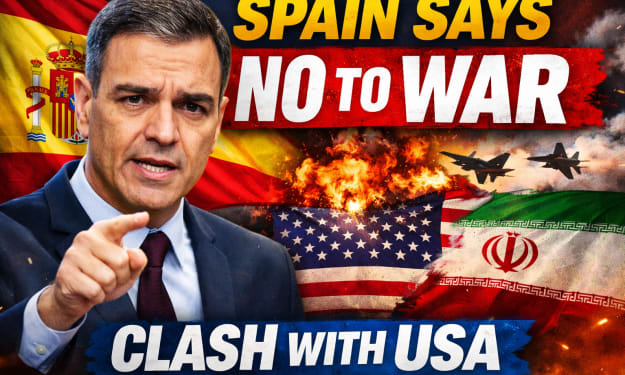
Spain Defies Washington: Pedro Sánchez Rejects U.S. Pressure Over Iran Strikes
In a moment that is rapidly becoming one of the most talked-about geopolitical developments of the year, Pedro Sánchez, Prime Minister of Spain, delivered a firm and carefully worded message to the United States on March 4: Spain will not support military escalation against Iran.
By Waqar Khan5 days ago in Journal
GOP Senator Helps Police Remove Anti-War Protester From Capitol Hill Hearing
A tense moment unfolded on Capitol Hill when Tim Sheehy, a Republican senator from Montana, joined law enforcement officers to physically remove an anti-war protester who interrupted a congressional hearing.
By Omasanjuwa Ogharandukun5 days ago in Journal