
William Shakespeare: The Bard’s Life and Poetic Legacy
A Journey Through the Words and World of England’s Greatest Playwright


William Shakespeare, often hailed as the greatest playwright and poet in the English language, was born in April 1564 in Stratford-upon-Avon, England. His life, though partially shrouded in mystery due to limited historical records, is a tale of creativity, ambition, and timeless artistry. Shakespeare’s poetry, alongside his plays, has left an indelible mark on literature, influencing generations with its profound themes, intricate language, and universal truths. This article explores his life, highlights key points of his career, and weaves a narrative inspired by his poetic spirit, including some of his iconic verses.
A Life in Stratford and London
Shakespeare was the son of John Shakespeare, a glove-maker and local official, and Mary Arden, a woman from a prosperous family. Baptized on April 26, 1564, he likely attended the local grammar school, where he studied Latin, rhetoric, and classical literature—skills that would later shape his writing. At 18, he married Anne Hathaway, and they had three children: Susanna and twins Hamnet and Judith. Tragically, Hamnet died at age 11, a loss that some scholars believe influenced Shakespeare’s later works, such as Hamlet.

By the late 1580s, Shakespeare had moved to London, where he began his career as an actor and playwright. He joined the Lord Chamberlain’s Men, a leading theatrical company, and later became a shareholder in the Globe Theatre. His plays, ranging from comedies like A Midsummer Night’s Dream to tragedies like Romeo and Juliet and histories like Henry V, captivated audiences. His poetry, particularly his sonnets, showcased his mastery of language and emotion. Shakespeare returned to Stratford in his later years, retiring around 1613, and died on April 23, 1616.
Key Points in Shakespeare’s Career
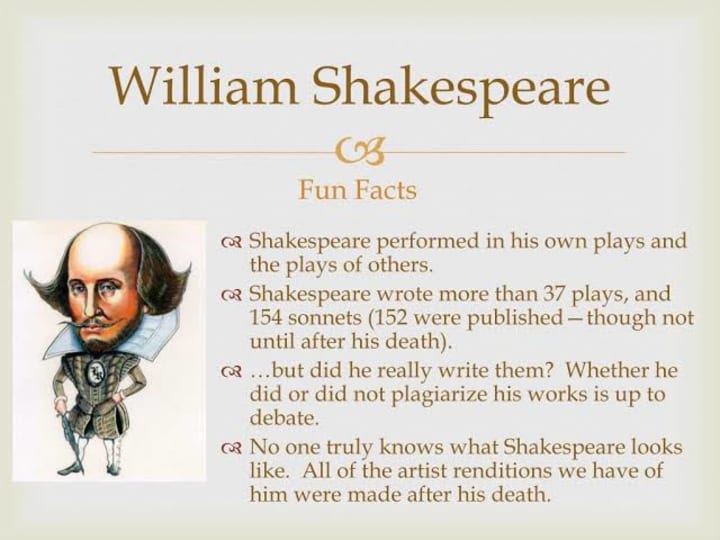
Prolific Output: Shakespeare wrote 37 plays and 154 sonnets, covering themes of love, power, betrayal, and human nature.
Sonnets’ Innovation: His sonnets, published in 1609, broke conventions with their introspective tone and complex exploration of love, time, and mortality.
The Globe Theatre: Built in 1599, it was a hub for his plays, drawing diverse audiences from all social classes.
Cultural Impact: His works shaped the English language, introducing words like “lonely” and phrases like “all’s well that ends well.”
Universal Appeal: Translated globally, his stories resonate across cultures, from Japanese Kabuki adaptations to modern film retellings.
A Story Inspired by the Bard
In the misty streets of Elizabethan London, a young Will Shakespeare wandered, quill in hand, heart brimming with dreams. The city buzzed with merchants, actors, and rogues, yet Will sought something deeper—a way to capture the soul’s fleeting joys and sorrows. One evening, beneath the stars, he sat by the Thames, scribbling what would become Sonnet 18:
Shall I compare thee to a summer’s day?
Thou art more lovely and more temperate:
Rough winds do shake the darling buds of May,
And summer’s lease hath all too short a date...
These lines, born from a moment of quiet awe, spoke of love’s endurance against time’s cruel hand. Will imagined a world where his words might outlive him, touching hearts centuries hence. As he joined the players at the Globe, his verses wove magic, turning tavern tales into poetry that danced on tongues. His life was no idyll—grief for his son, the pressures of patronage, and the plague’s shadow loomed—but his pen transformed pain into art.
Shakespeare’s Poetic Legacy
Shakespeare’s sonnets remain a pinnacle of English poetry. Sonnet 130, with its witty rejection of idealized beauty, showcases his playful yet profound style:
My mistress’ eyes are nothing like the sun;
Coral is far more red than her lips’ red;
If snow be white, why then her breasts are dun;
If hairs be wires, black wires grow on her head...
This sonnet subverts Petrarchan clichés, celebrating authentic love over exaggerated praise. His poetry, whether in sonnets or plays, probes the human condition—jealousy in Othello, ambition in Macbeth, or longing in As You Like It. His iambic pentameter and vivid imagery create a rhythm that feels both timeless and alive.

Shakespeare’s work endures because it speaks to universal truths. His ability to blend humor, tragedy, and beauty ensures his relevance, whether in a classroom or a theater. As he wrote in Sonnet 55:
Not marble, nor the gilded monuments
Of princes, shall outlive this powerful rhyme...
Indeed, his words have outlived empires, proving the power of poetry to transcend time. Shakespeare’s life, though rooted in a small English town, became a beacon for storytellers worldwide, his legacy a testament to the enduring magic of words.
About the Creator
Am@n Khan
I'm educational storyteller passionate about turning knowledge into engaging narratives.
I write about topics like science, history and life skills.
Contact
WhatsApp : +923336369634
A 4,400-Year-Old Priestess Tomb Discovered in Egypt
Archaeologists in Egypt have uncovered the remarkable tomb of a priestess that dates back approximately 4,400 years, offering new insight into religion, culture, and daily life during the height of the ancient Egyptian civilization. The discovery was made near the famous pyramids on the Giza Plateau, one of the most important archaeological areas in the world. Experts believe the tomb belonged to a high-ranking priestess named Hetpet, who lived during Egypt’s Fifth Dynasty, around 2400 BC. 
By Irshad Abbasi 7 days ago in History


Comments (1)
Shakespeare's works are timeless. Studied his plays in school, still love 'em. His sonnets were innovative. They really made me think about love differently.