
Eid al-Adha and the Story of Prophet Ibrahim AS
Historical Context of the Festival


Eid al-Adha, also known as the Festival of Sacrifice, is one of the most significant Islamic holidays celebrated by Muslims worldwide. It occurs on the 10th day of Dhul-Hijjah, the 12th month of the Islamic lunar calendar, following the completion of the Hajj pilgrimage to Mecca. This festival commemorates the profound faith and obedience of Prophet Ibrahim (Abraham, peace be upon him) to Allah’s command, as well as the mercy and provision of Allah. It is a time of spiritual reflection, gratitude, charity, and unity, where Muslims come together to honor their faith through prayer, sacrifice, and acts of generosity.
The Story of Prophet Ibrahim
The story of Prophet Ibrahim is central to the essence of Eid al-Adha. According to Islamic tradition, Ibrahim was a devoted servant of Allah, known for his unwavering faith and submission. The Qur’an narrates that Allah tested Ibrahim’s devotion by commanding him in a dream to sacrifice his beloved son, Ismail (Ishmael, peace be upon them). This was no ordinary test, as Ibrahim deeply loved his son, who was born to him in his old age after years of longing for a child.
Ibrahim, trusting in Allah’s wisdom, shared the divine command with Ismail. Demonstrating remarkable faith, Ismail willingly agreed to submit to Allah’s will, saying, “O my father, do as you are commanded. You will find me, if Allah wills, among the steadfast” (Qur’an 37:102). As Ibrahim prepared to carry out the sacrifice, Allah intervened, replacing Ismail with a ram to be sacrificed instead. This act symbolized Allah’s mercy and confirmed that the true essence of the test was not the sacrifice itself but the willingness to obey and trust in Allah completely.
The story highlights the virtues of faith, patience, and submission to Allah’s will. It also underscores the importance of tawakkul (trust in Allah) and the belief that Allah’s plans are always for the greater good, even when they are difficult to understand. This narrative is not only significant in Islam but also resonates in Judaism and Christianity, where Ibrahim is revered as a patriarch and exemplar of faith.

Significance of Eid al-Adha
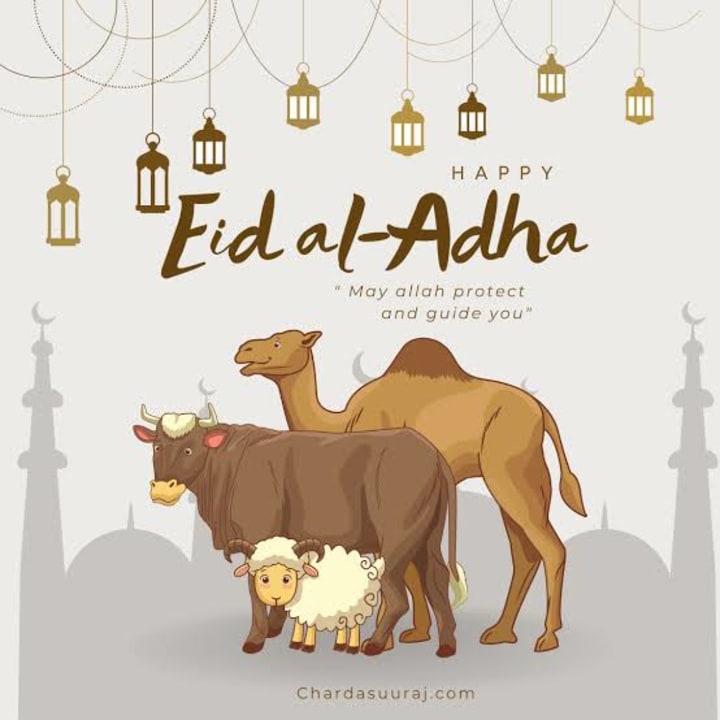
Eid al-Adha is a time to reflect on the lessons from Ibrahim’s story. Muslims perform the ritual of Qurbani, the sacrifice of an animal (typically a sheep, goat, cow, or camel), symbolizing Ibrahim’s willingness to sacrifice what was dear to him. The meat is divided into three parts: one for the family, one for relatives and friends, and one for the poor, emphasizing charity and community.
The festival begins with a special congregational prayer, the Eid Salah, performed in mosques or open spaces. Muslims dress in their finest clothes, exchange greetings of “Eid Mubarak,” and visit family and friends to strengthen bonds. The day is marked by gratitude for Allah’s blessings and a commitment to helping those in need.
Key Points About Eid al-Adha
Spiritual Significance: Eid al-Adha reminds Muslims to prioritize faith and submission to Allah, following the example of Prophet Ibrahim and Ismail.
Qurbani (Sacrifice): The act of animal sacrifice symbolizes devotion and gratitude, with the meat distributed to foster generosity and compassion.
Hajj Connection: The festival coincides with the culmination of the Hajj pilgrimage, one of the Five Pillars of Islam, uniting Muslims globally.
Charity and Community: Sharing food and resources with the less fortunate reflects Islamic values of empathy and social justice.
Global Celebration: Muslims worldwide celebrate Eid al-Adha, with local traditions adding cultural diversity to the universal rituals.
Conclusion
Eid al-Adha is more than a religious observance; it is a celebration of faith, sacrifice, and compassion rooted in the timeless story of Prophet Ibrahim. His unwavering trust in Allah and his son Ismail’s submission serve as enduring lessons for Muslims to live with devotion, patience, and generosity. As families gather, share meals, and extend help to the needy, Eid al-Adha reinforces the values of unity and gratitude, inspiring Muslims to strengthen their faith and contribute to a just and compassionate world.
About the Creator
Am@n Khan
I'm educational storyteller passionate about turning knowledge into engaging narratives.
I write about topics like science, history and life skills.
Contact
WhatsApp : +923336369634
Who’s Secretly Behind Israel’s Power?
On 27 September 2024, in New York, during the United Nations General Assembly, when it was the turn of Israeli Prime Minister Benjamin Netanyahu to give his speech, more than half of the diplomats protested by turning their backs on him and walking out of the assembly. The message was very clear: they were protesting Israel’s bombing in Gaza and Lebanon.
By Imran Ali Shah7 days ago in History



Comments
There are no comments for this story
Be the first to respond and start the conversation.