
Why Was the Ancient Greek City of Hadrianopolis Suddenly Abandoned?
Ancient Greek City Suddenly Abandoned

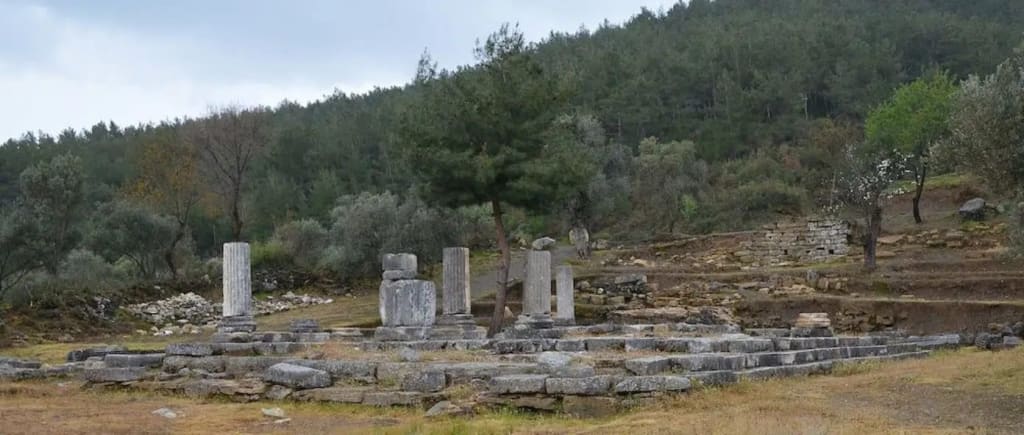
Why Was the Ancient Greek City of Hadrianopolis Suddenly Abandoned?
The ancient Greek city of Hadrianopolis located in the Eskipazar district of Karabuk Turkey has long been a site of fascination for archaeologists and historians. Known for its stunning mosaics and historical significance the city was a prominent center in the western Black Sea region during antiquity. However its sudden and complete abandonment in the 7th century AD has remained a mystery for centuries. Recent excavations led by Ibrahim Sahin the culture and tourism director of Karabuk and Ersin Celikbas an archaeology professor at Karabuk University are shedding new light on this enigmatic event offering clues that may finally explain why the city was deserted.
Hadrianopolis named after the Roman Emperor Hadrian was a thriving settlement during its heyday. It served as an important eparchy administrative district in the ancient world and was renowned for its cultural and religious significance. The city’s mosaics in particular have drawn considerable attention for their artistic and historical value. These intricate works of art dating back to the 5th century AD depict a variety of figures including animals mythological scenes and religious symbols providing a glimpse into the lives and beliefs of its inhabitants. Among the most notable discoveries is a church adorned with mosaics featuring a bull a lion and two peacocks. According to Celikbas these figures are among the most complete examples of such mosaics found in Anatolia suggesting that the church may have been dedicated to Roman emperors.
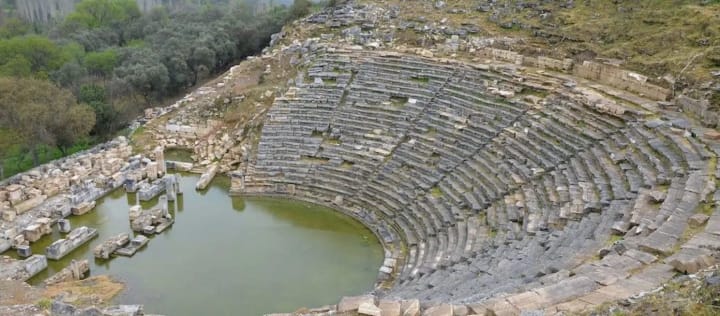
Despite its prosperity Hadrianopolis was abruptly abandoned in the 7th century AD leaving behind a city frozen in time. The excavations have revealed no evidence of gradual decline or prolonged conflict. Instead the findings point to a sudden evacuation with no signs of human activity after this period. There was not even a single person left in the ancient city Celikbas told Hurriyet Daily News. This has led researchers to consider several possible explanations for the city’s abandonment including natural disasters invasions or catastrophic events such as fires or earthquakes.
One of the leading theories is that an earthquake may have devastated the region forcing the inhabitants to flee. The Black Sea region is known for its seismic activity and a powerful earthquake could have caused significant damage to the city’s infrastructure making it uninhabitable. Alternatively the city may have been invaded by external forces such as the Persians or Arab armies which were active in the region during the 7th century. Such an invasion could have led to the destruction of the city and the displacement of its population. Another possibility is that a large scale fire broke out either accidentally or as a result of conflict rendering the city unsafe for its residents.
The ongoing excavations at Hadrianopolis are focused on uncovering more evidence to support these theories. The discovery of the church and its mosaics has already provided valuable insights into the city’s religious and cultural practices but researchers are hopeful that further findings will reveal more about the circumstances surrounding its abandonment. For instance the presence of unburied human remains or signs of structural damage could indicate a sudden disaster while evidence of weaponry or defensive structures might suggest an invasion.
In addition to solving the mystery of its abandonment the excavations at Hadrianopolis are also highlighting the city’s importance as a cultural and historical site. Celikbas describes it as a mosaic haven emphasizing the exceptional quality and preservation of its mosaics. These artworks not only showcase the artistic achievements of the period but also provide valuable information about the city’s connections to the broader Roman and Byzantine worlds. The church in particular is believed to be one of the oldest in Anatolia underscoring the city’s role as a center of early Christian worship.
The significance of Hadrianopolis extends beyond its mosaics and architecture. As a major eparchy in the ancient world the city played a crucial role in the administration and governance of the region. Its sudden abandonment would have had far reaching consequences disrupting trade routes religious practices and political structures. Understanding why the city was deserted could therefore provide important insights into the broader historical and cultural changes that occurred in the region during the 7th century.
As the excavations continue researchers remain optimistic that they will soon uncover the truth behind Hadrianopolis’s mysterious abandonment. Whether the cause was an earthquake an invasion or another catastrophic event the findings will undoubtedly deepen our understanding of this ancient city and its place in history. For now Hadrianopolis stands as a testament to the enduring legacy of the ancient world its mosaics and ruins offering a tantalizing glimpse into a bygone era. The ongoing work of archaeologists like Sahin and Celikbas ensures that the story of Hadrianopolis will continue to be told piece by piece as the mysteries of the past are brought to light.
About the Creator
Adnan Rasheed
Author & Creator | Writing News , Science Fiction, and Worldwide Update| Digital Product Designer | Sharing life-changing strategies for success.
Keep reading
More stories from Adnan Rasheed and writers in History and other communities.
Historic Kama Sutra Sculptures of Khajuraho Temple India UNESCO world Heritage Site Khajuraho India.
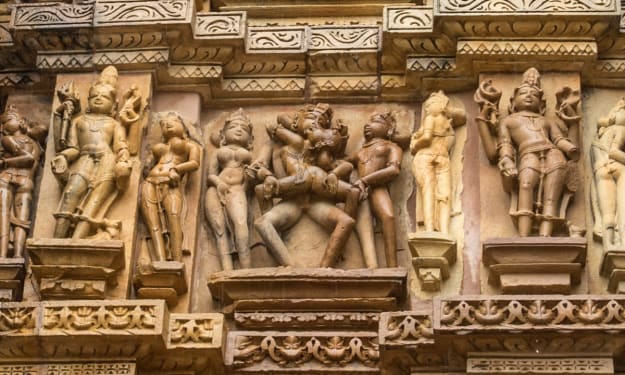
Historic Kama Sutra Sculptures of Khajuraho Temple India UNESCO world Heritage Site Khajuraho India. The Khajuraho Temple complex in India is a remarkable testament to the artistic and cultural achievements of ancient India. Recognized as a UNESCO World Heritage Site these temples are renowned for their intricate and exquisite sculptures particularly those depicting themes from the Kama Sutra. Located in the Chhatarpur district of Madhya Pradesh Khajuraho is a symbol of India's rich heritage and architectural brilliance. The temples built between 950 and 1050 CE during the Chandela dynasty were once part of a larger group of 85 temples of which only 25 survive today. These temples are divided into three groups Western Eastern and Southern and are dedicated to both Hindu and Jain traditions. The most striking feature of the Khajuraho temples is their elaborate and detailed sculptures which adorn the walls pillars and ceilings. Among these the sculptures inspired by the Kama Sutra are the most celebrated. The Kama Sutra an ancient Indian text attributed to Vatsyayana is a treatise on human relationships love and intimacy. While the text itself is often misunderstood as merely a manual on sexual positions it is, in fact, a comprehensive guide to the art of living encompassing ethics relationships and the pursuit of pleasure as one of the four goals of human life Purusharthas. The sculptures at Khajuraho beautifully capture the essence of this philosophy depicting various aspects of human life, including love romance and intimacy, in a highly artistic and sophisticated manner.
By Adnan Rasheedabout a year ago in History
A Transparent Look at Vocal Challenges and Top Stories
Almost three years ago, we shared a resource article that served as a place for people to suggest new challenge prompts. We thought it would be a good idea to refresh that thread, and take the opportunity to answer a few common questions about top stories, how challenges are judged and how submissions are reviewed.
By Vocal Curation Team4 days ago in Resources


Comments (1)
I’ll go visit Hadrianopolis some day! It seems like a cool city!