
Historic Kama Sutra Sculptures of Khajuraho Temple India UNESCO world Heritage Site Khajuraho India.
Khajuraho Temple India

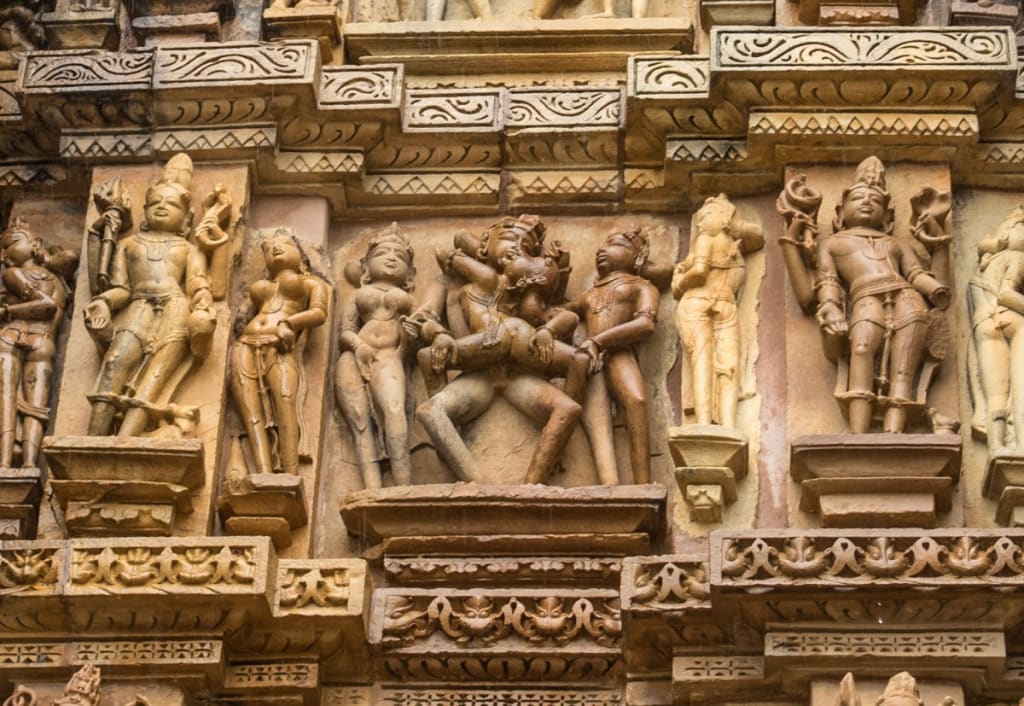
Historic Kama Sutra Sculptures of Khajuraho Temple India UNESCO world Heritage Site Khajuraho India.
The Khajuraho Temple complex in India is a remarkable testament to the artistic and cultural achievements of ancient India. Recognized as a UNESCO World Heritage Site these temples are renowned for their intricate and exquisite sculptures particularly those depicting themes from the Kama Sutra. Located in the Chhatarpur district of Madhya Pradesh Khajuraho is a symbol of India's rich heritage and architectural brilliance. The temples built between 950 and 1050 CE during the Chandela dynasty were once part of a larger group of 85 temples of which only 25 survive today. These temples are divided into three groups Western Eastern and Southern and are dedicated to both Hindu and Jain traditions. The most striking feature of the Khajuraho temples is their elaborate and detailed sculptures which adorn the walls pillars and ceilings. Among these the sculptures inspired by the Kama Sutra are the most celebrated. The Kama Sutra an ancient Indian text attributed to Vatsyayana is a treatise on human relationships love and intimacy. While the text itself is often misunderstood as merely a manual on sexual positions it is, in fact, a comprehensive guide to the art of living encompassing ethics relationships and the pursuit of pleasure as one of the four goals of human life Purusharthas. The sculptures at Khajuraho beautifully capture the essence of this philosophy depicting various aspects of human life, including love romance and intimacy, in a highly artistic and sophisticated manner.
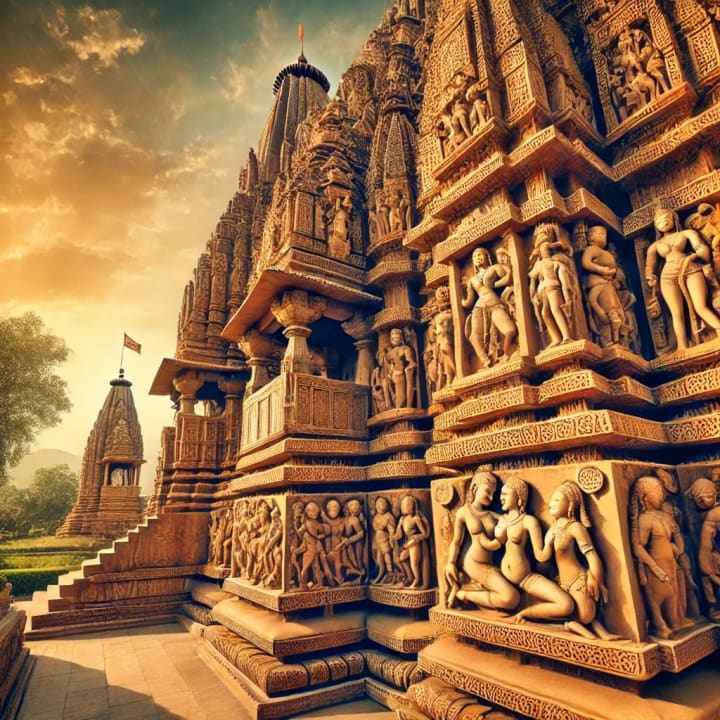
The Kama Sutra sculptures at Khajuraho are not merely erotic they are a celebration of life and human emotions. These sculptures are intricately carved and depict a wide range of human activities from everyday life to divine beings from mythical creatures to scenes of courtship and union. The artists of Khajuraho demonstrated exceptional skill in capturing the nuances of human expressions and emotions making the sculptures come alive. The erotic sculptures which constitute only a small portion of the total artwork are often found in the outer walls of the temples. This placement is believed to symbolize the idea that one must leave behind worldly desires before entering the sacred space of the temple. The temples of Khajuraho are also a masterpiece of Nagara style architecture, characterized by their towering spires shikharas intricate carvings and symmetrical layouts. Each temple is designed as a representation of the cosmos with the sanctum sanctorum garbhagriha symbolizing the womb of creation. The temples are adorned with sculptures of gods goddesses celestial beings and mythical creatures reflecting the spiritual and mythological beliefs of the time. The precision and artistry of the carvings are a testament to the advanced craftsmanship and deep spiritual understanding of the artisans.
The Chandela rulers who commissioned the construction of these temples were great patrons of art and culture. They envisioned Khajuraho as a center of learning spirituality and artistic expression. The temples served not only as places of worship but also as cultural hubs where art music and dance flourished. The sculptures at Khajuraho are a reflection of this vibrant cultural milieu capturing the essence of life in all its diversity and complexity. In 1986 the Khajuraho Group of Monuments was inscribed as a UNESCO World Heritage Site recognizing its outstanding universal value. The temples are celebrated not only for their architectural and artistic excellence but also for their historical and cultural significance. They provide a window into the life and times of medieval India offering insights into the social religious and cultural practices of the period. The Kama Sutra sculptures in particular have drawn global attention challenging conventional notions about ancient Indian society and its attitudes toward love and intimacy.
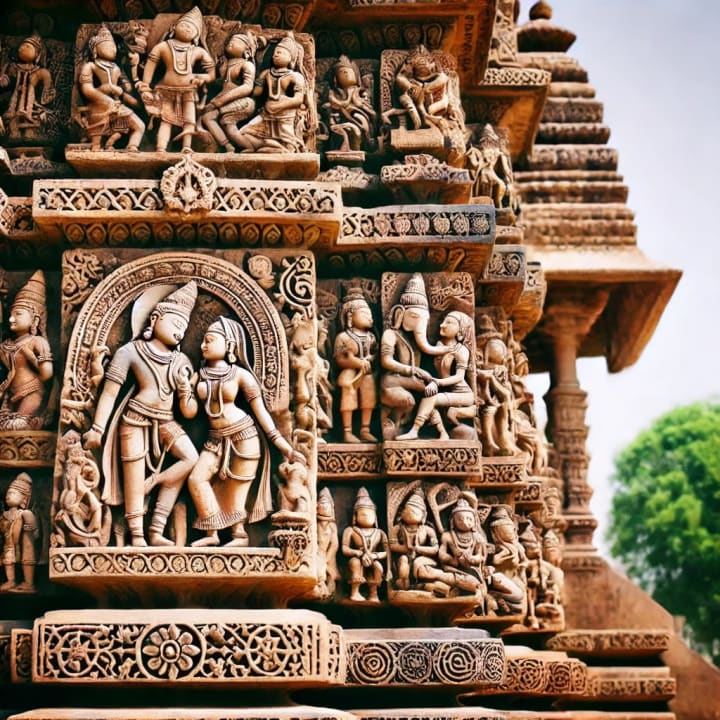
Today Khajuraho is one of India's most popular tourist destinationsbattracting visitors from around the world. The annual Khajuraho Dance Festival held against the backdrop of the temples is a major cultural event that showcases classical Indian dance forms such as Bharatanatyam Kathak and Odissi. This festival is a fitting tribute to the artistic legacy of Khajuraho bringing to life the spirit of creativity and expression that the temples embody. The Khajuraho temples stand as a timeless reminder of India's rich cultural heritage and artistic achievements. The Kama Sutra sculptures with their intricate details and profound symbolism are a celebration of life in all its dimensions. They remind us of the importance of balance and harmony in human existence as envisioned in the ancient Indian philosophy of the Purusharthas. The temples of Khajuraho are not just architectural marvels they are a testament to the enduring power of art to inspire enlighten and transcend the boundaries of time and space. Visiting Khajuraho is not just a journey through history it is an experience that touches the soul and leaves a lasting impression on the mind.
About the Creator
Adnan Rasheed
Author & Creator | Writing News , Science Fiction, and Worldwide Update| Digital Product Designer | Sharing life-changing strategies for success.
Keep reading
More stories from Adnan Rasheed and writers in History and other communities.
Turkey Mysterious Family That walk On All Four:
Turkey Mysterious Family That walk On All Four: In Turkey there is a family that has gained worldwide fame due to their unique way of life. This family possesses the extraordinary ability to walk on both their hands and feet a trait that sets them apart from most humans. This rare capability has not only intrigued scientists but has also sparked discussions about social and cultural perspectives. The family residing in a small village in Turkey has been walking on all fours since childhood. This form of locomotion typically seen in animals, is exceptionally rare in humans. Scientists believe this ability may stem from genetic mutations or a specific condition in the nervous system. However the exact cause remains a mystery.
By Adnan Rasheed12 months ago in History
An unidentified female dynasty is revealed in a tomb with the biggest collection of beads in the world.
The Montelirio Tholos Tomb is a vaulted building located beneath the present-day town of Valencina de la Concepción in Southwestern Spain that has the remains of residents who lived there between 2875 and 2635 BCE.
By Francis Damia day ago in History
Ludacris and Nelly draw backlash over bookings at MAGA-coded music festival
Ludacris and Nelly headlining a mostly right-wing event is good for them. It’s also great for the genre of hip hop. The two rap veterans have showcased their talents on other stages. Why can’t they perform for mostly MAGA folks and grab that bag?
By Skyler Saunders5 days ago in Beat



Comments
There are no comments for this story
Be the first to respond and start the conversation.