
Who Were the Aryans?
Unveiling the Origins, Migration, and Legacy of an Ancient Linguistic Group

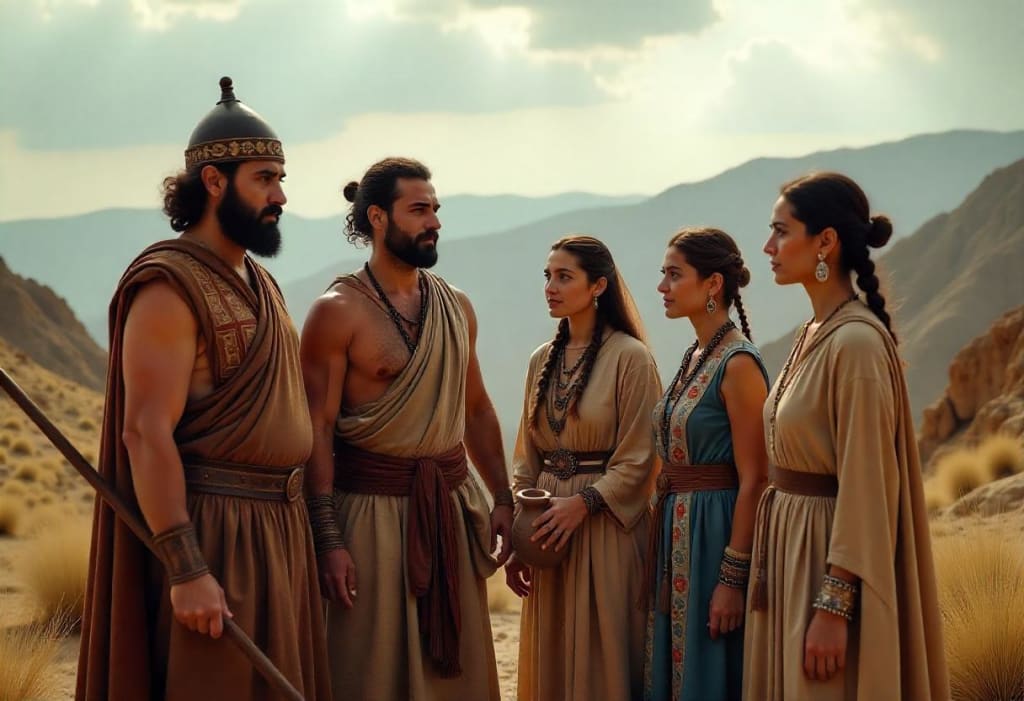
Embark on an exploration of the historical narrative surrounding the Aryans, an ancient linguistic community that has significantly influenced civilization, spanning from the Central Asian steppes to contemporary regions. This article aims to investigate the origins, migrations, and cultural contributions of the Aryans, while also addressing the ancient history and the misconceptions that have obscured their legacy throughout the ages.
The term "Aryan" is derived from the Sanskrit word "arya," which translates to "noble" or "civilized." Initially, it served as a self-identification for a migratory group originating from Central Asia. Importantly, the term did not carry any ethnic implications; rather, it functioned as a cultural and moral designation.
This migratory group, referred to as the Indo-Iranians, ultimately divided into two distinct branches: the Indo-Aryans, who migrated southward to establish themselves in northern India, and the Iranians, who settled in the Iranian Plateau. Their journey began in regions corresponding to present-day Kazakhstan near the Ural River, from where they gradually advanced into Iran and the Indian subcontinent prior to the 3rd millennium BCE.
One of the most notable migrations of the Indo-Aryans occurred towards the Indus Valley, where they likely integrated with the indigenous Harappan Civilization, recognized for its sophisticated societal structures, organized agricultural practices, architectural achievements, and artistic endeavors. While this era was characterized by significant cultural interactions, it is important to emphasize that there is no substantiated evidence of an Aryan "invasion" through military means. Rather, these groups contributed their language, Vedic traditions, and cultural elements, gradually assimilating with the pre-existing cultures in the area.
In India, this territory became known as Aryavarta, which translates to "land of the Aryans," denoting the northern part of the subcontinent where these communities flourished. Their language evolved into Sanskrit, which served as the basis for the sacred Vedic texts that are central to Hinduism.
Additionally, the Indo-Aryans migrated towards the Middle East, where they left their mark on Mesopotamian civilizations, particularly within the Mitanni Kingdom, located in present-day Iraq and Syria. The rulers of Mitanni were known to invoke the names of Indo-Aryan deities, underscoring the cultural exchanges that took place between these groups.
The designation "Aryan" acquired a problematic significance during the 18th and 19th centuries, primarily due to the efforts of European scholars who began to explore ancient Sanskrit literature. Notably, Sir William Jones identified linguistic parallels between Sanskrit and various European languages, which led him to hypothesize the existence of a shared ancestral language, referred to as Proto-Indo-European. This hypothesis erroneously linked the term "Aryan" to notions of ethnicity and the idea of a "superior" white race.
The French author Arthur de Gobineau further developed these concepts, advocating for a theory centered on "Aryan Blood" and white supremacy. This ideology was subsequently embraced by individuals such as Houston Stewart Chamberlain, who served as a mentor to Adolf Hitler. Such racially motivated interpretations significantly influenced Nazi ideology and other supremacist beliefs, culminating in devastating outcomes. The Aryan identity, which was originally associated with ideals of nobility and the pursuit of moral and cultural advancement, was co-opted to endorse prejudiced ideologies, thereby distorting the authentic historical significance of the term.
The enduring impact of the Aryans on language, religion, and culture is significant, despite subsequent misinterpretations. The early Iranian language, referred to as Avestan, shares a close relationship with Sanskrit and was utilized in the Zoroastrian religious texts. These scriptures convey that being “Aryan” was associated with the embodiment of noble qualities and the pursuit of moral integrity, contrasting sharply with the racial implications that later Western interpretations would impose.
Throughout history, various Indo-Iranian groups, including the Persians, Parthians, and Medes, cultivated unique cultures on the Iranian Plateau. Darius the Great, the Persian monarch who reigned from 521 to 486 BCE, proclaimed himself an “Aryan of Aryan lineage,” emphasizing his connection to nobility and cultural heritage rather than to any notion of race or ethnicity. Notably, the modern name of Iran is derived from “Aryan,” underscoring the term's lasting cultural relevance.
Today, the Indo-Iranian languages, which evolved from the migrations of the Aryans, are spoken by more than a billion individuals throughout southern Asia, parts of the Middle East, and extending as far east as Cambodia. While contemporary Iran and certain cultural groups preserve the Aryan heritage in both cultural and linguistic dimensions, the term "Caucasian" has increasingly replaced "Aryan" to refer to fair-skinned populations, largely due to the negative connotations that have arisen from historical misapplications of the term.
The authentic legacy of the Aryans is reflected in their significant contributions to language, religion, and the ethical frameworks that have influenced numerous ancient and modern societies. Rather than being defined by ethnicity, Aryan identity was based on a collection of virtues that highlighted nobility and ethical behavior. Acknowledging this perspective is crucial for understanding the necessity of examining history with an objective viewpoint and recognizing how historical misinterpretations can result in considerable consequences.
The Aryans constituted a significant linguistic group whose migrations played a crucial role in shaping the linguistic, cultural, and spiritual frameworks of ancient civilizations throughout Central Asia, Iran, and India. While the term "Aryan" has been misappropriated in later European contexts to imply racial superiority, the original Aryans were characterized by their cultural and moral values rather than by any notions of racial or ethnic dominance.
By examining the genuine origins and implications of the term "Aryan," we enhance our comprehension of the ways in which history can be distorted and underscore the necessity of recognizing diverse cultural identities in their authentic forms. A commitment to accurately remembering the past allows us to pay tribute to the contributions of those who have enriched humanity's collective heritage.
About the Creator
A História
"Hi. My name is Wellington and I'm a passion for general history. Here, I publish articles on different periods and themes in history, from prehistory to the present day.
Keep reading
More stories from A História and writers in History and other communities.
The Titanomachy
In Greek mythology, the Titans are frequently portrayed as colossal and formidable entities that embody the elemental forces of nature. They emerged from the union of Uranus, the personification of the sky, and Gaia, the embodiment of the earth, symbolizing fundamental powers and the vast unpredictability of the natural world. Among their progeny were various deities, some of whom would ultimately rebel against their forebears and contest the Titans' supremacy in a renowned conflict known as the Titanomachy, or the War of the Titans.
By A Históriaabout a year ago in History
Which War Caused More Destruction: World War I or World War II?
The two largest conflicts in modern history are World War I (1914–1918) and World War II (1939–1945). Both wars changed the course of human history and caused enormous destruction across many countries. Millions of soldiers and civilians lost their lives, cities were destroyed, and economies collapsed. However, historians generally agree that the Second World War caused far greater damage and loss of life than the First World War. By examining the number of deaths, the scale of destruction, and the impact on civilians, it becomes clear why World War II is considered the deadliest conflict in history.
By shaoor afridi3 days ago in History
The BAFTA Awards
By now, in a stunning departure from recent years, most of the world is aware of what happened at the BAFTA film awards. Social Media Headlines will tell you the bare bones: that John Davidson, a Tourette's Syndrome advocate, shouted a racial slur at two Actors of Colour, Michael B Jordan and Delroy Lindo.
By Natasja Rose6 days ago in Psyche




Comments
There are no comments for this story
Be the first to respond and start the conversation.