
🏹🔥When the Zulu warriors overpowered the British army
⚔️ The Battle of Isandlwana (1879)

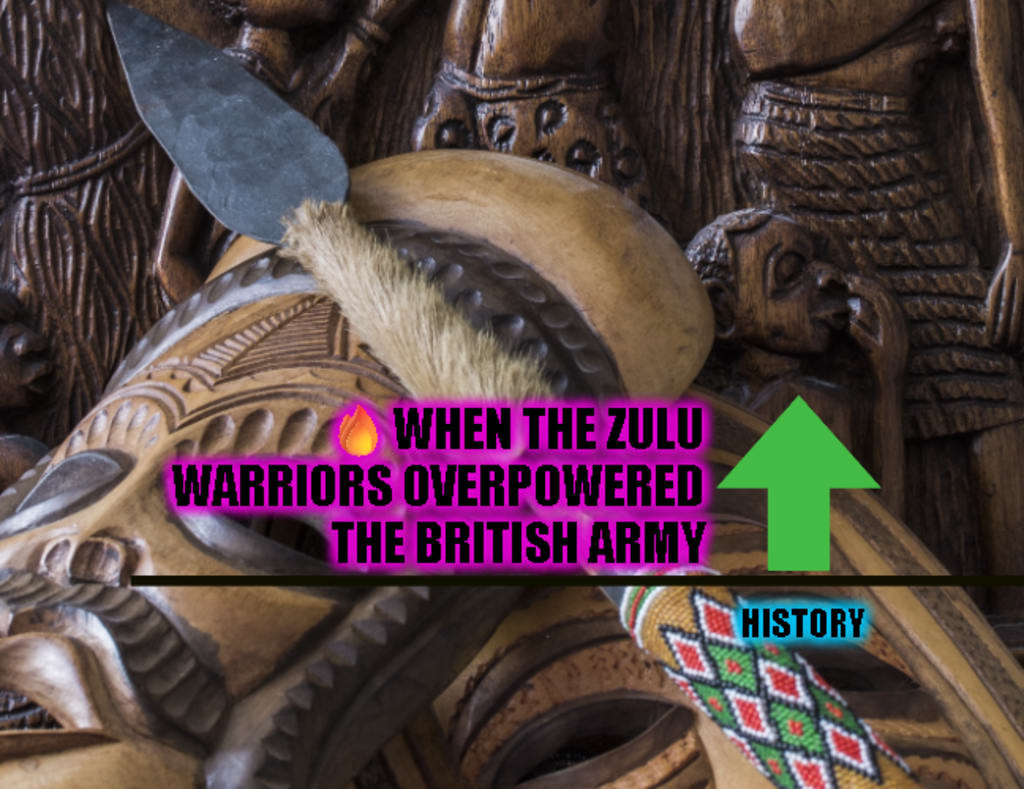
🏹🔥 The Battle of Isandlwana (1879): The Zulu Triumph Over Empire
🌍 The British Invasion of Zululand
In the late 19th century, the British Empire stood at the zenith of its global power. With colonies stretching across every inhabited continent, it pursued a relentless policy of expansionism underpinned by economic interest, racial ideology, and the belief in a “civilizing mission.” Southern Africa, rich in minerals and strategically located, became a key target in Britain’s imperial vision, particularly the drive to unite its various colonies—like the Cape Colony and Natal—into a single political confederation under British rule.

One of the greatest impediments to this goal was the Zulu Kingdom—a strong, independent, and highly organized African state that had maintained its sovereignty through a combination of military might and social cohesion. Under the leadership of King Cetshwayo kaMpande, the Zulu Kingdom inherited a powerful military legacy that originated during the reign of Shaka Zulu earlier in the 19th century. This legacy centered around the amabutho system—age-based regiments trained with iron discipline and forged into highly mobile, close-combat units capable of executing complex battlefield maneuvers with terrifying efficiency.
Cetshwayo, while seeking peace, firmly resisted colonial encroachment. He had maintained diplomatic contact with the British, but he rejected any notion that the Zulu Kingdom should become subservient to imperial interests. The British, particularly Sir Henry Bartle Frere, the High Commissioner for Southern Africa, saw Zulu independence as an obstacle to the economic integration and political domination of the region.
In December 1878, Frere issued an ultimatum to King Cetshwayo, couched in terms that he knew would be unacceptable. Among the demands were the disbanding of the Zulu military system, acceptance of a British resident in Zululand, and the surrender of certain chiefs accused of wrongdoing. These stipulations struck at the very heart of Zulu sovereignty, and Cetshwayo, predictably, refused.
On January 11, 1879, Frere, without waiting for approval from London, authorized a full-scale military invasion of Zululand. The campaign was divided into three columns: one advancing from the north, one from the south, and a central column under Lord Chelmsford marching straight toward the royal capital at Ulundi. The British expected a swift victory. Their assumption was that advanced weaponry—rifles, artillery, and disciplined infantry—would crush native resistance, as it had in so many other colonial campaigns.
Yet in their arrogance, British commanders failed to appreciate the tactical ingenuity and national unity of the Zulu people. They had underestimated the landscape, overextended their supply lines, and discounted the will of a people fighting for their land, their king, and their way of life.

🏹The British Camp and Disposition at Isandlwana
By January 20, 1879, the central British column under Lord Chelmsford reached the base of Isandlwana, a prominent rocky hill in the open plains of Zululand. The terrain was striking but offered poor natural defenses, especially for a stationary encampment. Despite this vulnerability, the British neglected to establish a fortified position. No trenches were dug. No wagon laager was formed—an elementary defensive measure used effectively in other colonial conflicts. This complacency was born from the assumption that Zulu forces would never attack in strength or without warning.
The camp held about 1,800 men, including two battalions of the 24th Regiment of Foot (mostly composed of Welsh soldiers), colonial volunteers, mounted irregulars, and a sizable contingent of the Natal Native Contingent (NNC), who were poorly armed and received little respect from their British counterparts. Despite the presence of two 7-pounder guns and ample ammunition, the logistical infrastructure of the camp was inadequate. Ammunition was stored in inaccessible wagons, and few formal resupply drills were practiced among the ranks.
Lord Chelmsford, acting on unreliable intelligence, divided his force on January 22. Believing the main Zulu army to be some distance to the southeast, he took roughly 2,500 troops on a scouting mission, leaving Lieutenant Colonel Henry Pulleine in command of the camp with vague orders and no clear plan for defense. That same morning, Colonel Anthony Durnford arrived with 500 mounted Basuto troops and rocket artillery, further complicating the command structure. Neither Pulleine nor Durnford had clear authority over the other, and coordination between their forces was limited.
Unbeknownst to Chelmsford, the main Zulu army—over 20,000 strong—was not to the southeast but hidden in a nearby valley barely five miles from the camp. Led by experienced generals Ntshingwayo kaMahole Khoza and Mavumengwana kaNdlela Ntuli, the Zulu impi had been carefully concealed, awaiting the right moment to strike. Their orders from Cetshwayo were to repel the British invasion without crossing into Natal, thus avoiding accusations of aggression. But when a British patrol inadvertently discovered part of the force, Zulu commanders realized the element of surprise was in danger of being lost.
With remarkable speed and coordination, the Zulu generals chose to strike immediately. Drums were beaten. Orders were passed. Warriors armed with iklwa (short stabbing spears), cowhide shields, and sheer resolve surged toward the British camp in a formation honed over generations—the horns of the buffalo.

⚔️ The Battle Unfolds — A Clash of Iron and Spears
Shortly before noon, the full might of the Zulu impi emerged, and the nightmare began. The attack formation—called impondo zankomo (“buffalo horns”)—unfolded with deadly precision. The center, or “chest,” advanced straight at the British lines, while the “horns” swung around both flanks in a sweeping motion designed to encircle and crush the enemy. The “loins,” or reserve units, held back, ready to reinforce success or exploit weaknesses.
Initially, British rifle fire was devastating. Martini-Henry rifles had a formidable range and power, and disciplined volleys from the redcoated infantry tore gaps into the Zulu ranks. Artillery crews fired shell after shell, sending bursts of shrapnel into charging warriors. The Zulus fell by the hundreds—but they kept coming. Every warrior who fell was replaced by another, sprinting forward, howling war cries, driven by duty, courage, and the sheer force of ancestral pride.
Yet firepower alone was not enough. The British lines, stretched thin across a broad front and lacking natural or artificial defenses, were vulnerable to encirclement. The Natal Native Contingent, many of whom had never faced battle, broke ranks and fled early in the fighting. Their desertion left gaping holes in the line. Colonel Durnford's mounted troops attempted a bold defense of the right flank, but they were overwhelmed as the Zulu left horn swung around in full force
Ammunition problems soon plagued the defenders. Confusion reigned at the supply wagons, where quartermasters, constrained by regulations and disorganized under pressure, failed to distribute cartridges efficiently. Soldiers at the front began to run dry. Some used bayonets. Others fought with rifle butts. In the end, it didn’t matter. The Zulus surged into the gaps. They screamed their war chants and clashed with the British in brutal hand-to-hand combat.
As the fighting descended into chaos, the redcoat ranks disintegrated. Pulleine and Durnford were both killed as their positions were overrun. Isolated groups of soldiers made desperate last stands—some on the rocky slope of Isandlwana hill, others at the ammunition wagons, or behind overturned carts. One by one, they were surrounded and annihilated.
By 2:30 p.m., the battle was effectively over. The Zulus had broken through every defensive position. The British camp, now in flames, was strewn with corpses. Smoke curled into the sky as looted supplies were discarded, and the last survivors fled westward. Fewer than 60 Europeans escaped the slaughter, along with some African allies who managed to break free. Over 1,300 British and colonial soldiers lay dead—the greatest single loss ever inflicted on a British army by a native force in Africa.

⚰️ Aftermath and Legacy — Shockwaves Through the Empire
The aftermath of the Battle of Isandlwana reverberated far beyond the plains of Zululand. When news of the defeat reached Cape Town and London, it was met with disbelief. An entire British column had been wiped out—not by a European foe or a modern army, but by African warriors wielding spears and shields. The imperial myth of technological invincibility had been shattered.
Public reaction in Britain oscillated between outrage and horror. Newspapers decried the blunder, Parliament convened emergency sessions, and calls for accountability were loud and persistent. Lord Chelmsford, having narrowly avoided capture himself, attempted to downplay the scale of the disaster and deflect blame onto subordinates. Yet his decision to split the force and his failure to fortify the camp drew severe criticism, even from military analysts within the empire.
In Zululand, the victory was celebrated, but not without apprehension. King Cetshwayo had not sought war with Britain. He hoped the victory would compel peace negotiations. Instead, it hardened British resolve. Reinforcements poured into South Africa—regulars from India, engineers, artillerymen, and veteran regiments trained in colonial warfare. The campaign was restructured, and Chelmsford adopted a more cautious strategy.
Within months, a new British offensive crossed into Zululand with overwhelming strength. Battles at Hlobane and Kambula turned the tide. The Zulu suffered heavy casualties. On July 4, 1879, at the Battle of Ulundi, the British delivered the final blow. Cetshwayo’s royal kraal was razed, his army shattered, and his nation dismantled into 13 fragmented territories under British control. The king was captured and later exiled.
Despite the ultimate British victory, Isandlwana left an enduring legacy. It remains a source of immense pride for the Zulu people—a symbol of resistance, courage, and national identity. For military historians, it is a case study in overconfidence, poor logistics, and the dangers of underestimating an enemy. The battlefield today is marked with stone cairns and memorials. Each pile of stones honors the fallen, Zulu and British alike, and bears silent witness to one of the most astonishing upsets in colonial history.

🛡️ Zulu Strategy and Warrior Culture — The Power Behind the Spears
To understand the stunning Zulu victory at Isandlwana, one must delve deeply into the social and military structures that enabled such a powerful and coordinated force to rise from an indigenous African kingdom. The Zulu impi was not merely a collection of warriors — it was a product of a unique system of regimental discipline, societal cohesion, and cultural valorization of warfare. The legacy of Shaka Zulu’s military reforms remained potent decades after his reign, with the amabutho system binding together age-groups into lifelong military brotherhoods. These regiments trained together, marched together, and fought with unbreakable unity, often under commanders chosen not only for their seniority but also for their proven courage and loyalty.
The Zulu regimental system was also intimately connected to the kingdom’s political framework. The king, regarded as a semi-divine figure and ultimate military commander, could summon regiments to assemble in a matter of days, often drawing thousands of warriors from vast distances. Loyalty to the king was absolute, and military service was viewed not merely as duty but as an honored passage in life. From adolescence to maturity, young Zulu men were socialized into a warrior ethos that emphasized endurance, obedience, and fearlessness in battle.
Central to Zulu military tactics was the "buffalo horns" formation, a masterstroke of battlefield maneuver. This formation consisted of a central chest (umkhosi) that engaged the enemy head-on, while two flanking arms—the horns—swept around to encircle and trap the foe. A rear reserve—the loins—was kept hidden to reinforce weakening positions or to deliver a final, decisive blow. At Isandlwana, this strategy was executed flawlessly, demonstrating how disciplined troops using centuries-old tactics could outmatch modern military units under certain conditions. Zulu commanders displayed remarkable battlefield acumen, adapting their movements fluidly in real-time and using terrain to amplify the formation’s effectiveness.

The Zulu warriors themselves carried traditional weapons: the short stabbing spear called the iklwa, named for the sound it made when withdrawn from a body, and large cowhide shields that could deflect bullets at long range or absorb glancing blows. The iklwa, introduced by Shaka Zulu, was revolutionary in its simplicity and lethality. Unlike the traditional throwing spear, it was designed for close combat, forcing warriors into face-to-face encounters where their agility and training gave them an edge. Despite lacking firearms and artillery, the warriors moved with incredible speed and coordination, covering terrain quickly and using hills, valleys, and tall grass for concealment. Communication through runners and visual signals allowed the impi to adapt and shift with almost fluid grace.
Their preparation before battle was ritualistic and rooted in spiritual tradition. Warriors would anoint themselves with specific herbs believed to bring strength and luck, while sangomas (spiritual healers) conducted blessings, consulted ancestral spirits, and performed protective rituals. Battle dances, such as the umGhubho, were used both as psychological preparation and as a way to foster group unity. The war cry—sharp, rhythmic chants that echoed across the savanna—served not only to intimidate enemies but to energize and bond fighters as one living organism.
Moreover, the Zulus were driven by a deep spiritual connection to their land and ancestors. Going to war was not merely a political decision; it was a sacred duty. The belief in the ever-present guidance of ancestral spirits instilled a sense of purpose and destiny. Many Zulu warriors believed that if they fell in battle while fighting bravely, they would join the honored ranks of the amadlozi (ancestral spirits), ensuring their eternal presence in the lives of their descendants. This belief emboldened them to face death without hesitation.
Isandlwana was not a lucky strike—it was the culmination of disciplined planning, cultural unity, and the brilliant use of indigenous warfare techniques that had evolved over generations. While the British viewed the Zulus as primitive, the reality was that the Zulu war machine was a highly developed system, every bit as formidable as its European counterpart when operating under favorable conditions. The Zulu impi had learned to optimize the geography of southern Africa—its escarpments, hills, ravines, and tall grasslands—to stage ambushes, screen movement, and coordinate large attacks. Their knowledge of the terrain and climate allowed for precise timing of attacks and strategic positioning.
In sum, the Zulu success at Isandlwana was not merely due to numerical superiority or the element of surprise. It was the result of a deeply integrated martial culture, sophisticated tactical planning, and a unifying national ideology that viewed warfare as both sacred and necessary. The Zulu Kingdom demonstrated that African military traditions, far from being obsolete, were adaptable, organized, and effective. It was a moment when indigenous strategy triumphed over imperial arrogance, revealing the might of a system too often underestimated.

🧭 Strategic Consequences — Repercussions Across Continents
The aftermath of the Battle of Isandlwana extended far beyond the blood-stained hills of Zululand. In Britain, news of the defeat landed like a thunderclap. The Victorian public, conditioned to believe in the invincibility of the British Empire, reacted with a mix of horror, outrage, and disbelief. The notion that a so-called "native" army armed primarily with spears could destroy a modern imperial force was almost inconceivable. Newspapers dubbed it “The Great Humiliation,” and the names of Chelmsford and Bartle Frere became the subjects of scathing criticism in press editorials and political cartoons.
British newspapers ran headlines demanding accountability. Satirical publications such as Punch mocked the complacency of British officers, depicting colonial officials as overconfident dandies brought low by their own ignorance. Somber editorials questioned the logic of the invasion itself, criticizing the imperial agenda that had provoked war with a kingdom that had, until recently, shown little interest in direct confrontation. In Parliament, debates raged over whether Sir Henry Bartle Frere and Lord Chelmsford bore primary responsibility for the disaster. Political rivals seized the opportunity to accuse the Disraeli government of imperial overreach, while military officials scrambled to spin the narrative, blaming poor intelligence, logistical failures, and even the bravery of the Zulu fighters for the unexpected catastrophe.
Across the empire, colonial administrators took notice. In India, Australia, and other dominions, colonial garrisons reviewed their defensive arrangements, realizing that complacency could no longer be afforded. Isandlwana had demonstrated that rebellion and resistance, when organized and strategically executed, could pose a genuine threat even to the most powerful military forces of the day. British officers stationed in far-flung territories were instructed to reassess their supply chains, fortifications, and local alliances. The lesson was clear: the myth of European invincibility had been punctured, and indigenous resistance could no longer be dismissed as amateurish or futile.
Strategically, the defeat delayed British ambitions in southern Africa. The vision of a unified, British-controlled confederation from the Cape to Natal had to be postponed while resources were redirected toward pacifying Zululand. Reinforcements poured into the region—more soldiers, more supplies, and more artillery. Britain adopted a scorched-earth approach, determined not to repeat the mistake of underestimating its opponents. Camps were fortified, patrols expanded, and local informants recruited to avoid another disaster. Colonial officials also began recruiting African auxiliaries from rival tribes to help turn the tide against the Zulus, thereby exacerbating regional divisions.
For the Zulu Kingdom, however, the strategic consequences were tragic. The stunning victory at Isandlwana drew the full wrath of an empire. Cetshwayo’s diplomatic attempts to negotiate peace following the battle were ignored. Instead, the British Empire resolved to crush the Zulu state utterly. As more redcoats arrived and began methodically dismantling Zulu strongholds, the initial triumph was gradually overshadowed by overwhelming British retribution. By July 1879, the Zulu capital at Ulundi would be razed, and the kingdom forcibly fragmented into compliant chieftaincies.
Nonetheless, Isandlwana remained a rallying cry across Africa. It proved that indigenous resistance was possible and could succeed, if only briefly, against European colonial might. It challenged racial hierarchies and imperial assumptions, reminding both colonizers and the colonized that courage and discipline were not the sole province of empire. In southern Africa, oral traditions kept the memory of the battle alive, passed down from elders to youth as a symbol of honor and pride. Among African intellectuals in the early 20th century, Isandlwana became a cornerstone in the emerging discourse of resistance against European domination.

The strategic shockwaves of Isandlwana would echo for decades. Though the Zulu Kingdom was eventually dismantled, the memory of its defiance endured. It inspired resistance movements throughout southern Africa, laying the early ideological groundwork for anti-colonial struggles in the 20th century. Liberation leaders, from Nelson Mandela to Robert Sobukwe, would reference the battle as proof that African strength and unity could confront even the most powerful of oppressors. In classrooms, war colleges, and liberation movements alike, the story of the Battle of Isandlwana continued to be told—not as a cautionary tale of British folly, but as a symbol of unyielding indigenous strength.
From the dusty floor of the British House of Commons to the remotest kraals of KwaZulu-Natal, the reverberations of that singular Zulu victory were felt in law, policy, memory, and legend. It was not merely a military defeat for the empire—it was a cultural rupture, a redefinition of the limits of imperial power, and a tribute to the strength of a people determined to defend their land, their sovereignty, and their dignity at all costs.
About the Creator
Kek Viktor
I like the metal music I like the good food and the history...
Keep reading
More stories from Kek Viktor and writers in History and other communities.
🏰Petra: The Lost Rose City of the Nabateans
🏰Petra: The Lost Rose City of the Nabateans 🌵The Ancient City Carved from Desert Stone If you ever find yourself in southern Jordan, standing at the mouth of a narrow canyon while the desert wind swirls red dust around your feet, you might have the sense that you’re on the edge of something extraordinary. And you’d be right. Just beyond that winding chasm lies Petra—a city carved straight into the rose-colored cliffs, a place that once bustled with life and now sits in silent, sun-baked grandeur. Petra isn’t just a monument to the past. It’s a labyrinth of stories, secrets, and stone, and its legacy is still unfolding.
By Kek Viktor10 months ago in History
The Queen of Jhansi : The British Must Never Capture My Body”
In the long history of resistance against colonial rule in the Indian subcontinent, few figures shine as brightly as Rani Lakshmibai, the legendary Queen of Jhansi. Remembered for her courage, leadership, and unwavering determination, she became one of the most powerful symbols of defiance during the Indian Rebellion of 1857. Her story is not only about war but also about dignity, honor, and a final wish that echoed through history: the British must never capture her body.
By Irshad Abbasi about 7 hours ago in History
TUS NUA - ch 53
TUS NUA – ch 53 New Beginnings – Mia and Midnight (*)(*)(*) Finola knew Ali’s brother-in-law needed to put his mind at rest. She fed her arm through his and led him outside. “We’ll sit here. If you like, I can put a block around us so our conversation will be private.”
By Margaret Brennan4 days ago in Fiction



Comments
There are no comments for this story
Be the first to respond and start the conversation.