
🪖When the allies dropped "dummies" from airplanes - the fake paratroopers
🛩️“Rupert” the paratrooper

During World War II, intelligence and deception became critical components of military strategy. Both Allies and Axis powers employed sophisticated psychological warfare, using false information, fake equipment, and simulated troop movements to mislead opponents, gain advantageous positions, and minimize casualties. Among the most innovative and visually striking tactics was the deployment of dummy paratroopers—inflatable and dummy figures designed to simulate airborne troop drops.

This article explores the history, implementation, and impact of these deception techniques, focusing on the real-world tactics used by the Allies to cause “mass confusion” among Axis forces, particularly in the context of key operations like D-Day and other airborne campaigns.
In battlefield operations, surprise is often decisive. Knowing when and where an enemy plans to strike can determine the outcome of entire campaigns. However, the Germans developed highly effective aerial reconnaissance, radar detection, and intelligence networks, enabling them to monitor Allied troop movements and anticipate invasions.
The Allies understood that if they could mislead German intelligence about their true plans, they could gain crucial time and strategic advantage. Deception became an essential component of war planning, incorporating subtle and overt tactics alike.
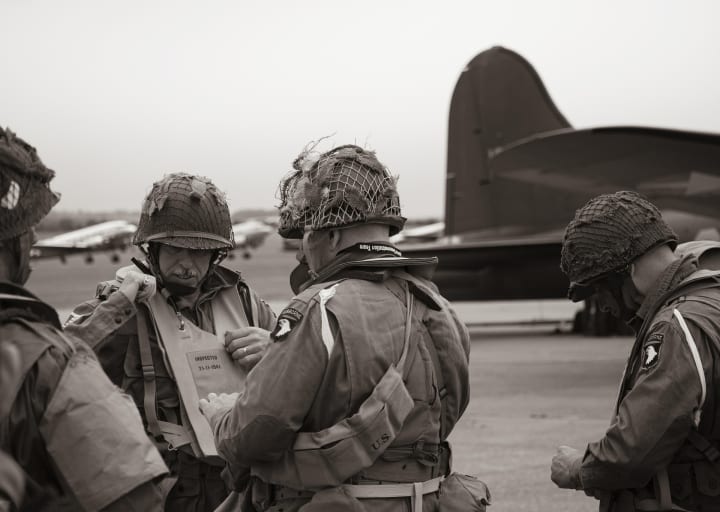
From simple camouflage to elaborate ruses, WWII marked a significant evolution in deception warfare. Operations involved fake tanks, aircraft, ships, and troops—including inflatable decoys, dummy equipment, and fake signals—to create illusions of strength or intent where none existed.
In airborne operations, deception was especially vital. Paratrooper drops and glider assaults depended on not only overwhelming defenses but also maintaining the element of surprise. Dummy paratroopers provided an effective way to mislead enemy air defenses, draw troops into false targets, and create chaos in the opposing command.

The Deployment of Dummy Paratroopers: Methods and Material . Inflatable Decoys and Dummy Figures
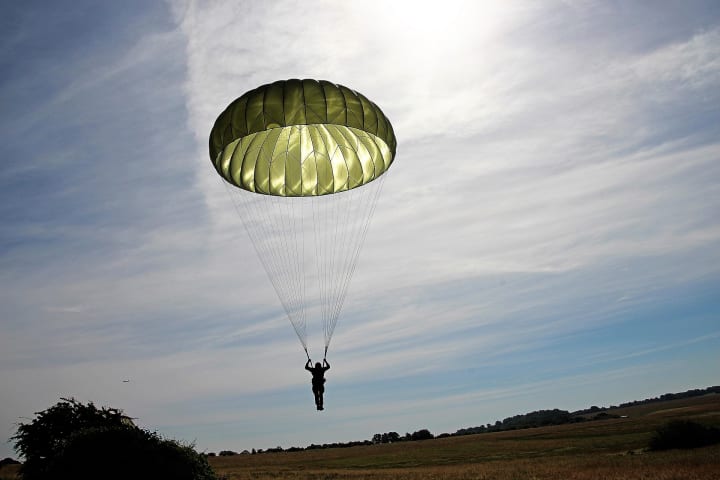
The primary method involved large-scale inflatable mannequins that resembled airborne soldiers descending with parachutes. These inflatable “paratroopers” were made of durable rubber or fabric, painted or designed to look lifelike, and equipped with parachutes or fake aircraft detectable from the ground or by reconnaissance.
In addition to inflatable figures, dummy aircraft models—often made of wood or canvas—were used to simulate transport planes. These were sometimes dropped from aircraft or positioned on the ground to suggest mass troop movements and planned landings.
To enhance the realism, the Allies also used sound effects, such as aircraft engines and parachute rustling, along with radio signals and coded messages, to create the illusion of troop movements in specific locations.
The main goal of deploying dummy parachutists was to cause mass confusion in the enemy’s intelligence network. When the Germans believed a large airborne assault was taking place somewhere, they often diverted their defenses, concentrated anti-aircraft fire, or rushed troops to false locations. This confusion could delay or weaken their response to the actual attack, making subsequent invasion or assault more successful.

Major Operations Using Dummy Paratroopers and Decoys . D-Day and the Normandy Invasion
The most famous example of Allied deception involving dummy forces was during Operation Overlord, the Normandy invasion on June 6, 1944. To mislead the Germans, the Allies launched Operation Bodyguard, a complex cover plan that used inflatable tanks, ships, and aircraft, combined with dummy paratroopers, to simulate a threat in Pas de Calais and southeastern England.
While inflatable soldiers and vehicles played a larger role, dummy parachutists, sometimes called “parachute dummies,” were used both on the ground and in the air to give the impression of a massive airborne drop. These decoys helped persuade German commanders that Allied forces might be landing at multiple locations, dispersing their defenses and reducing the strength at the actual invasion site.
Dummy paratroopers were also used in operations like the attempted Arnhem airborne assault (Operation Market Garden), where inflatable figures and fake signals created confusion about the size and location of Allied drops.
The Battle of Arnhem and Operation Market Garden
In September 1944, during Operation Market Garden, the Allies aimed to secure a series of bridges in the Netherlands to enable an invasion into northern Germany. To improve the success of their airborne assault, the Allies employed decoys—including inflatable aircraft and dummy parachutists—intended to mislead German air and land defenses.
The inflated figures and banners, along with fake aircraft and signals, created the illusion of large-scale airborne landings at multiple points. German defenses, as a result, were stretched thin trying to identify real versus decoy drops, which contributed to the overall failure of the operation's objectives. The deception tactics caused mass confusion among German forces, delaying their response and providing the Allies with critical opportunities for assault.
In addition to inflatable figures, inflatable tanks, trucks, artillery, and even construction equipment were used to mislead enemy reconnaissance and aerial surveillance. These dummy units were often strategically placed to simulate real concentrations of forces, encouraging the enemy to divert troops and resources away from the actual battlefield.

The Impact: Disrupting German Command and Control
The primary aim of these deceptive measures was to disrupt German command and control, induce misallocation of resources, and generate chaos in their decision-making process. By creating the illusion of larger forces or different attack plans, the Allies effectively “clouded” the German intelligence picture, increasing the difficulty for them to respond effectively.
This tactical deception was credited with saving lives, reducing Allied casualties, and increasing the overall success of operations where deception was employed.
The inflatable decoys used by the Allies ranged from small, portable models to enormous, life-sized inflatables of tanks, aircraft, and soldiers. Made from durable rubber or fabric with high-visibility paint, these inflatables could be deployed from aircraft, dropped by parachute, or set up on the ground.
They often featured internal bladders to maintain their shape and were designed to be realistic enough to deceive aerial and ground observation for extended periods. The decoys could be inflated on site or pre-inflated and transported.
Radio deception played an essential role. Units would transmit fake radio signals or use "spoof" broadcasts mimicking real troop communications. This further confused enemy interceptors and deciphering units, adding a layer of complexity that kept German forces guessing about actual troop movements.
In particular, dummy aircraft—constructed from lightweight materials—were tethered or designed to simulate actual transports or fighters. Parachute drop zones with dummy canopy shapes were also set up to mimic a large airborne invasion.

Effectiveness and Limitations . Success Stories and Impact
The deployment of dummy paratroopers and decoys contributed significantly to Allied successes in several campaigns:
D-Day Landing: The extensive deception campaign with inflatable tanks, ships, planes, and dummy paras misled the Germans about the invasion site, helping delay their response and allowing the Allies to establish a foothold in Normandy.
Operation Bodyguard: The entire set of deception measures, involving inflatable and dummy units, created confusion about the actual invasion plans, resulting in tactical advantages.
Despite their successes, decoys were not foolproof. Skilled German counterintelligence units occasionally detected the fakery, especially when decoys failed to react as real troops or equipment would. Weather conditions, lighting, and observation points also affected the decoys’ realism.
Nonetheless, the combination of inflatable figures, fake signals, and strategic placement often proved enough to create the crucial element of doubt in German defenses, tilting the balance in favor of the Allies.
The use of inflatable dummy troops and aircraft marked a significant evolution in psychological warfare. It demonstrated that the perception of force could be just as vital as actual force, emphasizing that misdirection, deception, and psychological tactics played a pivotal role in modern warfare.

The techniques pioneered during WWII set the foundation for modern military deception. Today, inflatable tanks, vehicle decoys, and electronic warfare continue to be vital. The concepts of creating false signals, holograms, and electronic decoys have advanced, but the core principles remain rooted in WWII deception practices.
The use of inflatable decoys and dummy forces was generally accepted as a legitimate form of warfare deception, as it did not involve direct harm or destruction. However, the deliberate use of decoys to mislead enemy intelligence remains a strategic art with ongoing ethical debates
About the Creator
Kek Viktor
I like the metal music I like the good food and the history...
Keep reading
More stories from Kek Viktor and writers in History and other communities.
🛁🫧When President Taft Got Stuck in a Bathtub
William Howard Taft, the 27th President of the United States (1909–1913), is remembered not only for his political accomplishments but also for his distinctive physical stature and personality. Standing about 5 feet 11 inches and weighing over 300 pounds, Taft was an imposing figure in American presidential history. His size, combined with his humor and self-awareness, made him a beloved and memorable figure. The story of Taft getting stuck in a bathtub at the White House is among the most enduring anecdotes about his presidency. It has become part of both presidential lore and American humor, symbolizing his remarkable physique and the challenges it sometimes posed.
By Kek Viktor8 months ago in History
World War I
The morning fog lay thick over the trenches of northern France, clinging to the earth as if it too feared what was about to happen. Private Thomas Hale pulled his coat tighter around himself, though it did little to stop the cold from seeping into his bones. He had been in the trenches for six months, yet the damp smell of mud, smoke, and fear still felt unfamiliar, like a nightmare he could not wake from.
By Maavia tahir5 days ago in History
Chicago Hospital Held Newborn Baby for 8 Months Over an Unpaid Medical Bill
Debts were handled much differently in the 19th and early 20th century. Back then, people who accrued debt had more to fear than letters and calls from collection agencies the same way we do today, especially if they owed a hospital or doctor money.
By Criminal Matters6 days ago in History



Comments
There are no comments for this story
Be the first to respond and start the conversation.