
Trump Overtime Tax, What It Means and Why It Matters.
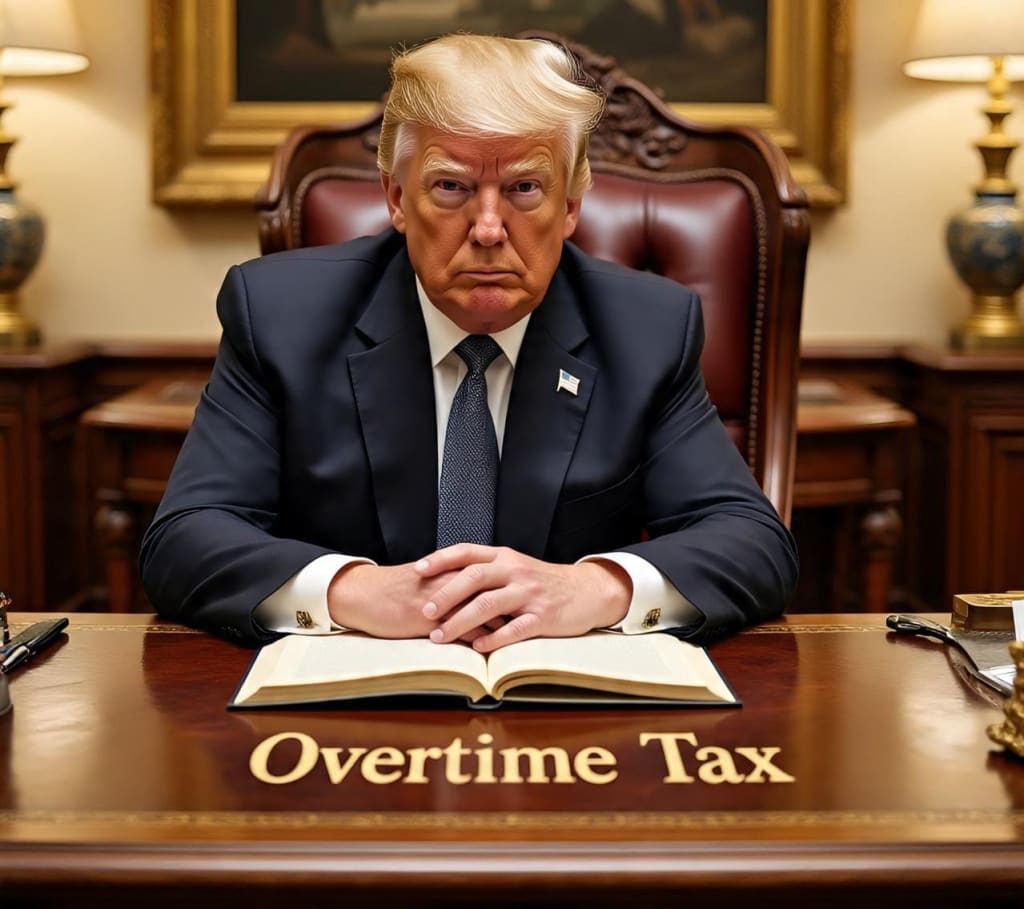
In the political and economic debate over wages and workers’ rights in the United States, one topic that occasionally emerges is the so-called “Trump Overtime Tax.” This term has been used by critics of former President Donald Trump to describe changes during his administration that affected overtime pay for millions of American workers. While not technically a “tax” in the traditional sense, the phrase refers to policies that critics say effectively reduced workers’ take-home pay or limited their ability to earn overtime. This article explains what the term means, the policy behind it, and its impact on workers and employers.

What is Overtime Pay?
Under the Fair Labor Standards Act (FLSA) passed in 1938 most hourly workers in the United States are entitled to overtime pay when they work more than 40 hours in a week. Overtime pay is typically 1.5 times the employee’s regular hourly rate. However, not all workers are eligible. Employees who earn above a certain salary threshold and perform certain types of managerial or professional duties are considered “exempt” from overtime rules.
The U.S. Department of Labor (DOL) periodically updates the salary threshold for overtime eligibility to account for inflation and wage growth. Workers earning less than this threshold are generally entitled to overtime pay, even if they are salaried.
The Obama-Era Overtime Rule
In 2016, during the Obama administration, the DOL issued a rule raising the overtime salary threshold from about $23,660 per year to $47,476 per year. This change would have made an estimated 4.2 million more workers eligible for overtime pay. Many advocates hailed it as a win for the middle class and low-wage salaried workers who often worked long hours without extra pay. However, business groups argued it would hurt small businesses, increase labor costs, and lead employers to cut hours or reclassify workers.
The Trump Administration’s Response
After Donald Trump became president in 2017, his administration reversed the Obama-era rule. In 2017, a federal judge in Texas struck down the Obama rule, saying it exceeded the DOL’s authority by placing too much emphasis on salary rather than job duties. Rather than appealing this decision or implementing the higher threshold, the Trump administration issued a new, lower overtime rule in 2019.
The Trump DOL raised the salary threshold for overtime eligibility but only to $35,568 per year, far below the Obama-era level of $47,476. This made about 1.3 million more workers eligible for overtime, compared to the 4.2 million under the Obama plan. Labor advocates and unions criticized the move, calling it a “pay cut” compared to what workers would have received under the higher threshold.
Why Critics Call it a “Tax”
Critics of the Trump overtime rule began referring to it as the “Trump Overtime Tax” because it effectively limited the amount of overtime pay millions of workers could earn. By setting the threshold lower, workers earning between $35,568 and $47,476 remained exempt from overtime, even though they would have qualified under the Obama rule. This, critics argued, forced workers to put in long hours without fair compensation — amounting to a kind of tax on their time and labor.
Although the government did not literally tax workers more, the term highlights how policy decisions can financially burden workers by denying them additional income they would otherwise have earned.
Supporters’ Perspective
Supporters of the Trump overtime rule argued that it struck a more reasonable balance between workers’ rights and business costs. They contended that the Obama rule would have imposed steep labor costs on small businesses, leading to layoffs, reduced hours, or even higher prices for consumers. Some employers also argued that the Obama rule would have reduced flexibility for salaried workers who valued their exempt status.
The Broader Debate
The debate over the “Trump Overtime Tax” reflects a larger discussion about income inequality, the value of workers’ time, and the role of government in setting wage standards. For millions of Americans working in retail, food service, healthcare, and other industries, overtime pay can make a big difference in supporting their families. Advocates argue that wage standards should keep up with inflation and productivity, while opponents warn of unintended consequences for businesses and employment.
Looking Ahead
The Biden administration has proposed further raising the overtime salary threshold, though legal and political challenges remain. Workers and advocates continue to push for stronger protections to ensure fair pay for long hours. Whether the phrase “Trump Overtime Tax” remains a part of the political vocabulary depends on how future administrations address overtime policies.
About the Creator
USA daily update
News, Politics, Technology Updates
Keep reading
More stories from USA daily update and writers in History and other communities.
Ken paxton texas's 51st attorney general.
Ken Paxton: The Controversial Texas Attorney General Warren Kenneth Paxton Jr., widely known as Ken Paxton, is the current Attorney General of Texas and one of the most polarizing figures in modern Texas politics. Known for his staunch conservative positions, fierce legal battles, and a string of personal and professional controversies, Paxton has become a symbol of both the ideological zeal and the ethical questions that define contemporary American politics.
By USA daily update 8 months ago in History
Birthplace of the Buddha Threatened by Rising Air Pollution
Lumbini, located in the southern plains of Nepal near the border with India, is one of the most sacred sites in the world for Buddhists. It is widely recognized as the birthplace of Gautama Buddha, the founder of Buddhism who lived more than 2,500 years ago. The site, centered around the Maya Devi Temple and its surrounding sacred garden, attracts hundreds of thousands of pilgrims and tourists every year. However, this historically and spiritually significant location is now facing an alarming threat: increasing air pollution.
By Irshad Abbasi a day ago in History
The Forsyth House Fire
Since 1851, Forsyth House has stood on the corner of Union Street and Gordon Street in the heart of Glasgow. Its iconic, or was... because on Sunday 8th of March, 2026, a fire broke out in a small, seemingly un-named shop in the building and tore all that history down. As I write, the rubble is still unsettled and the street is still blocked off. Central Station is quiet on the upper level, and around 30 small businesses have quite literally gone up in smoke.
By S. A. Crawford2 days ago in The Swamp


Comments
There are no comments for this story
Be the first to respond and start the conversation.