
The Swamp of Oak Island: A Ship, a Road, and a Secret Older Than History
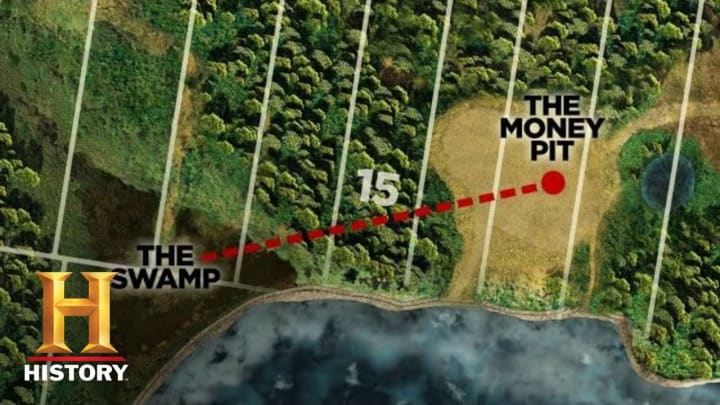
The Swamp — once thought to be a natural formation, a geographical afterthought — has emerged as perhaps the most bizarre, compelling, and explosive puzzle in the island’s centuries-old legend.


It doesn’t look like much at first.
A shallow, muddy body of brackish water nestled between two arms of forested land. Quiet. Still.
But nothing on Oak Island is what it seems.
The Swamp — once thought to be a natural formation, a geographical afterthought — has emerged as perhaps the most bizarre, compelling, and explosive puzzle in the island’s centuries-old legend.
Because beneath its reeds and silt lie anomalies that defy logic.
A ship-shaped formation buried in the muck.
Traces of ancient stone roads that seem to connect the unconnected.
And, most staggering of all, evidence that humans may have altered this place long before history began keeping score.
The Swamp: Nature's Lie, Engineered by Human Hands?
For decades, the swamp was overlooked.
It was wet, hard to excavate, and seemingly irrelevant. After all, what could possibly be hidden in a place so exposed — so unremarkable?
Then came the geoscans.
Then came the sediment cores.
Then came Dr. Ian Spooner — the soft-spoken environmental geoscientist whose analysis would turn the swamp into ground zero for one of the most daring Oak Island theories ever proposed.
According to Spooner and his team, the swamp is not natural.
It was constructed. Engineered. Possibly even flooded on purpose.
And the reason for that drastic effort may lie directly in the center of the swamp — buried in the shape of a ship.
The Ship-Shaped Anomaly: A Vessel Lost, or a Decoy Hidden?
Buried beneath layers of peat and clay is something that no natural swamp should contain:
A 300-foot-long structure with definitive outlines, curved edges, and the unmistakable profile of a ship’s hull.
This isn’t a guess. It’s been confirmed via seismic testing, sonar, and core sampling.
Some of the most jaw-dropping theories suggest this could be:
A beached ship deliberately covered over centuries ago.
A scuttled vessel, carrying priceless cargo buried not beneath dirt — but beneath water.
Or a foundation, constructed in the shape of a ship to act as a decoy or trap.
Wooden fragments retrieved from the anomaly have been dated to centuries before colonial settlers arrived. Some even contain tool marks — clear signs of human alteration.
The implications are massive.
If a ship was deliberately buried and flooded into secrecy…
What was it hiding?

The Ancient Stone Roads: Hidden Infrastructure in the Swamp’s Shadows
The more the team dug, the less natural the swamp became.
Stone paths — some wide enough for oxen carts, others fitted with support stones and water-resistant clay — emerged beneath the muck.
These roads connect to Smith’s Cove, and possibly the Stone Road, forming what appears to be an interconnected network of transport and logistics.
In one location, massive stones are laid in a linear formation, heading directly toward the suspected “ship.”
Who built these roads?
And why go through the herculean effort of building them beneath what would later be a swamp?
There’s only one answer that fits:
The swamp was dry land when the roads were made.
And then… it wasn’t.
Someone flooded it. On purpose.
Predating the Past: Human Activity Before Recorded History
Perhaps the most haunting discovery in the swamp wasn’t wood or stone — but organic material.
Cores taken from beneath the swamp revealed traces of charcoal, biological decay, and chemical markers consistent with human activity.
And then came the carbon dating.
Some of it came back centuries older than the island’s official settlement period.
Even older than the colonial era.
Potentially medieval.
This was no longer just a question of treasure.
It was a question of forgotten history — people who moved here, worked here, buried something here, and erased themselves from the record.
Intentionally.
Why the Swamp? Why the Secrecy?
If someone wanted to hide something forever, they wouldn’t just bury it. They would hide the hiding place.
And that’s what the swamp may be.
A cover story, written in reeds and silt.
What better way to protect a chamber, a vault, or a sacred relic than to build roads to it, move cargo over centuries-old causeways… and then flood the whole thing with seawater and sediment?
No map.
No marker.
No trace.
Just a swamp. Until someone decided to look deeper.
The Swamp’s Relics: Silent Evidence of Forgotten Builders
Within the swamp and its perimeter, dozens of relics have been discovered:
Hand-cut wood, showing signs of medieval-style joinery.
Iron spikes, consistent with ship construction.
Pieces of pottery and ox shoes, pointing to laborers and transport.
Fibers and burnt material, suggesting ancient construction or destruction.
Each artifact adds a layer to the theory that the swamp is not just a feature of the island — it’s its own hidden world.
A vault.
A ship graveyard.
A place that wasn’t meant to be disturbed.
Until now.

What If the Swamp Is the Key?
The Money Pit might be the symbol.
The Stone Road might be the path.
Smith’s Cove might be the defense.
But the Swamp?
It might be the secret.
A camouflaged entrance.
A sacrificial vault.
A vessel buried like a body — complete with roads, ramps, and ritual-like precision.
If Oak Island is a riddle, the Swamp may be the punchline — waiting, just beneath the muck, to explode the entire legend into revelation.
Conclusion: The Still Waters That Run Deep
To the casual observer, the Swamp is lifeless.
Brown water. Mosquitoes. Silence.
But beneath the surface — beneath centuries of intentional silence — something ancient stirs.
It may be the shattered hull of a buried ship.
Or the last surviving road of a vanished people.
Or the echo of hands that shaped the earth before history dared write names.
The Swamp of Oak Island is not an accident.
It is design.
Defense.
Deception.
And when it finally gives up its last secret, the world may finally know not just what was buried here…
But who.
About the Creator
Rukka Nova
A full-time blogger on a writing spree!
Keep reading
More stories from Rukka Nova and writers in History and other communities.
The Oak Island Money Pit: History, Theories, and the Flooded Trap That Changed Everything
It started with the sound of a shovel striking earth. What followed would become the longest-running treasure hunt in modern history — filled with mystery, death, obsession, and one maddening, elusive promise: that somewhere beneath Oak Island, something extraordinary lies buried.
By Rukka Nova8 months ago in History
Nobel Peace Prize
The Nobel Peace Prize has stood as one of the world’s most recognized honors. Awarded annually in Oslo, it is meant to celebrate individuals or organizations that have made significant contributions toward peace, diplomacy, and humanitarian progress. While its mission appears straightforward, the Nobel Peace Prize has never been free from debate. In recent years, conversations surrounding global politics—particularly discussions about the Trump Nobel Peace Prize—have brought renewed attention to how peace is defined, measured, and rewarded in the modern era. The Origins and Meaning of the Nobel Peace Prize The Nobel Peace Prize was established by Alfred Nobel, the Swedish inventor best known for creating dynamite. In his final will, Nobel directed that a portion of his wealth be used to recognize efforts that foster peace among nations, reduce standing armies, or promote diplomacy and cooperation. Since its first award in 1901, the prize has honored activists, diplomats, organizations, and world leaders whose actions shaped international dialogue. Unlike other Nobel categories, the peace prize is awarded by a Norwegian committee rather than a Swedish institution. This distinction reflects Nobel’s desire to separate the prize from national interests and focus instead on global responsibility. Over time, the definition of “peace” has expanded. Early recipients were often disarmament advocates or mediators. More recent laureates have included human rights defenders, climate activists, and international organizations working in conflict zones. Politics and the Nobel Peace Prize Despite its humanitarian ideals, the Nobel Peace Prize has always intersected with politics. Recognizing peace efforts often means evaluating political leadership, international negotiations, and long-term consequences—none of which are easy to measure in real time. Some awards have been widely celebrated, while others sparked controversy. Critics often argue that certain laureates were honored prematurely, before the lasting results of their actions became clear. Supporters counter that the prize is meant to encourage peace efforts, not merely reward completed achievements. This tension has made the Nobel Peace Prize a reflection of global priorities at any given moment, rather than a simple historical judgment. Donald Trump and Nobel Peace Prize Discussions Few modern political figures have generated as much debate in connection with the Nobel Peace Prize as Donald Trump. During and after his presidency, conversations about a potential Trump Nobel Prize emerged repeatedly, particularly among supporters who pointed to his role in diplomatic initiatives. The phrase Trump Nobel Peace Prize gained traction following agreements and negotiations in regions long marked by conflict. Advocates argued that these diplomatic efforts aligned with Alfred Nobel’s vision of reducing international tension through dialogue rather than force. At the same time, critics questioned whether these actions met the broader ethical and humanitarian standards traditionally associated with the award. They pointed to domestic divisions, foreign policy controversies, and unresolved global conflicts as reasons for skepticism. This divide highlights a core challenge of the Nobel Peace Prize: peace is rarely absolute, and political leadership is often complex and contradictory. Trump Nobel Peace Prize 2026: Speculation and Context As global politics continue to evolve, speculation around a Trump Nobel Peace Prize 2026 has appeared in media discussions and public commentary. It is important to note that nominations for the Nobel Peace Prize are confidential for decades, and speculation does not confirm consideration or selection. However, the mere discussion of Trump Nobel Peace Prize 2026 reflects how the award has become part of broader cultural and political conversations. Supporters view such recognition as validation of diplomatic achievements, while critics see the speculation as politicizing an institution meant to rise above partisan debate. This dynamic is not unique to Trump. Many past leaders, from various ideological backgrounds, were debated heavily before or after receiving the prize. The Nobel Peace Prize often mirrors global disagreements rather than resolving them. How the Nobel Committee Makes Its Decision Each year, hundreds of nominations are submitted by qualified individuals, including academics, lawmakers, and previous laureates. The Nobel Committee evaluates these nominations through research, expert consultation, and internal debate. The process considers intent, impact, and long-term significance. However, because peace efforts often unfold over years or decades, the committee must make decisions without full historical clarity. This reality explains why some awards age gracefully while others remain controversial. The committee rarely responds directly to public pressure or online campaigns. Media attention, including discussions around a Trump Nobel, does not guarantee influence over the final decision. The Broader Impact of the Nobel Peace Prize Beyond individual recipients, the Nobel Peace Prize plays a symbolic role. It brings global attention to issues that might otherwise be ignored, from humanitarian crises to fragile peace processes. Even controversial nominations can spark meaningful debate about what peace truly means in the modern world. The prize also raises questions about accountability. When leaders are considered for such recognition, the public is encouraged to examine policies, outcomes, and moral responsibility more closely. In this sense, discussions surrounding the Trump Nobel Peace Prize are not just about one individual. They reflect deeper conversations about diplomacy, leadership, and the evolving standards by which peace is judged. Conclusion: A Prize That Reflects the World The Nobel Peace Prize remains one of the most influential and debated honors in global society. Its power lies not only in recognizing peace efforts but also in challenging the world to think critically about conflict, cooperation, and responsibility. Whether discussions involve historic activists or modern political figures like those associated with Trump Nobel Peace Prize 2026 speculation, the award continues to reflect the complexities of international relations. Peace is rarely simple, and neither is the process of honoring it. Ultimately, the Nobel Peace Prize serves as a reminder that striving for peace is an ongoing journey—one shaped by ideals, actions, and the difficult choices that define human history.
By Saboor Brohi 4 days ago in History
The History of America — A Nation Forged by Struggle and Change
Long before the name “America” existed, the vast lands of North America were home to millions of Indigenous peoples. These societies—such as the Navajo, Iroquois, Cherokee, Apache, and many others—developed rich cultures, languages, and systems of governance. They farmed, hunted, traded, and built complex communities deeply connected to the land. For thousands of years, these civilizations thrived, long before European ships ever crossed the Atlantic.
By The best writer 2 days ago in History
Silver Screen Magic with Mae West
American actress and singer Mae West became a popular film actress during the Great Depression. She started entertaining in vaudeville, then performed on Broadway, and finally went to Hollywood. She signed up with Paramount Pictures and made her debut in the 1932 film “Night After Night.” She also starred in musicals, comedies, and crime dramas. The American Film Institute named her one of the best classic Hollywood actresses.
By Rasma Raisters7 days ago in Geeks




Comments (1)
The idea that the swamp on Oak Island was engineered is mind-blowing. The ship-shaped anomaly is really something. It makes you wonder what else could be down there. I've seen some strange things in my work, but this takes the cake. How did they build such a structure so long ago? And why cover it up? It's a mystery that's gonna keep people guessing for a long time.