
The Seven Wonders of the Ancient World: A Journey Through Time Between Myth and Archaeology
"The Seven Wonders: A Testament to Human Ingenuity and Ambition"
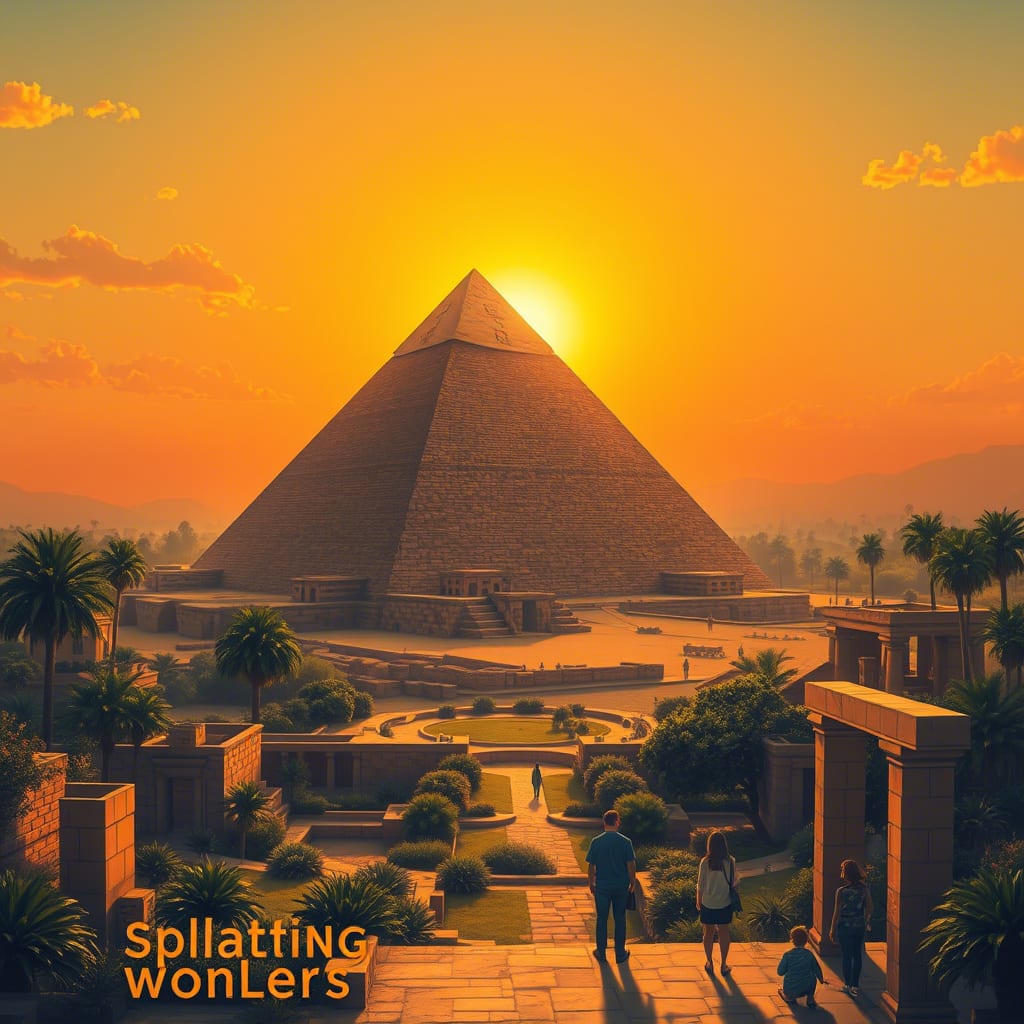
Introduction: Why Are the Seven Wonders Timeless Icons?
Since the dawn of civilization, humans have sought to leave an enduring mark that transcends time. In a world plagued by conflicts and natural disasters, the Seven Wonders of the Ancient World stand as testaments to human ingenuity, blending myth and reality. The concept was formalized by the Greeks in the 2nd century BCE, compiling the greatest architectural achievements of ancient civilizations—from Egypt to Mesopotamia, Greece to Persia.
These wonders were not merely colossal structures but civilizational messages declaring humanity’s ability to surpass natural limits through intellect and skill. Some of these wonders, such as the Great Pyramid of Giza, continue to amaze researchers, while others remain shrouded in mystery. Were the Hanging Gardens of Babylon real, or were they a poetic exaggeration? How did the Colossus of Rhodes, a towering bronze statue, collapse into the sea?
This article delves into the historical context, engineering marvels, and fate of each wonder, answering questions like: Do they still exist? And where are they located today?
1. The Great Pyramid of Giza (Egypt): The Sole Survivor
Historical Details:
Built between 2580–2560 BCE during Pharaoh Khufu’s reign, the Great Pyramid was part of a vast funerary complex, including the pyramids of Khafre and Menkaure and the Great Sphinx. Ancient Egyptians believed in an elaborate afterlife, and pyramids functioned as stairways to eternity for their rulers.
Originally standing at 146.6 meters (now 138.8 meters due to erosion), with a base covering 5.3 hectares, it remained the largest human-made structure until the 19th century.
Construction Secrets:
Egyptians transported stones weighing 2.5 tons on average (some up to 80 tons) from quarries using inclined earthen ramps, wooden sledges, and possibly early pulleys and levers. The King’s Chamber, built from massive granite blocks to resist pressure, features air shafts aligned with stars, suggesting astronomical significance.
Current Status:
Still standing on the Giza Plateau near Cairo, it is the only surviving Ancient Wonder. Recent studies using cosmic-ray muon imaging revealed hidden chambers in 2023, deepening mysteries about its true purpose.
2. The Hanging Gardens of Babylon (Iraq): The Myth That Puzzled Historians
Historical Mystery:
Traditionally attributed to King Nebuchadnezzar II (605–562 BCE) for his wife Amytis, the gardens were described as terraced structures with exotic plants and an advanced waterwheel-powered irrigation system.
However, despite extensive excavations in Babylon, no physical evidence has been found. Some historians theorize that the gardens might have belonged to Sennacherib’s Palace in Nineveh, based on Assyrian reliefs depicting sophisticated irrigation systems.
Existence Theories:
In 2013, Oxford researchers proposed that the gardens were actually in Nineveh, 500 kilometers north of Babylon. Some speculate that Greek historians, particularly Strabo and Philo, may have exaggerated the accounts, creating a legend rather than a real location.
Current Status:
If they existed, they were likely destroyed by earthquakes or invasions. Today, they remain a mythical wonder, though replicas exist in museums like the Babylon Museum in Iraq.
3. The Statue of Zeus at Olympia (Greece): The Divine Masterpiece
Religious Context:
Sculpted by Phidias around 435 BCE, this 12-meter-tall chryselephantine (gold and ivory) statue depicted Zeus seated on a cedar throne in Olympia, birthplace of the ancient Olympics.
Artistic Details:
The statue’s skin was made from ivory plates, while gold formed Zeus’s hair and beard. The throne, adorned with ebony and precious stones, featured mythological scenes, emphasizing Zeus’s divine authority.
Destruction:
Destroyed in a 425 CE fire after being moved to Constantinople, only descriptions and coin engravings survive. The temple ruins lie in Peloponnese, Greece.
4. The Temple of Artemis at Ephesus (Turkey): The Shrine Destroyed Seven Times
Long History:
Built in Ephesus (modern-day Turkey) to honor Artemis, goddess of fertility, the temple was first destroyed in 700 BCE and rebuilt with support from King Croesus in 550 BCE. It featured 127 marble Ionic columns, each 18 meters tall.
Architectural Innovation:
The temple was the first large Greek structure to use Ionic columns and included sculpted reliefs of Amazons by Scopas of Paros.
Final Destruction:
Razed by Gothic invaders in 268 CE, fragments are displayed in the Ephesus Archaeological Museum in Selçuk, Turkey.
5. The Mausoleum at Halicarnassus (Turkey): The Tomb That Became an Icon
Political Context:
Built in 353 BCE by Mausolus, Persian satrap of Caria, the mausoleum symbolized local autonomy. It blended Greek, Persian, and Lycian styles, with sculptures of mythical creatures and warriors.
Architectural Details:
Standing 45 meters tall, it featured a stepped pyramid roof topped with a marble chariot. Reliefs depicted battles, such as the Greeks vs. Amazons.
Collapse:
Destroyed by earthquakes in the 12th century, its stones were reused to build Bodrum Castle. Sculptures are displayed in the Louvre Museum, Paris.
6. The Colossus of Rhodes (Greece): The Giant Who Fell into the Sea
Historical Context:
Erected in 280 BCE to celebrate Rhodes’ victory over Demetrius I, this 33-meter bronze statue of Helios stood at the harbor entrance.
Engineering Feat:
Constructed by Chares of Lindos, it used an iron frame and bronze plates. The right hand held a torch, while the eyes were inlaid with ivory.
Destruction:
Collapsed in a 226 BCE earthquake, its remains were sold as scrap in 653 CE. Modern Rhodes occasionally proposes rebuilding it.
7. The Lighthouse of Alexandria (Egypt): The Mediterranean Beacon That Sank
Strategic Role:
Built on Pharos Island in 280 BCE, this 120-meter-tall lighthouse guided ships into Alexandria’s harbor. Its three-tiered design (square, octagonal, cylindrical) culminated in a mirror-and-fire beacon visible from 50 kilometers away.
Technological Innovation:
Used a polished bronze mirror to reflect sunlight by day and fire by night—a marvel of ancient optics.
Collapse:
Destroyed by earthquakes (1303–1323 CE), its submerged remains were reused to build Citadel of Qaitbay. Underwater excavations continue to uncover fragments.
Conclusion: Wonders Between Reality and Legend
Though six wonders are lost, their stories endure in history and culture. They are not mere ruins but proof that humanity can create beauty even in the darkest times. As we seek modern wonders, the ancient list reminds us that the real challenge is preserving our shared heritage.
About the Creator
Chinese Water Torture
Since the dawn of history, human beings have inflicted unimaginable suffering upon one another. Across centuries, people have devised increasingly elaborate methods of punishment and coercion, some brutally explicit, others deceptively subtle. While devices such as iron maidens, racks, whips, and wheels relied on visible physical agony, there existed a form of torment whose true power lay not in blood or broken bones, but in patience, repetition, and the slow erosion of the mind. This method came to be known as Chinese water torture.
By Pure child2 days ago in History
Saddam Hussein: Rise, Rule, and Fall
Saddam Hussein was born on April 28, 1937, in a small village near Tikrit, Iraq. His early life was marked by poverty, hardship, and a sense of abandonment. His father died before he was born, and his mother remarried soon after. Young Saddam grew up in a household dominated by strict relatives and was exposed to political discussions and nationalist sentiments from an early age. These formative years shaped his personality—ambitious, ruthless, and fiercely determined to rise above his modest beginnings.
By The best writer 2 days ago in History
The Devil's Cut
“Comrade, finally you’re awake.” The voice was smooth, sensual. A flickering incandescent bar was all that lit the white, sterile room. All Vladimir remembered was everything going black. He tried to move his arms and found them strapped to the gurney.
By Matthew J. Fromm5 days ago in Fiction




Comments (1)
I love the seven wonders! I usually wear sunscreen when I’m around them so I don’t melt from bedbugs!