
The Paris Climate Treaty
A Step Toward Saving Our Planet

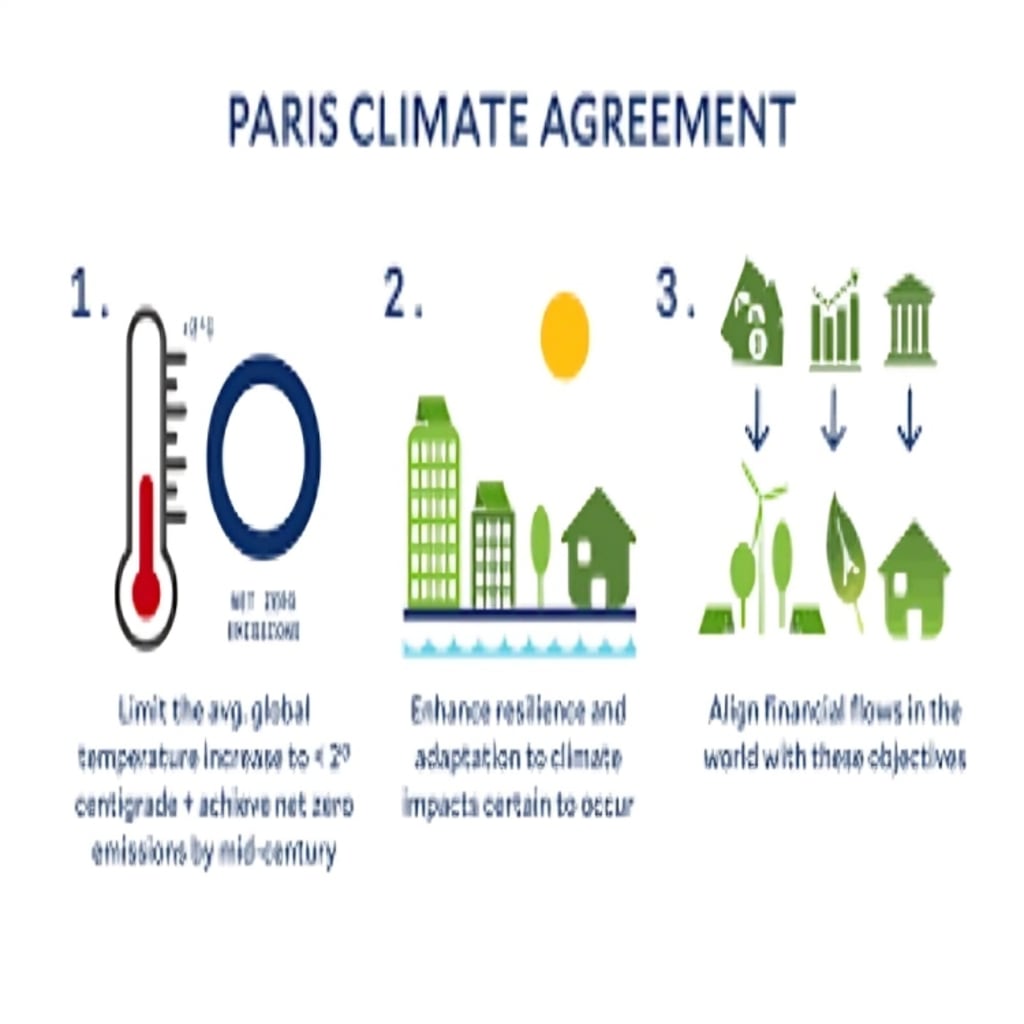
The Paris Climate Treaty, also known as the Paris Agreement, is an important global agreement aimed at fighting climate change. It was created during the United Nations Climate Change Conference (COP21) in December 2015 in Paris, France. Representatives from almost every country in the world came together to make this deal. The goal of the treaty is to protect the Earth by reducing greenhouse gas emissions and keeping global warming under control.
What is Climate Change?
Climate change refers to the long-term changes in Earth's weather patterns and temperatures. It is mainly caused by human activities like burning fossil fuels (coal, oil, and natural gas), cutting down forests, and industrial processes. These activities release gases, such as carbon dioxide (CO₂) and methane, into the atmosphere. These gases trap heat, causing the planet to warm up, which leads to problems like melting glaciers, rising sea levels, and more extreme weather events.
The Purpose of the Paris Agreement
The Paris Climate Treaty aims to limit the increase in the Earth’s average temperature. Scientists believe that if the temperature rises too much, it could have disastrous effects on our planet.
Main Goal: Keep global warming below 2°C (3.6°F) compared to pre-industrial levels.
Additional Aim: Try to limit the temperature increase to 1.5°C (2.7°F) to reduce the risks even further.
To achieve these goals, countries agreed to take steps to reduce their greenhouse gas emissions.
How the Paris Agreement Works
The Paris Agreement works by asking each country to make its own plan, called a Nationally Determined Contribution (NDC). These plans include the actions each country will take to reduce emissions and fight climate change.
Every Country Has a Role: Both developed and developing countries must participate. Wealthier countries often have more resources to reduce emissions, but poorer countries also need support to make changes.
Transparency and Accountability: Countries must report their progress every five years. This helps the world see whether they are meeting their goals.
Flexibility: The agreement allows each country to choose how to meet its goals, considering its own situation and challenges.
Support for Developing Nations
One key part of the Paris Agreement is helping developing countries. Many poorer nations are more vulnerable to the effects of climate change, like floods, droughts, and storms. The agreement encourages wealthier nations to provide financial aid, technology, and support to help these countries adapt to climate change and reduce their emissions.
Challenges to the Agreement
While the Paris Agreement is an important step forward, it faces several challenges:
Lack of Enforcement: There are no penalties for countries that fail to meet their goals. This relies on trust and cooperation.
Funding Issues: Developing countries need financial help, but not all rich nations provide the promised funding.
Ambition Gap: Some experts believe that the goals set by many countries are not ambitious enough to prevent dangerous levels of warming.
Why It Matters
The Paris Agreement is important because climate change affects everyone. Rising temperatures can lead to more natural disasters, food shortages, and health problems. It can also harm wildlife and ecosystems. By working together, countries can reduce these risks and create a healthier, more sustainable future.
Progress So Far
Since the treaty was signed in 2015, many countries have made progress. Renewable energy, such as wind and solar power, has become more common. Governments and businesses are working to reduce emissions, and more people are aware of the need to fight climate change.
However, there is still much work to do. Scientists warn that current efforts may not be enough to meet the 1.5°C goal. Stronger action is needed to reduce emissions and protect the planet.
The Role of Individuals
While governments and businesses play a big role, individuals can also help fight climate change. Some ways to make a difference include:
Using energy-efficient appliances.
Reducing waste and recycling.
Supporting clean energy and sustainable products.
Spreading awareness about the importance of climate action.
Conclusion
The Paris Climate Treaty is a historic agreement that brings the world together to fight climate change. While it faces challenges, it also offers hope for a better future. By working together, countries can reduce emissions, protect vulnerable communities, and ensure a healthy planet for future generations.
Whether it’s through government policies, business innovations, or individual actions, everyone has a role to play in the fight against climate change. The Paris Agreement reminds us that global problems require global solutions, and together, we can make a difference.
About the Creator
Farhan Sayed
Hi, I’m Farhan Sayed 🌹! I’m here to share stories, thoughts, and maybe sprinkle a little magic along the way. ✨
💡 Passion for:
Exploring new ideas 🧠
Writing from the heart ❤️
Inspiring and connecting with amazing souls like you 🌍
Keep reading
More stories from Farhan Sayed and writers in History and other communities.
The Roman Salute
The Roman salute is a gesture where a person raises one arm forward with the palm facing down or slightly up. It is often associated with ancient Rome, but its real history and meaning are much more complicated. Over the years, this gesture has taken on different meanings in art, politics, and culture, making it a topic of debate and interest.
By Farhan Sayedabout a year ago in History
When the Caliph’s Head Hung from the Gates of Baghdad
In the early ninth century, the Abbasid Caliphate stood as one of the most powerful empires in the world. Stretching from North Africa to Central Asia, it was a center of wealth, culture, and intellectual achievement. At the height of this golden age ruled the legendary caliph Harun al-Rashid, whose reign is often remembered as a period of prosperity and brilliance. Yet after his death in 809 CE, the empire he left behind descended into a devastating civil war between his own sons—a conflict that would scar the Abbasid state for generations.
By Irshad Abbasi about 2 hours ago in History


Comments
There are no comments for this story
Be the first to respond and start the conversation.