
The Roman Salute
A Symbol with a Complex History

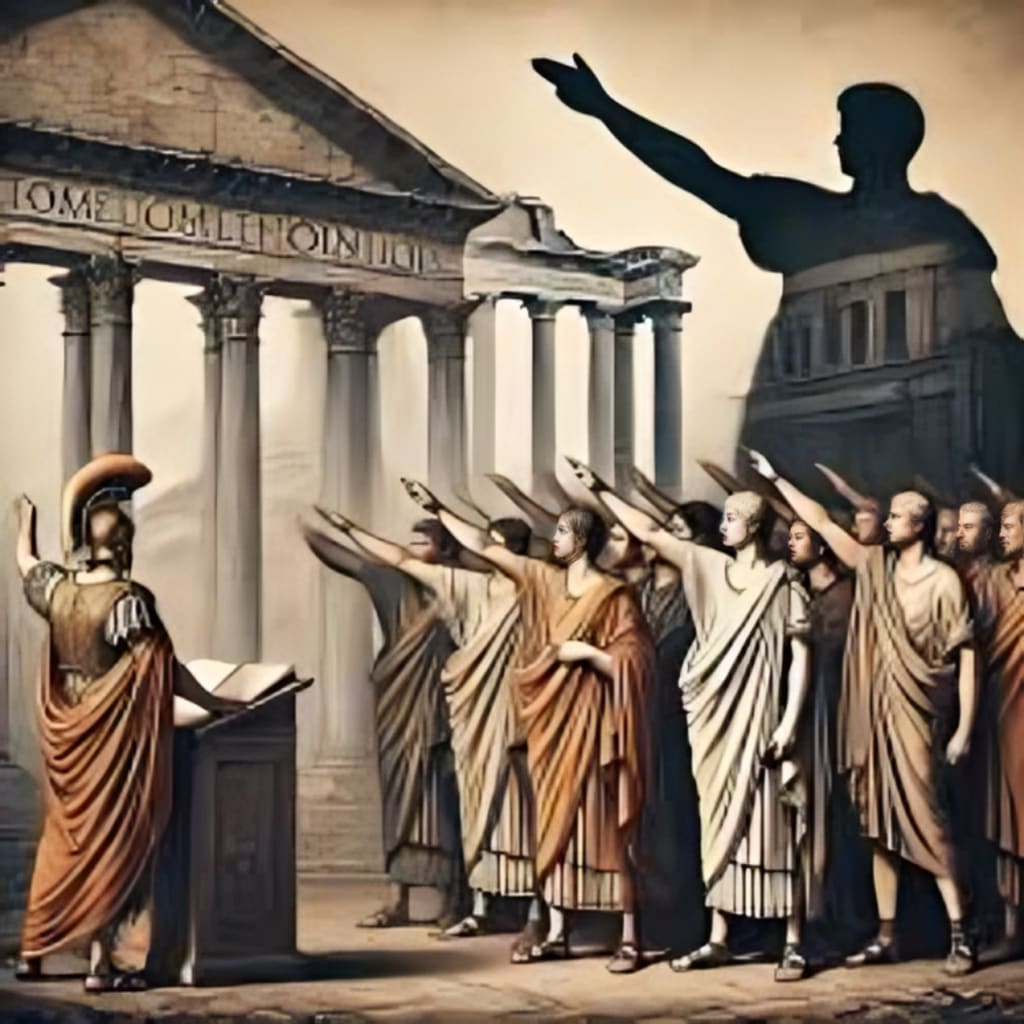
The Roman salute is a gesture where a person raises one arm forward with the palm facing down or slightly up. It is often associated with ancient Rome, but its real history and meaning are much more complicated. Over the years, this gesture has taken on different meanings in art, politics, and culture, making it a topic of debate and interest.
The Myth of Ancient Rome
Many people believe that the Roman salute was widely used in ancient Rome. It is often imagined as a formal greeting or a way of showing loyalty to leaders. However, historians have found no solid evidence that the Roman salute was used in this way during ancient times.
The idea of this salute being linked to Rome likely comes from how people interpreted ancient art. Some paintings and sculptures show figures raising their arms, but these gestures often had other meanings, such as pointing or making a blessing.
Rise in Modern Art and Culture
The Roman salute became popular in the 19th and early 20th centuries through art and theater. It was used in plays and operas about ancient Rome to represent loyalty and respect. For example, in paintings and stage performances depicting Roman scenes, characters often raised their arms to greet each other or to address an audience.
One of the most famous examples is Jacques-Louis David’s painting "The Oath of the Horatii" (1784), which shows Roman soldiers raising their arms in a pledge. This painting influenced how people imagined ancient Roman traditions, even though it was created centuries later.
Adoption in Politics
In the 20th century, the Roman salute became more than just a gesture in art. It was adopted by political movements, particularly in Europe. The fascist regimes of Italy under Benito Mussolini and Nazi Germany under Adolf Hitler used the salute as a symbol of power and unity.
In these contexts, the Roman salute was no longer connected to ancient Rome but became a political tool. It was used in rallies, speeches, and propaganda to promote loyalty to the state and its leaders. Unfortunately, this association with authoritarian regimes gave the salute a negative meaning.
Banned and Controversial
After World War II, the use of the Roman salute became illegal or highly controversial in many countries. For example:
In Germany and Austria, using the salute as part of Nazi symbols is banned.
In Italy, it is also seen as a symbol of fascism, and its use can lead to legal consequences.
Even in places where it is not banned, the salute is viewed as offensive and connected to hate speech or extremist ideologies.
Cultural References and Misunderstandings
The Roman salute has appeared in pop culture, often without its controversial political meaning. For example, in films about ancient Rome, such as "Ben-Hur" or "Gladiator," characters use the salute to reflect historical accuracy. However, these depictions are based on artistic imagination, not historical fact.
In some cases, the gesture has caused misunderstandings. People may use the salute without knowing its history, leading to criticism or accusations of supporting extremist views.
Other Similar Gestures
It’s important to note that gestures like the Roman salute exist in other cultures and traditions. For example:
In the U.S., a similar gesture was once used during the Pledge of Allegiance. Called the "Bellamy salute," it was discontinued in the 1940s because of its resemblance to the Roman salute.
In some cultures, raising an arm may symbolize greeting or respect without any political meaning.
These examples show how the meaning of a gesture can change based on context and history.
A Symbol of Debate
The Roman salute remains a topic of debate. Some people view it as a historical gesture linked to ancient Rome and art. Others see it as a harmful symbol connected to fascism and hate.
Its dual meaning makes it a powerful reminder of how symbols can evolve over time. What starts as an artistic or cultural gesture can take on new meanings depending on how it is used.
Conclusion
The Roman salute is a fascinating example of how history, culture, and politics can shape the meaning of a symbol. While it may have roots in artistic interpretations of ancient Rome, its modern associations with political regimes have made it controversial.
Understanding the history of the Roman salute helps us see how gestures and symbols can change over time. It also reminds us to be careful about the meanings we attach to them, as they can influence how people view and interpret the past and the present.
About the Creator
Farhan Sayed
Hi, I’m Farhan Sayed 🌹! I’m here to share stories, thoughts, and maybe sprinkle a little magic along the way. ✨
💡 Passion for:
Exploring new ideas 🧠
Writing from the heart ❤️
Inspiring and connecting with amazing souls like you 🌍
Keep reading
More stories from Farhan Sayed and writers in History and other communities.
Snowstorm Weather Forecast for the UK
The United Kingdom is preparing for a significant snowstorm, and weather experts are warning people to get ready. Winter weather can bring beauty, but it can also cause challenges for travel, homes, and daily life. Here's everything you need to know about the upcoming snowstorm in simple terms.
By Farhan Sayedabout a year ago in History
Ali Khamenei Leadership, Legacy, and the Influence of His Family
Ali Khamenei is one of the most influential political and religious figures in the contemporary Middle East. As the Supreme Leader of Iran since 1989, he has played a central role in shaping the country’s domestic governance, foreign policy, and ideological direction for more than three decades. His leadership position gives him authority over major state institutions, including the armed forces, the judiciary, and state media, making him the highest-ranking official in the Islamic Republic.
By Irshad Abbasi 5 days ago in History
"Scream 7" (2026): Running out of Fresh Screams
This is the seventh time we’ve had a Ghostface crisis. Scream 7 is the latest edition of the Scream franchise. Sydney Prescott and her family are under attack by another anonymous killer dressed in a Ghostface costume. While having issues with her daughter, Tatum, they run from the bloody murders, trying to determine who is behind it all.
By Marielle Sabbag4 days ago in Horror



Comments
There are no comments for this story
Be the first to respond and start the conversation.