
The Ophanim: Unraveling the Mystery of the Wheel Angels
Beyond Wings and Halos: Unveiling the Enigmatic Ophanim, the Wheel Angels of God's Throne
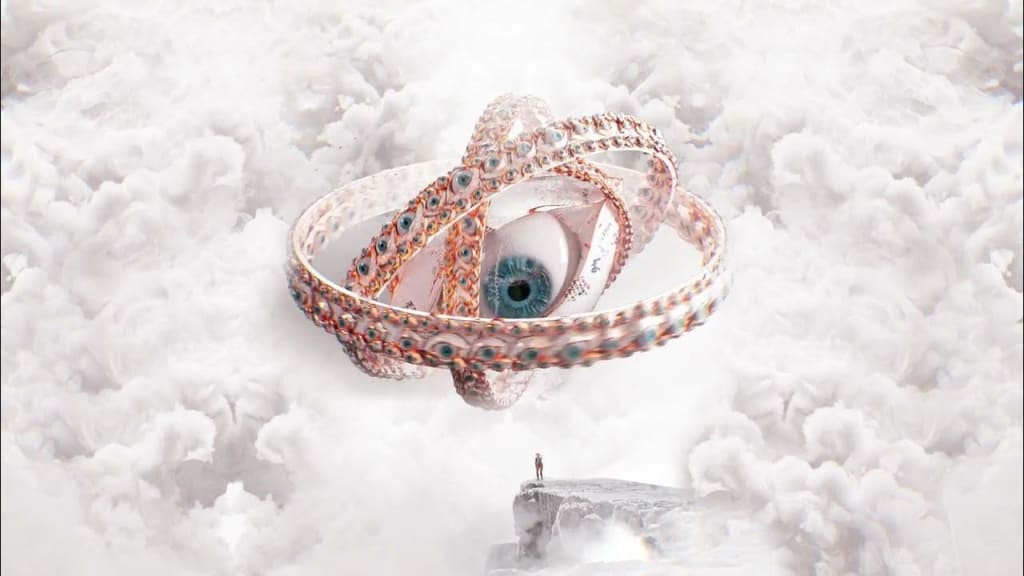
The Ophanim: Unraveling the Mystery of the Wheel Angels
When we picture an angel, we often envision a serene figure with magnificent wings, a gentle countenance, and a benevolent aura. But within the celestial hierarchy, there exists an order of angels whose appearance is far more abstract, powerful, and enigmatic. These are the Ophanim, the so-called "wheel angels," whose very form defies human understanding and whose purpose is tied to the most profound mystery of the divine throne.
This guide will take you on a journey to uncover the awe-inspiring nature of the Ophanim, exploring their origins in sacred texts, the deep symbolism of their form, and their powerful role as guardians of the divine presence.
What are the Ophanim? The Throne Angels
The name Ophanim (or Ofanim) is a Hebrew word that translates to "wheels." In Jewish mystical traditions and Kabbalah, they are considered a high-ranking angelic order, often placed in the second tier of the celestial hierarchy, just below the Seraphim. They are inextricably linked to the divine throne, and for this reason, they are sometimes referred to as the ophanim throne angel.
Unlike angels who serve as messengers to humanity, the angel Ophanim exist in a state of eternal motion and proximity to God. Their purpose is not to interact with humans but to serve as the wheels of the divine chariot, or Merkabah. This concept is one of the most sublime and profound in mystical theology, representing God's omnipresence and immense power.
The Ophanim are the kinetic force of the divine will, always moving in perfect synchronicity and order. Their very existence is a testament to the harmony and complexity of the divine cosmos.
The Ophanim in the Bible: Ezekiel's Vision
The most vivid and detailed account of the Ophanim in the Bible comes from the prophet Ezekiel. In his famous vision of the divine chariot (Merkabah), Ezekiel describes a breathtaking spectacle that has captivated theologians and mystics for centuries. This is the origin of the ophanim wheel angel concept.
Ezekiel saw four living creatures (the Chayot Ha Kodesh) and alongside them, four magnificent wheels. The description is as follows:
"As I looked at the living creatures, I saw a wheel on the ground beside each creature with its four faces. This was the appearance and structure of the wheels: they gleamed like chrysolite; all four looked alike. Each appeared to be made like a wheel intersecting a wheel. As they moved, they would go in any one of the four directions the creatures faced; the wheels did not turn about as the creatures went." (Ezekiel 1:15-17)
This "wheel within a wheel" structure is the defining feature of the Ophanim. The wheels were also "full of eyes all around," symbolizing their omniscience and constant watchfulness. Their movement was not random but perfectly aligned with the will of the Chayot Ha Kodesh, the living creatures that drove the chariot. The sound of their wings was like a great rushing water, a testament to their overwhelming power and majesty.
The Profound Meaning of the Ophanim
The symbolism of the Ophanim is rich with layers of meaning. Their appearance as wheels signifies eternal movement, time, and the cycles of the cosmos. The "wheel within a wheel" structure represents the intricate, multi-dimensional nature of the universe and the interconnectedness of all things.
The eyes that cover the wheels symbolize God's all-seeing presence. They are a constant reminder that nothing escapes the divine gaze and that the entire cosmos is held within God's perfect and knowing vision. The seamless, straight-ahead movement of the wheels, without ever having to turn, is a symbol of the direct and unwavering nature of divine will. There is no hesitation or deviation in the fulfillment of God's purpose.
The ophanim meaning is therefore tied to the concepts of divine omnipresence, omniscience, and the majestic, ordered complexity of creation. They are a testament to the order that governs the universe and the unstoppable force of God's will.
Seeing Ophanim: A Mystical Experience
The concept of seeing Ophanim is not about a physical sighting in the traditional sense. These beings are part of the divine throne, existing on a plane far beyond the material world. To "see" the Ophanim is a mystical experience, a prophetic vision akin to Ezekiel's. It is an experience of deep spiritual insight, often attained through contemplation, prayer, or altered states of consciousness. It is a glimpse into the mechanics of the divine, a moment of profound awe that reveals the true scale and power of the divine cosmos.
A Note on Ophanim in Islam
When exploring the concept of Ophanim in Islam, it's important to note that the term itself is not present in the Quran or Hadith. However, Islamic theology also describes angels of immense scale and power who carry the throne of God. While the names and specific descriptions may differ, the conceptual parallel of powerful, heavenly beings attending to God's throne is a shared theme across Abrahamic faiths, reflecting the universal human attempt to comprehend the divine.
Explore the Angels and Their Hierarchies
Eager to learn more about these powerful beings and their place in the celestial order?
- Discover the specific ranks and roles within the hierarchy of the Ophanim.
- Get a complete overview of all the celestial orders and their functions in the divine cosmos by exploring the Angelic Hierarchies.
About the Creator
Sthephanie
Unlock the meaning of angel numbers and messages from your guides. Dive into divine signs and support your spiritual journey . ✨ https://photopera.org/
Keep reading
More stories from Sthephanie and writers in History and other communities.
A Journey into the Realm of the Malachim: Angels, Alphabet, and Ancient Mysticism
Angels have captivated human imagination for millennia, serving as divine messengers, guardians, and powerful celestial beings. Yet, within the vast tapestry of angelology, there are specific orders and concepts that remain shrouded in mystery. One such fascinating subject is the Malachim, a term that refers not only to a specific class of angels but also to a powerful and mystical alphabet. This guide will take you on a deep dive into the world of the Malachim, exploring their role in ancient texts, their place in angelic hierarchies, and the secrets of the unique script that bears their name.
By Sthephanie6 months ago in History
Chinese Water Torture
Since the dawn of history, human beings have inflicted unimaginable suffering upon one another. Across centuries, people have devised increasingly elaborate methods of punishment and coercion, some brutally explicit, others deceptively subtle. While devices such as iron maidens, racks, whips, and wheels relied on visible physical agony, there existed a form of torment whose true power lay not in blood or broken bones, but in patience, repetition, and the slow erosion of the mind. This method came to be known as Chinese water torture.
By Pure child3 days ago in History
Saddam Hussein: Rise, Rule, and Fall
Saddam Hussein was born on April 28, 1937, in a small village near Tikrit, Iraq. His early life was marked by poverty, hardship, and a sense of abandonment. His father died before he was born, and his mother remarried soon after. Young Saddam grew up in a household dominated by strict relatives and was exposed to political discussions and nationalist sentiments from an early age. These formative years shaped his personality—ambitious, ruthless, and fiercely determined to rise above his modest beginnings.
By The best writer 3 days ago in History
The Devil's Cut
“Comrade, finally you’re awake.” The voice was smooth, sensual. A flickering incandescent bar was all that lit the white, sterile room. All Vladimir remembered was everything going black. He tried to move his arms and found them strapped to the gurney.
By Matthew J. Fromm6 days ago in Fiction




Comments
There are no comments for this story
Be the first to respond and start the conversation.