
The Ocean’s Oldest Secret: A Clam That Lived for Over 500 Years
The 500-Year Life of Ming the Clam: Nature’s Quiet Timekeeper Beneath the Waves

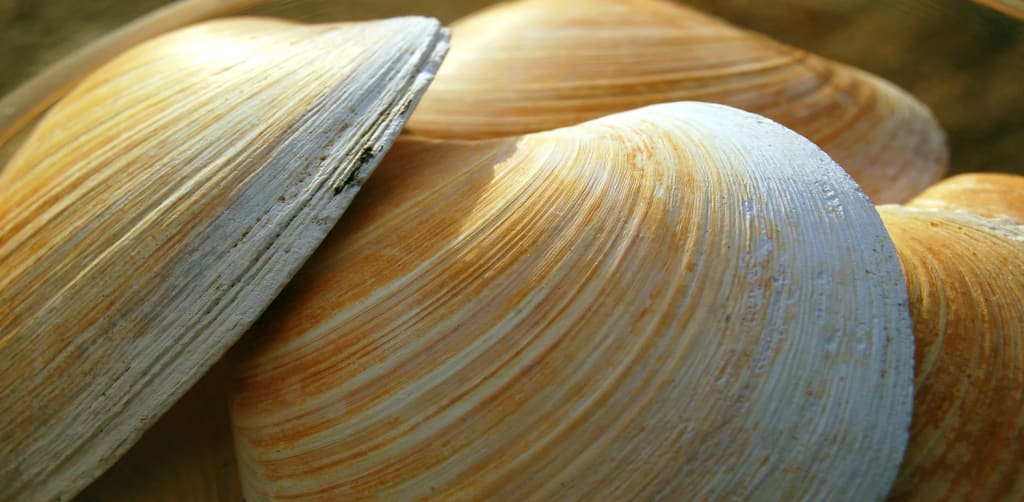
A Surprising Discovery Beneath the Waves
When it comes to the longest-living creatures on Earth, ancient trees like bristlecone pines or slow-moving Galápagos tortoises usually dominate the conversation. But deep beneath the icy waters off the coast of Iceland, an unassuming mollusk shattered those expectations. In 2006, scientists discovered what would become known as Ming the Clam—a specimen of the species Arctica islandica, later confirmed to be the oldest living clam in recorded history.
Unlike charismatic animals or towering flora, this clam lived unnoticed for over five centuries, resting silently on the seabed while the human world above it transformed beyond recognition. Its story not only captivated the scientific community but also sparked ethical debates, environmental awareness, and reflection on nature’s resilience.
Who Was Ming the Clam?
Ming the Clam belonged to a species already known for its longevity. Arctica islandica, also called the ocean quahog, is a bivalve mollusk capable of living for centuries. But Ming broke all known records. Through a scientific method known as sclerochronology, researchers determined the clam had lived for a staggering 507 years.
This method, similar to counting tree rings, involves analyzing the clam’s shell growth bands to determine age. Based on these rings, scientists dated Ming’s birth to the year 1499—a time when Leonardo da Vinci was alive, the Ming Dynasty ruled China, and European explorers were just beginning to chart the New World.
The clam’s nickname, “Ming,” came from that Chinese dynasty, which reflected the period during which the clam began its life. It’s a fitting name, considering the centuries of global history that unfolded while Ming remained undisturbed on the ocean floor.
Ming the Clam’s Accidental Death
As incredible as the discovery was, it came with an unfortunate and irreversible consequence. Ming the Clam’s accidental death occurred during the research process. Scientists, unaware of its age at the time, opened the clam to study its internal tissues—a standard procedure in marine biology. It was only after the fact, while analyzing the shell, that they realized the clam’s unprecedented longevity.
The revelation triggered public backlash and stirred discussions within the scientific community. Many criticized the researchers, questioning the balance between scientific curiosity and ethical responsibility. Should we open every clam in search of data, even if it risks destroying something irreplaceable?
Though unintentional, Ming the Clam’s accidental death served as a wake-up call. It brought global attention to the idea that some of Earth’s most ancient life forms might be quietly living—and dying—without us ever realizing their significance until it’s too late.
A Natural Archive of Oceanic History
Despite the tragedy, Ming left behind more than just a shell—it left a treasure trove of environmental data. Each of the clam’s annual growth rings recorded conditions in the surrounding ocean, offering a detailed climate timeline that spanned more than five centuries.
By studying the shell, scientists gained insights into historical changes in ocean temperature, salinity, and even evidence of large-scale climate events such as volcanic eruptions or shifts in ocean currents. This kind of long-term dataset is rare and immensely valuable in the study of climate change.
In essence, Ming acted as a biological time capsule—preserving a continuous environmental record from the age of Renaissance thinkers to the digital era.
Why Ming’s Story Matters
The tale of Ming the Clam isn’t just about breaking records—it’s about what such a life represents. In a world increasingly dominated by speed, noise, and change, the life of a clam that spanned five centuries reminds us of the power of patience and persistence.
This creature outlived generations of humans, multiple empires, and entire civilizations. It experienced neither war nor peace, ambition nor fear. It simply existed—peacefully, silently, and with extraordinary longevity.
The oldest living clam in recorded history challenges us to think differently about life and time. It encourages us to look more closely at the quiet corners of our planet, where the most remarkable stories often go untold.
A Legacy of Caution and Curiosity
Following the discovery and Ming the Clam’s accidental death, researchers have shifted how they approach the study of long-lived species. Now, there’s a greater emphasis on non-invasive techniques and increased awareness of the ethical dimensions of marine biology.
There’s also growing scientific interest in Arctica islandica as a model for aging research. How does this species avoid the cellular damage that plagues most animals? Could understanding the clam’s biology help unlock secrets of human aging or longevity? These questions remain under investigation, sparked in part by the legacy of Ming.
Nature’s Quiet Reminders
Ming’s story resonates not because the clam did anything remarkable, but because it was remarkable simply by existing. It lived through the rise of industrialization, global pandemics, the invention of electricity, and the birth of the internet—without ever leaving the ocean floor. There’s something profoundly humbling in that fact.
Today, Ming the Clam is more than a data point. It’s a symbol of the planet’s silent endurance and a reminder of the mysteries still hidden in the natural world. While the clam’s life ended too soon, its impact continues to ripple across science, ethics, and environmental awareness.
Conclusion:
A Story Worth RememberingIn remembering the oldest living clam in recorded history, we gain more than knowledge—we gain perspective. We’re reminded that not all significant lives make noise. Some leave no footprints, only shell rings. Yet those lives can still speak volumes, long after they’ve ended.
Ming’s life, and its untimely death, taught us to listen more carefully to nature. In the deep ocean, time moves slowly, but meaning accumulates quietly. And sometimes, it takes the death of a 500-year-old clam to remind us just how much we still don’t know.
About the Creator
Keep reading
More stories from charliesamuel and writers in History and other communities.
Understanding Red Dot and Holographic Sights: A Modern Guide for Shooters and Airsoft Enthusiasts
Whether you're an airsoft enthusiast, a sport shooter, or just interested in firearm optics, chances are you've come across terms like red dot sight or holographic sight. These tools are part of a growing world of optical enhancements that improve target acquisition and shooting accuracy. But while they may look similar at a glance, red dot and holographic sights operate in fundamentally different ways. Understanding their differences, strengths, and ideal use cases can help you make more informed decisions when choosing optics for real or simulated firearms.
By charliesamuel6 months ago in Futurism
The Dalai Lama: Life, Teachings, and Global Influence
Early Life and Recognition The 14th Dalai Lama was born on July 6, 1935, in a small farming village called Taktser in northeastern Tibet (present-day Qinghai Province, China). His birth name was Lhamo Dhondup. Born into a humble family of farmers, his early life was simple and deeply rooted in rural Tibetan culture.
By Say the truth about 2 hours ago in History
Stanislav Kondrashov’s Oligarch Series: Power, Economy, and Culture in Ancient Corinth
The Oligarch Series by Stanislav Kondrashov examines how systems of power emerge, stabilize, and adapt over time. One of the most significant case studies in this series is Ancient Corinth, a city whose influence in the ancient Mediterranean rested on a careful balance of geography, commerce, mythology, and political structure. Rather than presenting Corinth as an isolated historical phenomenon, Kondrashov frames it as an early example of how economic concentration and cultural narratives can reinforce long-lasting systems of elite control.
By Stanislav Kondrashov5 days ago in History




Comments
There are no comments for this story
Be the first to respond and start the conversation.