
The Dalai Lama: Life, Teachings, and Global Influence
The Dalai Lama is one of the most respected spiritual leaders in the world, known for his teachings on compassion, non-violence, peace, and universal responsibility. He is the spiritual head of Tibetan Buddhism and a global symbol of harmony and moral leadership. Over the decades, the Dalai Lama has transcended religious boundaries, inspiring millions across cultures, nations, and belief systems.

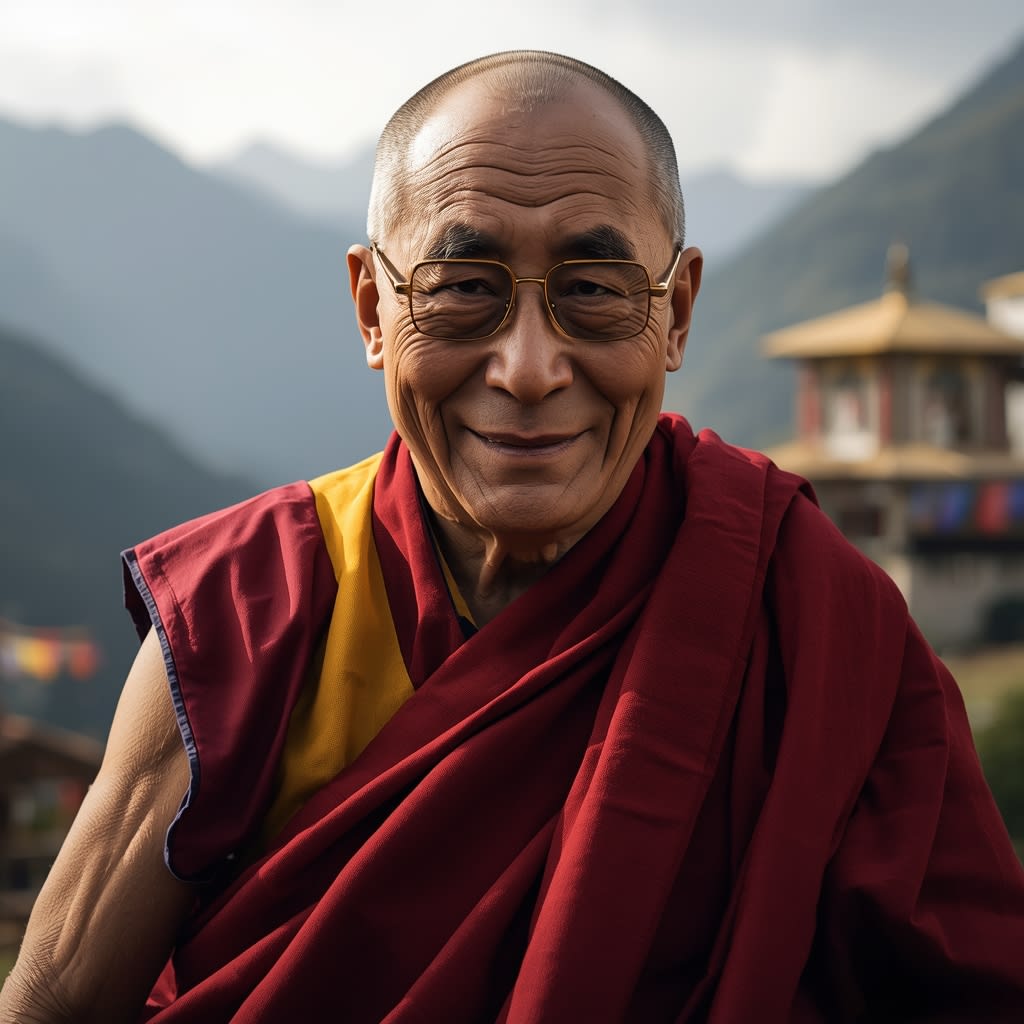
Early Life and Recognition
The 14th Dalai Lama was born on July 6, 1935, in a small farming village called Taktser in northeastern Tibet (present-day Qinghai Province, China). His birth name was Lhamo Dhondup. Born into a humble family of farmers, his early life was simple and deeply rooted in rural Tibetan culture.
At the age of two, he was identified as the reincarnation of the 13th Dalai Lama by a search party of Tibetan monks. According to Tibetan Buddhist tradition, the Dalai Lama is believed to be the reincarnation of Avalokiteśvara, the Bodhisattva of Compassion. After rigorous tests and spiritual confirmations, the child was officially recognized and taken to Lhasa, the capital of Tibet, to begin monastic training. He was renamed Tenzin Gyatso, meaning “Ocean of Wisdom.”
The Dalai Lama: Life, Teachings, and Global Influence
The Dalai Lama is one of the most respected spiritual leaders in the world, known for his teachings on compassion, non-violence, peace, and universal responsibility. He is the spiritual head of Tibetan Buddhism and a global symbol of harmony and moral leadership. Over the decades, the Dalai Lama has transcended religious boundaries, inspiring millions across cultures, nations, and belief systems.
Spiritual and Political Leadership
In Tibetan tradition, the Dalai Lama held both spiritual and temporal authority. In 1950, at just 15 years of age, Tenzin Gyatso was formally enthroned as the political leader of Tibet during a period of great instability. That same year, Chinese forces entered Tibet, marking the beginning of a long and complex political conflict.
Despite his youth, the Dalai Lama attempted to negotiate peacefully with the Chinese government to protect Tibetan autonomy and culture. However, tensions escalated, and in 1959, following a failed uprising in Lhasa, the Dalai Lama was forced to flee Tibet. He crossed the Himalayas on foot and sought asylum in India, where he has lived in exile ever since.
Life in Exile and Preservation of Tibetan Culture
After settling in Dharamshala, Himachal Pradesh, India, the Dalai Lama established the Central Tibetan Administration, a democratic government-in-exile. From exile, he focused on preserving Tibetan culture, language, religion, and identity, which he feared were under threat in Tibet.
He promoted democratic reforms among the Tibetan people, eventually giving up his political authority in 2011, transferring power to an elected leadership. This move reinforced his belief in democracy and modern governance, even within a deeply traditional society.
Teachings and Philosophy
At the core of the Dalai Lama’s teachings is compassion (karuṇā). He emphasizes that compassion is not limited to religious practice but is essential for human survival and happiness. According to him, inner peace leads to outer peace, and global problems can only be solved through mutual understanding and kindness.
Key principles of his philosophy include:
Non-violence (Ahimsa)
Interfaith harmony
Mindfulness and emotional intelligence
Ethics without religion
He often states that one does not need to be Buddhist to practice compassion, making his message universally accessible.
Global Influence and Recognition
The Dalai Lama has traveled extensively, delivering lectures and engaging in dialogues with scientists, philosophers, politicians, and religious leaders. He has played a key role in promoting interfaith dialogue, encouraging mutual respect among different religions.
In 1989, he was awarded the Nobel Peace Prize for his non-violent struggle for the liberation of Tibet and his efforts to resolve conflicts peacefully. The Nobel Committee praised his consistent opposition to the use of violence, even in the face of extreme oppression.
He has also authored and co-authored numerous books on Buddhism, ethics, happiness, science, and compassion, making ancient Tibetan wisdom accessible to the modern world.
Science and Buddhism
One of the most unique aspects of the Dalai Lama’s work is his engagement with modern science. He has encouraged dialogue between Buddhist monks and scientists, particularly in fields such as neuroscience, psychology, and quantum physics. He famously stated that if scientific evidence disproves a Buddhist belief, Buddhism must change.
This openness has helped bridge the gap between spirituality and science, contributing to research on meditation, mental health, and emotional well-being.
The Dalai Lama Today and His Legacy
Now in his late eighties, the Dalai Lama remains active, delivering teachings and messages through global platforms. He has addressed questions regarding his succession, stating that the institution of the Dalai Lama will continue only if it serves a meaningful purpose.
His legacy extends far beyond Tibetan Buddhism. He is widely admired as a moral authority, a voice for peace in a violent world, and a reminder of the power of kindness in human life.
Conclusion
The Dalai Lama’s life is a remarkable journey from a small Tibetan village to the world stage. Despite exile, political struggle, and cultural loss, he has remained committed to peace, compassion, and humanity. His teachings remind us that true strength lies not in power or dominance but in understanding, empathy, and inner transformation.
In a world often divided by conflict, the Dalai Lama stands as a timeless symbol of hope, wisdom, and universal love.
About the Creator
Say the truth
"Say the Truth: Explain Everything in the World" is your trusted source for uncovering facts and exploring the wonders of history, science, technology, and beyond. We simplify complex ideas and reveal truths to inspire curiosity .
Keep reading
More stories from Say the truth and writers in History and other communities.
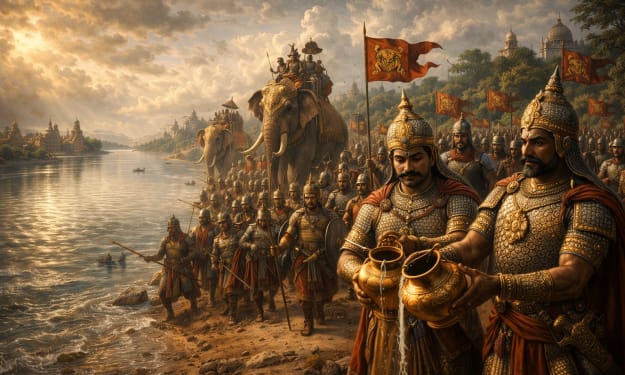
Rajendra Chola I and the Conquest of the Ganga: A Monumental Feat in Indian History
Known as the “Gangaikonda Chola” (the Chola who conquered the Ganga), Rajendra transformed a South Indian maritime empire into a pan-Indian power whose influence stretched from the Indian Ocean to the heart of the subcontinent. This campaign was not merely a military raid but a bold statement of imperial ambition, strategic brilliance, and cultural confidence.
By Say the truth 6 days ago in History
The Holland Hotel - A Railroad-Era Landmark in East Tawas
When the Holland Hotel opened on July 31, 1893, East Tawas was staking its future on rail connections and lake traffic. Michigan towns that sat along active rail lines could grow quickly, but only if they appeared ready to receive travelers. The Holland Hotel was built to send that signal.
By Paul Austin8 days ago in History
"The Power of Belief: Ideology in the Roman Kingdom"
The Rise of Ideology in the Roman Kingdom In the earliest days of Rome, long before it became a republic or an empire, the Roman Kingdom was bound together by more than kings, armies, or stone walls. What truly unified Rome was a powerful and carefully shaped ideology—one that defined how Romans understood authority, duty, morality, and identity. This ideological foundation transformed a small settlement on the banks of the Tiber River into a disciplined and resilient civilization, prepared to rule others long after its kings were gone.
By The best writer 8 days ago in History


Comments
There are no comments for this story
Be the first to respond and start the conversation.