
Understanding Red Dot and Holographic Sights: A Modern Guide for Shooters and Airsoft Enthusiasts
Explore how red dot and holographic sights are changing the way people aim, shoot, and play.

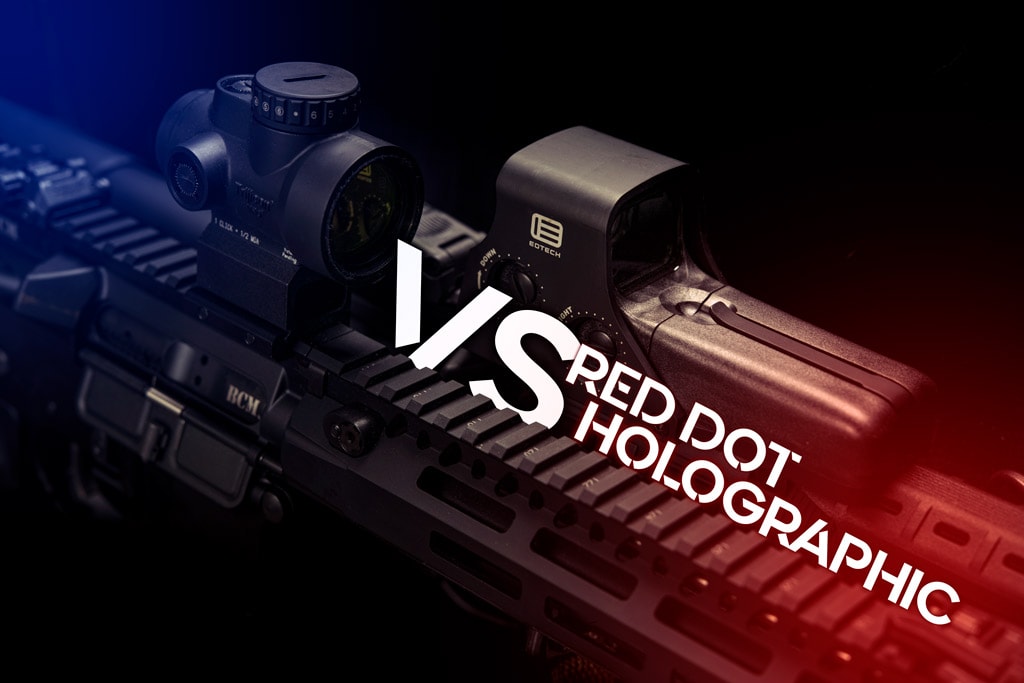
Whether you're an airsoft enthusiast, a sport shooter, or just interested in firearm optics, chances are you've come across terms like red dot sight or holographic sight. These tools are part of a growing world of optical enhancements that improve target acquisition and shooting accuracy. But while they may look similar at a glance, red dot and holographic sights operate in fundamentally different ways. Understanding their differences, strengths, and ideal use cases can help you make more informed decisions when choosing optics for real or simulated firearms.
This article delves into the history, design, application, and evolving technology behind red dot and holographic sights—drawing on reliable sources and product collections such as those found on Yuvfireer, a site offering a wide range of red dot sight and airsoft sights solutions.
A Brief History of the Red Dot Sight
To understand how these optical devices came into mainstream use, it's worth taking a quick look back. According to Wikipedia’s article on red dot sights, the concept emerged in the early 1970s with the introduction of the first reflex sights, a type of non-magnifying reflector sight that used collimated light to create a reticle image. This allowed the shooter to maintain focus on both the reticle and the target simultaneously—a crucial advancement in fast-paced environments.
Initially bulky and expensive, red dot optics were largely limited to military and elite shooting circles. But with the advent of compact LED technology, these sights have become more affordable, lighter, and suitable for civilian use. Today, you can find a wide array of red dot sight options for rifles, pistols, and even airsoft sights for recreational players.
What Is a Red Dot Sight?
At its core, a red dot sight is a type of non-magnifying optic that uses a small LED to project a red (or sometimes green) dot onto a lens. This dot serves as the aiming reticle. The technology is designed to work with both eyes open, enhancing peripheral awareness and speed. This is especially useful in dynamic environments such as sport shooting or tactical simulations.
If you're looking to explore a variety of these sights, websites like Yuvfireer offer a curated range of red dot optics for both live fire and airsoft sights setups. These sights come in many styles—some tube-shaped, others open—and often feature adjustable brightness levels, shock resistance, and quick-detach mounts.
How Holographic Sights Differ
While holographic sights may appear similar, their internal technology is quite distinct. Instead of projecting an LED dot, these optics use a laser to illuminate a holographic reticle embedded within the sight’s glass. The result is a more precise, parallax-free image that remains centered regardless of the shooter’s eye position.
Holographic sights are particularly well-suited for close-quarters combat scenarios and offer advantages when shooting from unconventional angles. However, their complexity and cost generally make them more common in professional or high-end airsoft circles.
Unlike simpler red dot systems, holographic sights often require more battery power and may not last as long on a single charge. But the trade-off comes in the form of better performance under stress—especially when the shooter is moving rapidly or shooting from behind cover.
Red Dot Sight vs. Holographic Sight: A Comparative View
When comparing red dot sights and holographic sights, the differences largely stem from their internal technology, performance characteristics, and intended use. A red dot sight uses an LED to project a simple illuminated dot onto a lens. This system is highly energy-efficient, often allowing for months or even years of use on a single battery. In contrast, a holographic sight relies on laser technology to create a holographic reticle inside the optic glass, which typically results in a clearer, more precise aiming point—but at the cost of higher power consumption and a shorter battery life.
In terms of price, red dot sights generally offer a more budget-friendly option, with many reliable models available for casual shooters and airsoft players. Holographic sights, however, tend to be more expensive due to their complex design and advanced technology. Another key difference is parallax. While both systems strive for minimal parallax error, holographic sights often offer virtually parallax-free aiming, meaning the reticle remains accurate even if the shooter’s eye isn’t perfectly aligned with the optic.
Field of view is also worth considering. Holographic sights typically provide a broader sight window, making them well-suited for close-quarters engagements and dynamic shooting environments. Durability tends to be strong in both categories, though holographic models are often built to withstand more rigorous use. For many users—especially those in recreational shooting or airsoft—the lighter, longer-lasting red dot sight may be ideal. For professionals or those needing the most precision in high-stress scenarios, the advantages of a holographic sight might justify the investment.
Red Dot Sights in Airsoft
Airsoft as a sport has evolved significantly, with players demanding more realistic experiences. One aspect of that realism includes optics. While magnified scopes are useful for long-range sniping, most airsoft matches involve quick reflex-based engagements. That's where airsoft sights such as red dot optics come in.
Affordable, accurate, and fast, red dot sights allow players to simulate tactical scenarios effectively. Many airsoft sights available on platforms like Yuvfireer are built specifically for airsoft guns, meaning they are lightweight and impact-resistant without the high cost of mil-spec gear.
Moreover, the ability to mount optics on rails—be it Picatinny or Weaver—means that airsoft guns can closely mimic their real-steel counterparts in both aesthetics and functionality.
Mounting and Adjustments
Mounting a red dot or holographic sight isn’t as simple as snapping it onto your rail. Proper alignment, co-witnessing with iron sights, and securing the mount to avoid movement under recoil are crucial for maintaining accuracy.
Some red dot sights come with riser mounts to align better with other optics or backup sights. Adjustability in windage and elevation is standard, and brightness settings should be tailored to your environment—lower settings for indoor use, higher for bright daylight.
Whether for tactical training or airsoft gaming, understanding these mounting principles ensures a consistent and reliable aiming system.
Limitations and Considerations
While red dot and holographic sights are powerful tools, they’re not without drawbacks:
Battery Dependence: Always have a backup power source if you're relying on a battery-powered optic.
Lens Glare: In some conditions, reflections on the lens may give away your position or obscure your view.
Training Dependency: These sights are tools—not solutions. Regular training is essential to take full advantage of them.
And for airsoft users, there’s also the need to protect the lens from BB impacts. Lens protectors or shields are commonly used to avoid cracking your optics during intense gameplay.
Future Developments
Optics technology continues to evolve, integrating features like:
- Solar-powered systems
- Auto-brightness sensors
- Bluetooth connectivity for zeroing profiles
Brands across the industry are pushing boundaries, making these tools smarter and more adaptable. For those interested in staying up to date or exploring options, sites like Yuvfireer provide a look at some of the current product innovations in red dot sight designs.
Final Thoughts
Whether you're a hobbyist, a tactical trainee, or an airsoft enthusiast, understanding the difference between a red dot and a holographic sight is essential for effective use. While both offer quick target acquisition, the choice often comes down to budget, purpose, and preference.
Those seeking reliability and simplicity may prefer the traditional red dot sight, available in various models suited for both firearms and airsoft sights use. Those looking for enhanced performance and precision might lean toward the technologically advanced holographic sight.
As optics become more accessible and customizable, the way we aim—both on the field and at the range—will continue to evolve.
About the Creator
Keep reading
More stories from charliesamuel and writers in Futurism and other communities.
Seamless Device Management: Exploring IoT Remote Access and Secure SSH Connectivity
The Internet of Things (IoT) has revolutionized how we interact with physical devices. From smart home systems to industrial monitoring tools, the rise of interconnected devices has introduced new dimensions of convenience, control, and data insight. However, the ability to remotely access IoT devices—especially securely—remains a critical challenge. With the demand for remote SSH IoT platform capabilities growing, understanding the technologies that allow secure, browser-based access to devices like the Raspberry Pi has never been more important.
By charliesamuel6 months ago in Futurism
About Binding Prometheus
I want to start actively advocating on behalf of my own work, and the most valuable part of my canon is, without a doubt, Binding Prometheus, the play I have been working on since 2019 and only finished in 2023 as part of my MA. The play itself is an amalgamation of a million different inspirations. On one end, it evokes the Ancient Greek myth-play, deriving its own title from the earliest extant work of Western drama we have, Aeschylus’s Prometheus Bound. On the other end, it borrows significantly from the sci-fi bulwarks from over the years, namely Mary Shelley’s Frankenstein and Karel Capek’s Rossum’s Universal Robots. The play could be an episode of Black Mirror, I fear. I don’t know. I’ve only ever seen one episode of Black Mirror.
By Steven Christopher McKnight17 days ago in Futurism
Saudi Arabia Cloud Computing Market & Forecast 2025–2033
Introduction Saudi Arabia’s digital transformation is entering a decisive phase, with cloud computing at the core of the Kingdom’s technology roadmap. As enterprises, government agencies, and startups accelerate their shift toward digital platforms, cloud infrastructure is rapidly becoming the backbone of innovation, efficiency, and scalability across industries.
By jaiklin Fanandish3 days ago in Futurism




Comments
There are no comments for this story
Be the first to respond and start the conversation.