
The Naupa Huaca Portal: Proof That Ancient Civilizations Were Secretly Connected?
Next to the “portal” is a perfectly carved, three-tiered niche, a shape associated with sacred cosmology in Andean cultures.

The Door That Shouldn’t Exist
High in the Andean mountains of Peru, carved into living rock and forgotten by time, lies a doorway to a mystery that refuses to be ignored. Hidden near the Sacred Valley, in a place untouched by modern roads or maps, the Naupa Huaca Portal emerges from the cliffside like a deliberate fracture in reality. It is not a ruin. It is not a temple. It is something else entirely.
It is a doorway that doesn’t open. A structure that appears more like technology than architecture. And for those who stand before it, the sensation is not one of old stone, but of presence, an ancient intelligence still humming within the granite.
Who built it? Why does it exist? And why does its design echo the sacred architecture of civilizations half a world away? The deeper you look, the stranger it becomes. This is not just another archaeological site. Naupa Huaca is a riddle in stone. A portal, perhaps literal, to something greater. It may be the strongest clue yet that all ancient civilizations were connected through a system not taught in our history books.
The Site: More Than Meets the Eye
Naupa Huaca is unlike any other known site in Peru. Hidden in a cave, it’s not visible from the main road and requires a hike to reach. Once there, the sensation is undeniable. The site is quiet, not with silence, but with an eerie stillness that almost presses against the skin.
Inside the cave, a perfectly flat, polished wall of stone rises from the earth. It’s darker than the surrounding rock, smooth as glass, and strangely magnetic. Carved into this mysterious face is a doorway, rectangular, precise, recessed into the stone like a frame. But there is no chamber behind it. It leads nowhere. And yet… it feels like it leads somewhere.
Next to the “portal” is a perfectly carved, three-tiered niche, a shape associated with sacred cosmology in Andean cultures. The triple platform represents the three worlds of Inca belief: the underworld (Uku Pacha), the earthly world (Kay Pacha), and the upper realm (Hanan Pacha).
This is no coincidence. The site wasn’t made for a ceremony. It was the ceremony. Or the machine. Or the gateway. There are no inscriptions. No signs of settlement. Only the echo of something powerful, preserved in stone.
Stone That Tells a Story
The stone itself is the first clue that something extraordinary happened here. The dark stone used for the portal is not the same as the surrounding rock; it appears to have been brought in from elsewhere. The level of precision in the carving suggests techniques far beyond simple chisels or bronze tools.
This is hard andesite, cut with a mastery that modern stoneworkers can barely replicate. The angles are too sharp. The surfaces are too smooth. One mistake would crack the stone, but there are no mistakes. Was this stone cut by tools? Or by something else? Lasers? Sound? Vibration? These are not baseless fantasies. In Egypt, in India, in Puma Punku, and now here in Naupa Huaca, the same impossible precision appears. Different cultures. Different languages. The same fingerprints.
A Global Signature
What’s most unsettling about Naupa Huaca is how familiar it looks if you’ve studied ancient sites around the world.
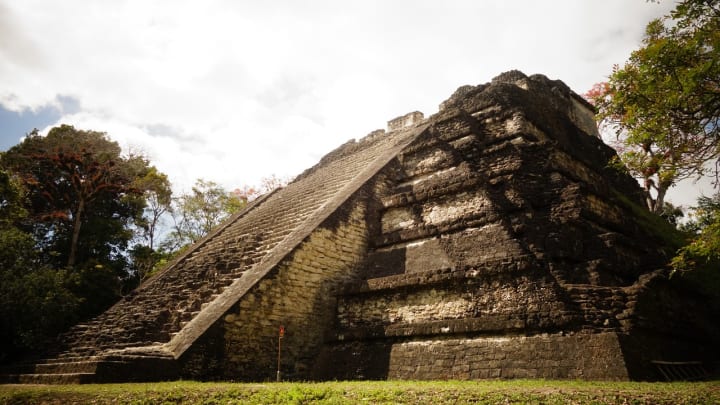
The “false” doorway is eerily similar to the “Gate of the Gods” at Hayu Marca, another Peruvian mystery. But more than that, it echoes the portals and gates of ancient Egypt. It resembles the temple facades of Petra in Jordan and the sacred niches of the Ellora caves in India. Three-tiered steps appear in ancient Mesopotamian ziggurats, Mesoamerican pyramids, and even in early Hindu architecture. What could connect such distant, unrelated cultures?
They were not unrelated.
The evidence is not just visual. Many of these cultures speak of sky beings, star people, or gods who brought knowledge. The Inca spoke of Viracocha, an enlightened being who came from the sea and vanished into the stars. The Sumerians wrote of the Anunnaki. The Egyptians of Thoth and Osiris.
Each culture described a golden age of divine contact. And each built monuments to remember it. Naupa Huaca may be one of the last untouched monuments of that era?.
The Sound Within the Stone
One of the strangest elements of Naupa Huaca is its acoustic properties. Sound behaves strangely in the cave. Whispers echo. Tones seem amplified. Researchers and mystics alike have noted that chanting or playing certain frequencies near the portal creates a vibration that can be felt in the chest—an energetic resonance. Is it just good acoustics? Or was it built for sound?
Ancient temples in Egypt, Malta, and Chichen Itza all demonstrate an advanced understanding of acoustics, resonance chambers designed to amplify certain frequencies. Sound, after all, is vibration. And vibration is energy. Could Naupa Huaca be a dormant device, one that once responded to specific tones? Did ancient priests or shamans once activate this place with a chant, unlocking something we no longer understand?
If true, this would not be a doorway in metaphor. It could have been a literal stargate.
A Portal to What?
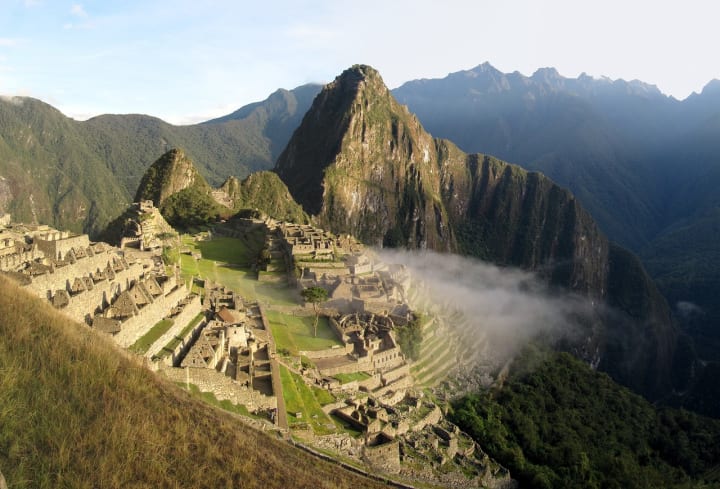
In the mystical traditions of the Andes, portals are not fantasy. They are sacred. In Quechua and Aymara traditions, there are tales of places where the veil between worlds is thin, where spirits move freely, and where those of pure heart may enter the realm of the gods. Naupa Huaca may have been one of those sites. Or something older.
In esoteric teachings, these portals were not just to other dimensions, they were connections between global civilizations aligned in purpose and knowledge. A network spanning continents. A web of energy centers, linked by geometry, astronomy, and sound.
Each site, a beacon. Each doorway, a message. Each carving, a password. Naupa Huaca, then, is not a doorway to be opened by hand, but by consciousness.
A Forgotten Connection Remembered
The mystery of Naupa Huaca is not just in its stone. It’s in what it suggests. It whispers of a time when Earth’s civilizations were not isolated tribes, but pieces of a greater puzzle. When knowledge flowed through sacred architecture, geometry, and light. When people didn’t just build temples, they built machines for the soul.
Naupa Huaca is a clue left behind. A silent monument that defies history and dares us to remember. What else lies hidden in the Andes? What other portals wait in silence, half-buried and forgotten? And what would happen if we finally remembered the ancient language, the one not written in words, but in stars, stones, and song?
About the Creator
The Secret History Of The World
I have spent the last twenty years studying and learning about ancient history, religion, and mythology. I have a huge interest in this field and the paranormal. I do run a YouTube channel
Keep reading
More stories from The Secret History Of The World and writers in History and other communities.
Were the Ancient Gods Extraterrestrials? The Hidden Truth Behind Our Origins
There’s something magnetic about ancient history, especially when you start asking the questions no one dares to answer. I’ve always been drawn to the forbidden corners of the past, the dusty layers that mainstream historians sweep under the rug. And one theory in particular continues to rise from those layers like a buried secret refusing to stay quiet: the idea that the ancient gods were not myths, but extraterrestrials.
By The Secret History Of The WorldExclusive • 9 months ago
3 Historical Events That Were Ruined by One Incredibly Small Detail
History is shaped by big ideas, brave leaders, and sweeping movements—but sometimes, the tiniest, most overlooked detail changes everything. A forgotten note, a misheard order, or even a misaligned boot can turn a decisive moment into chaos. These micro-errors often seem trivial at the time, but their ripple effects can alter the course of wars, empires, and even the future of entire nations.
By Enoch Sagini7 days ago in History
A Dart at Dusk
Seconds ago, the sullen sun set on the two of us… my exuberant furry companion and me. A fresh breeze embraces us, delivering welcome relief from the day’s oppressive heat. His typical stumbling and staggering along — apace with a sloth — has turned into trip-trapping, high-stepping, almost skipping along.
By Angie the Archivist 📚🪶7 days ago in Petlife



Comments
There are no comments for this story
Be the first to respond and start the conversation.