
The Middle East: A Tinderbox of Empires, Wars, and Unending Conflict
From Ancient Sands to Modern Battlefields: Why the Middle East Never Knows Peace
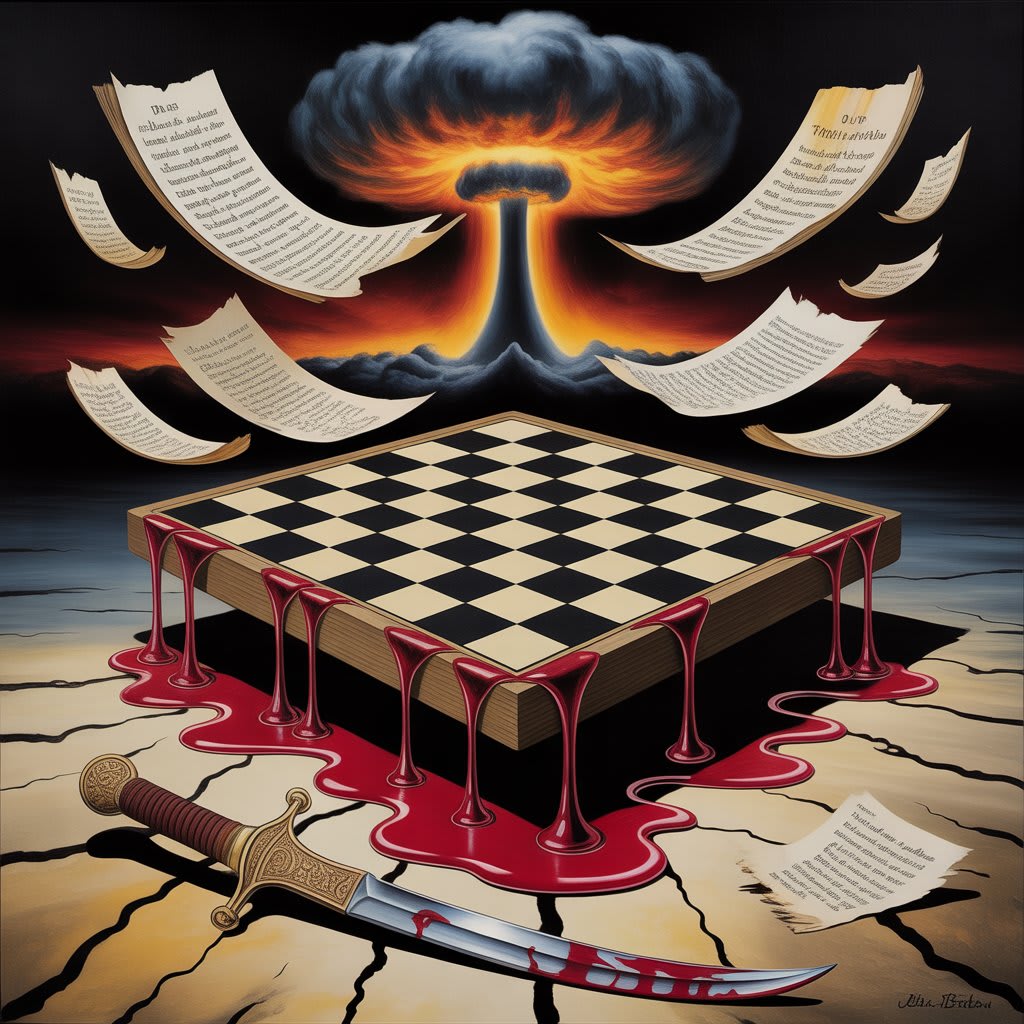
The Middle East: A Tinderbox of Empires, Wars, and Unending Conflict
The Middle East has always been more than just a geographical region—it’s a crucible of civilizations, a battleground of empires, and a vortex of geopolitical rivalries that have shaped world history. From the ancient wars of Mesopotamia to the modern-day clashes between Israel and Iran, this land has rarely known lasting peace. Today, as tensions escalate once again, the Middle East stands at the brink of another catastrophic conflict, threatening not just regional stability but global security.
Ancient Roots of Conflict: The Cradle of Civilization and Conquest
Long before oil and jihad, the Middle East was the birthplace of empires. The Sumerians, Babylonians, and Assyrians clashed over fertile lands between the Tigris and Euphrates. Later, Persian kings, such as Cyrus the Great and Darius, expanded their dominion, only to be challenged by Alexander the Great. The Islamic conquests of the 7th century united the region under the banner of Islam. However, internal divisions soon emerged—Sunni vs. Shia, Arab vs. Persian—fault lines that still ignite wars today.
The Ottoman Era and European Meddling
For centuries, the Ottoman Empire held sway, but its decline in the 19th century left a power vacuum. European powers—Britain, France, and Russia—carved up the region with arbitrary borders, sowing the seeds of future conflict. The Sykes-Picot Agreement (1916) divided Arab lands between colonial rulers, ignoring ethnic and religious realities. When the Ottoman Empire collapsed after World War I, new nations like Iraq, Syria, and Jordan were born—artificial states prone to instability .
The Birth of Israel and the Arab-Israeli Wars
The creation of Israel in 1948 was a turning point. Arab nations rejected the UN partition plan, leading to the first Arab-Israeli war. Israel’s victory displaced hundreds of thousands of Palestinians, creating a refugee crisis that remains unresolved. Subsequent wars—1956, 1967, 1973—cemented Israel’s military dominance but deepened Arab resentment. The 1967 Six-Day War was particularly transformative: Israel captured the West Bank, Gaza, Sinai, and the Golan Heights, setting the stage for decades of occupation and resistance .
The Iranian Revolution and the Rise of Proxy Wars
The 1979 Iranian Revolution reshaped the Middle East. The Shah, a U.S. ally, was overthrown by Ayatollah Khomeini, who declared Israel an "enemy of Islam" and vowed to export revolution. Iran’s support for groups like Hezbollah (Lebanon) and Hamas (Palestine) turned the Arab-Israeli conflict into a broader Sunni-Shia struggle. When Saddam Hussein’s Iraq invaded Iran in 1980, the West backed Baghdad, fearing Iran’s radicalism. The war killed a million people and left lasting scars .
The U.S. Invasion of Iraq and the Rise of ISIS
America’s 2003 invasion of Iraq, based on false WMD claims, shattered the region. Saddam’s fall unleashed sectarian violence between Sunnis and Shias. The power vacuum birthed Al-Qaeda in Iraq, which later morphed into ISIS. By 2014, ISIS controlled vast territories in Syria and Iraq, committing atrocities that shocked the world. The U.S.-led coalition eventually defeated ISIS, but the damage was done—millions displaced, cities destroyed, and Sunni-Shia hatred deeper than ever .
The Israel-Iran Shadow War Explodes into Open Conflict
For years, Israel and Iran fought a covert war—cyberattacks, assassinations, and proxy battles in Syria and Lebanon. But in June 2025, Israel launched **"Operation Rising Lion,"** a massive preemptive strike on Iran’s nuclear facilities. The U.S. joined, bombing Fordow, Natanz, and Isfahan. Iran retaliated with missile barrages, while its proxies—Hezbollah, the Houthis—attacked Israel from multiple fronts. The conflict risks spiraling into a full-scale war, with global economic consequences .
Why This Conflict Could Ignite the Entire Region
1. Nuclear Threat – If Iran rebuilds its program, Israel may strike again. A radioactive leak could cause an environmental disaster .
2. Oil Shock – The Strait of Hormuz, a vital oil chokepoint, could be blocked, sending fuel prices skyrocketing .
3. Proxy Escalation – Hezbollah’s rockets, Houthi drones, and Iraqi militias could turn this into a multi-front war .
4. Great Power Involvement – Russia backs Iran; the U.S. supports Israel. A miscalculation could draw in global powers .
Conclusion: Can the Middle East Ever Find Peace?
History suggests the answer is no. The region’s conflicts are rooted in colonialism, sectarianism, and geopolitical games. Yet, diplomacy remains the only hope. The 2025 ceasefire between Israel and Iran collapsed within hours, proving how fragile peace is . If the world fails to act, the Middle East may plunge into its bloodiest war yet—one that could reshape the 21st century.
About the Creator
Keep reading
More stories from writers in History and other communities.
No ICE, No KKK, No Fascist USA
"I don't 'do' politics." Politics will do you, regardless. Watching from the sidelines for the last year I can see far too many similarities in the way Trump's ICE Gestapo is to Nazi Germany. Considering the United States just invaded Venezuela and kidnapped their President and his wife I would say we are there.
By Lyvia Jack5 days ago in History
3 Moments When Reality Accidentally Became a Horror Movie
Horror movies usually rely on a simple agreement with the audience: this could never really happen. Ghosts follow rules, monsters have weaknesses, and there’s always a clear point where reality hands the story over to fiction. Real life, unfortunately, does not care about narrative structure, logic, or closure.
By Enoch Sagini3 days ago in History
The Devil's Cut
“Comrade, finally you’re awake.” The voice was smooth, sensual. A flickering incandescent bar was all that lit the white, sterile room. All Vladimir remembered was everything going black. He tried to move his arms and found them strapped to the gurney.
By Matthew J. Fromm4 days ago in Fiction



Comments
There are no comments for this story
Be the first to respond and start the conversation.