
The Maya 👁⚡👁
Top 10 Prophets, Prognosticators, & Visionaries- #3

⚡"For I dipp'd into the future,
as far as human eye could see,
Saw the vision of the world,
and all the wonder
that would be..."
—Alfred Lord Tennyson
⚡____________⚡
I'm compiling a list of the Top 10 Prophets of All Time, in chronological order.
Part one features the Oracles of Delphi.
Part two reviews the Sibyls of Rome.
Continuing onward, let's hop across the Atlantic for...
#3) The Maya—
at their height between A.D. 250 and 900
Thriving in a vast region in what is now Mexico and Central America, the Mayans created a vibrant civilization that lasted for thousands of years. Their society was built on agriculture: the cultivation of squash, chile peppers, beans, and most especially corn. More important than the sun god, the moon god, the rain god, or any other deities in the Mayan pantheon, the god of corn was the most exalted of all.
The bulk of the Mayan territory was comprised of a dangerous tropical rain forest, where wild jaguars stalked human prey.

Poisonous snakes slithered through the thick vegetation. The insects were ferocious. During the rainy seasons, certain areas became fetid swamps.
Disease spread faster than the screaming monkeys jumping through the trees.
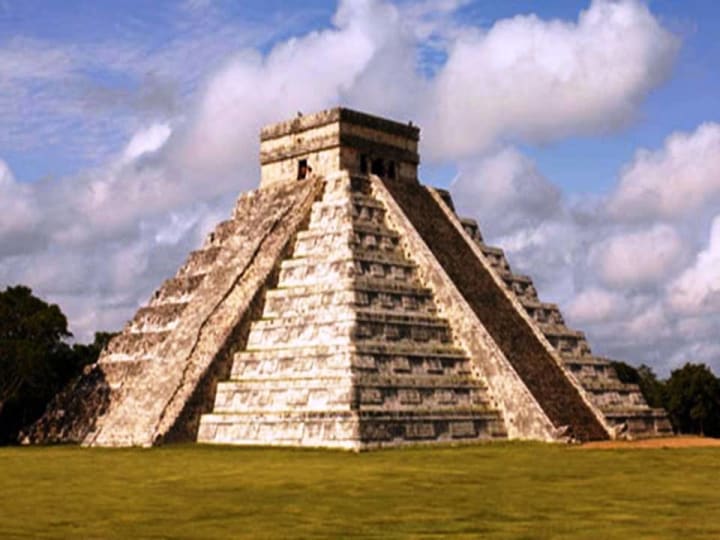
And yet, despite all the many threats to life and limbs, at one point the Mayan population numbered fourteen million people. They crisscrossed their nation with more than forty monumental cities, some with pyramid temples that towered twenty-two stories high.

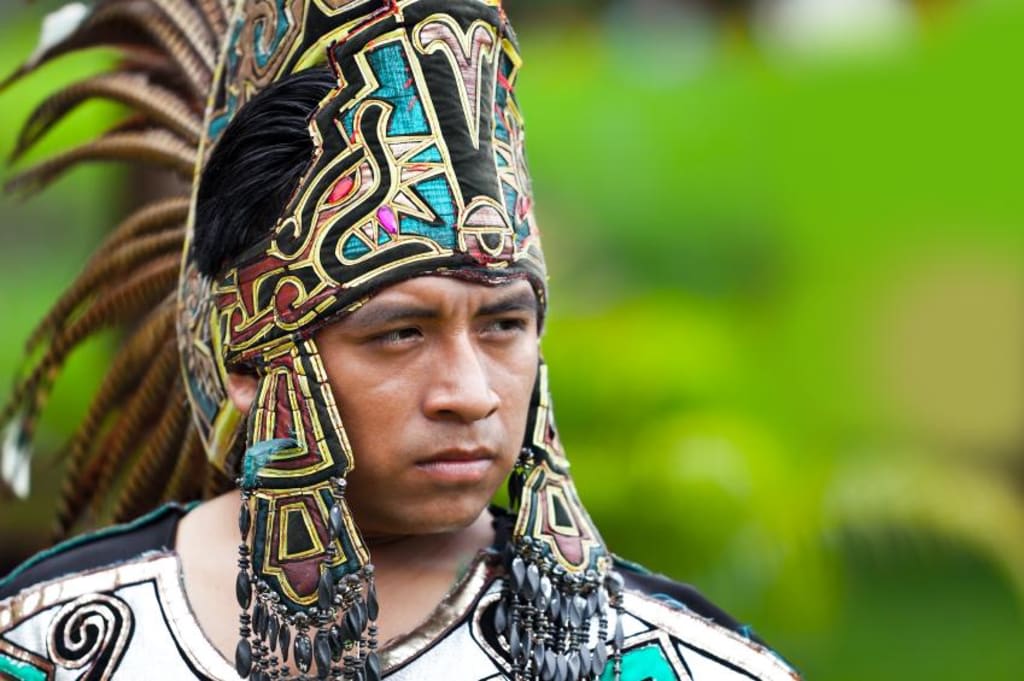
Mayans were guided by their priests, who specialized in foreseeing the future. Various titles were given to the seers, including “he who knows” and “interpreter of the gods.” Wearing feathers and jewels, priests read from sacred books. Sometimes they sang and acted out their predictions to the beat of drums. Sometimes visions were sought using a concoction of tobacco mixed with peyote, lime, or psychoactive mushrooms.
These wise men didn’t just supervise religious rituals. They understood math, including the use of zero. Without telescopes or modern technology, they mastered astronomy. Generation after generation, the priests passed down observed patterns allowing for weather forecasting.
These astronomer-priests used observatories to track the night sky. They wrote books in complex hieroglyphics, on paper made from the bark of fig trees, with covers made from jaguar skin.
Mayans were obsessed with counting. They revered time and measuring, and they meticulously recorded the movement of the sun, moon, planets, and stars.
Mayans organized their entire culture around their understanding of astrology.
A person's birth date determined their destiny. Certain people were fated to be farmers, other singers, or poets, or craftsman, or beekeepers, or tattoo artists, or warriors. Those born on a day called Edznab, for instance, were created to be doctors.
The role of a parent was to raise their children in accordance with that child's predetermined role.
Submitting to the will of the universe, not going against it, was the key to finding peace.
‘Katun 13 Ahau’ is a date that occurs every 260 Mayan years. The next Katun 13 Ahau will fall on May 30, 2052. The Mayans had a dire prediction for that date…
On that day, dust possesses the earth,
On that day, a blight is on the face of the earth,
On that day, a cloud rises,
On that day, a mountain rises,
On that day, a strong man seizes the land,
On that day, things fall to ruin,
On that day, the tender leaf is destroyed,
On that day, the dying eyes are closed.
For the Mayans, the past provided expectations for the future. They believed that...
Those who forgot history were doomed to repeat it.
They further believed that surviving foretold disasters was paramount. Torture and human sacrifice were employed to please the gods. When less brutal offerings of food, animals, jewels, dancing, and prayers weren’t enough, it then became necessary to sacrifice orphans, prisoners of war, and/or criminals.
Inheriting their offices, priests went to special schools to be taught their duties. They were all specialists. Some had the responsibility of splitting open the breast of a victim. Others held the victims down.
Still others treated disease with potions that included ingredients like blood, bird fat, crocodile testicles, animal excrement, bat wings, and worms.
The most revered of all these specialized holy men were the priests who performed augury.
Using highly sophisticated calculations, the Mayans invented their calendar approximately 2,600 years ago. It was comprised of two complicated interlocking cycles that ran simultaneously. A 365-day cycle called Tun was divided into eighteen months, each with twenty days.
Five days were left over and they were believed to be extremely unlucky, requiring many sacrificial rituals.
Tzolkin was the second cycle of the same calendar, made up of thirteen months, each with twenty days each. Every day had its own unique associations— omens that could be good, bad, or neutral.
The means by which the Maya determined all the details is unknown to us today.
Whenever a person began a new adventure, like planting corn, getting married, beginning a journey, building a house— it only made sense to chose a good day to start, or at least a neutral day.
Another necessity that their calendar measured was the intervals at which human blood was drawn. 🩸🩸
🩸
Rulers had to endure ritual self-torture, including drawing a thorn-studded cord through their tongues or jabbing stingray spines into tender spots of their bodies. Priests collected the blood of the kings on paper in order to nourish the gods.

The Mayans believed the world had a definite beginning.
It was created on 4 Ahau 8 Cumku, or August 13, 3114 B.C..
They also seemed to predict when the world would end, at the end of the Maya’s Fifth Creation Epic. Three different cycles of the Mayan calendar all concluded on that same date, foretelling the world’s last gasp.
That auspicious date when all the volcanic eruptions, tornadoes, hurricanes, earthquakes, and tidal waves were set to begin was the winter solstice (December 21st) of 2012.
We’re still here, obviously, so either the Mayans made a mistake in their predictions… or… the scholars who study the Mayans misinterpreted the evidence. 🤷🏻♂️ Many experts believe that 12/21/2012 was date when a cleansing of the earth would begin, not when the world would end... because other research suggests that the Mayan calendar advances all the way to the fiftieth century.
There is also debate about the Mayans’ disappearance.
It is believed that sometime around A.D. 900, there was widespread warfare. Severe drought or possibly overcultivation of the land may have also lead to famine. The cities were abandoned, the people dispersing into the jungle. When Spanish explorers eventually arrived, any Mayans they found were doomed. Believing the natives were savages, European explorers made a point of destroying their sacred books of prophecy. In 1562, one Spanish priest wrote…
"We found a great number of books (twenty-seven to be exact)… and because they contained nothing but superstition and the devil’s falsehoods, we burned the lot, which upset them most grievously and caused them great pain.”
All we have left today are four fragments out of an enormous body of prophecies based on thousands of years of astronomical research.
Several million of the Mayans’ descendants currently live in southern Mexico, El Salvador, northern Guatemala, and northern Belize. And just as it was thousands of years ago, so it remains today: no event is more precious to these people than the birth of a child.
This concludes Part Three of this Series.
________________________Bolt⚡

For the next installment, we skip ahead to the Middle Ages, complete with 850-year-old music. Check back tomorrow!
Part #1 ⚡😁👇
Part #2 ⚡😁👇
About the Creator
Keep reading
More stories from Lightning Bolt ⚡ and writers in History and other communities.
Botched: The First Person Executed by Electric Chair
Until 1888, hanging was the only method of execution used on criminals sentenced to death. Many deaths ended in excruciating pain and sometimes, decapitation. This led officials and the public at large to label hanging as barbaric. Although the state elected to kill the person, they wanted it done as humanely as possible. Lawmakers began looking for an alternative execution method. Alfred P. Southwick, a New York dentist, had an idea. He suggested death by electricity. Two years later, the electric chair was introduced in a New York prison.
By Criminal Matters3 days ago in History
Bruce Lee and The God of War: Kuan Ti
It starts with love.. The Power to the God Of War and Wealth Walk into a Chinese restaurant (even in Oklahoma, USA), a Chinese police station, a kung fu martial arts studio or even a Chinese temple and you often see a red faced warrior holding a heavy quan-do (spear like weapon).
By WILD WAYNE : The Dragon King4 days ago in Chapters


Comments (3)
Thank you for this series, it’s fascinating.
Another great Humanities lecture for me. On the fun side wasn't it the Mayans that invented the sport Basketball. Great job.
Fascinating!!