
The Life of Tutankhamun
Tutankhamun, one of the most famous pharaohs of ancient Egypt, has fascinated historians and archaeologists for decades. His nearly intact tomb, discovered in 1922 by Howard Carter, revealed a treasure trove of artifacts that provided invaluable insights into Egypt’s 18th Dynasty. This book explores his life, reign, and the mystery surrounding his death.

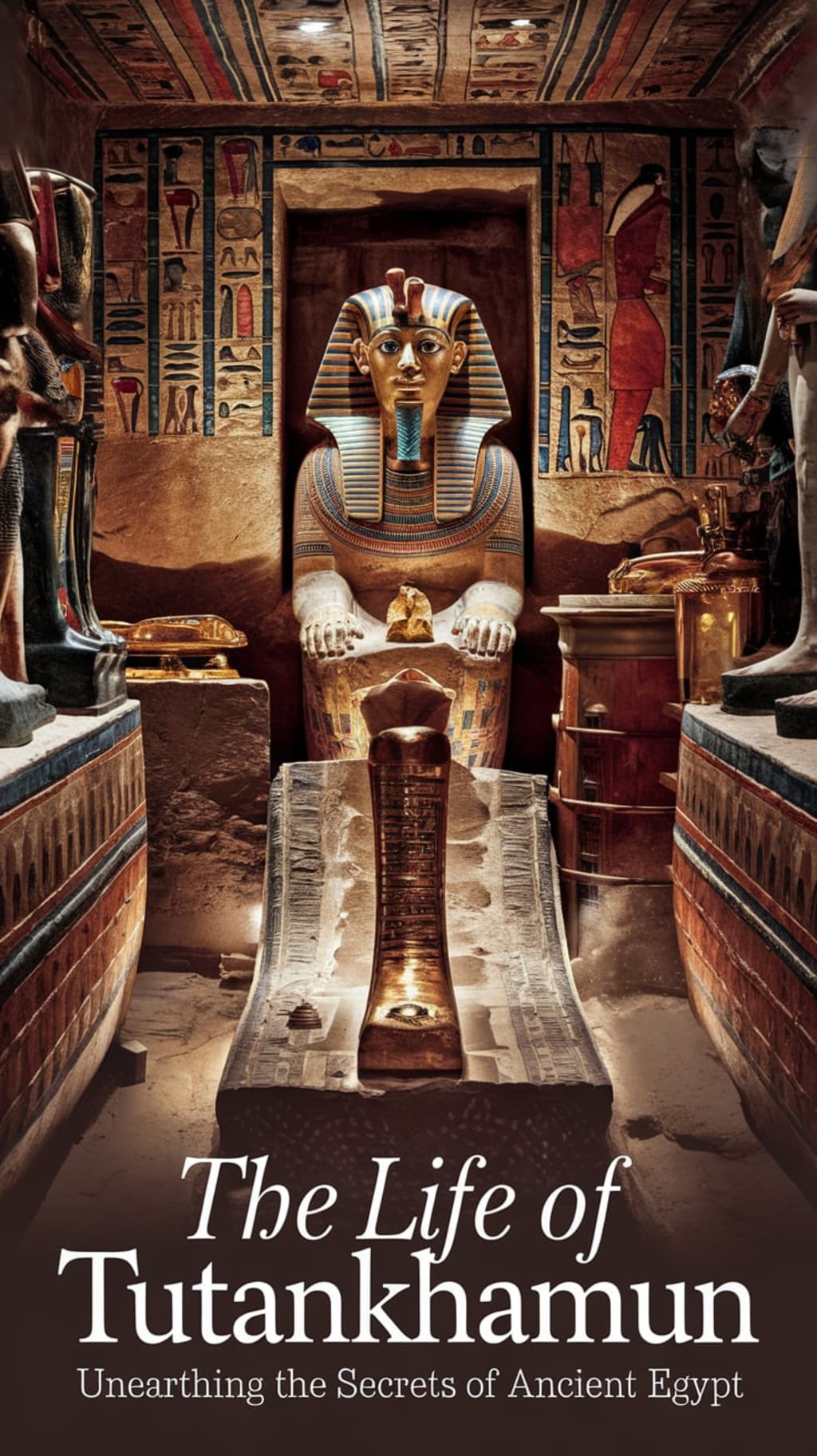
The early life of Tutankhamun is shrouded in mystery, largely due to the lack of detailed historical records from that time. He was born as Tutankhaten, a name that signifies his connection to Aten, the sun god that his father, Akhenaten, promoted as the sole deity of Egypt. This religious revolution, known as the Amarna Period, saw a shift in Egypt’s spiritual practices, with Aten at its center.
Tutankhamun's mother remains an enigma. While there is no definitive historical record of her identity, modern DNA analysis has suggested that she was likely one of Akhenaten's lesser-known wives. Some theories speculate she could be Nefertiti, Akhenaten's famous queen, though this is still debated.
Tutankhamun’s birth took place at a time of religious and political upheaval, which likely influenced his upbringing and the early part of his reign. His eventual ascension to the throne would see a return to traditional polytheism, as the country sought stability after his father's radical changes.
Tutankhamun’s ascension to the throne was a dramatic event. At just around nine years old, he inherited a fractured kingdom following the tumultuous reign of his father, Akhenaten, who had radically altered Egypt’s religious landscape. Akhenaten’s devotion to the sun god Aten and the abandonment of traditional deities such as Amun had caused division and unrest within Egypt. When Tutankhamun took the throne, the country was in a state of flux, both religiously and politically.
Given his youth, Tutankhamun was unable to rule independently. Instead, he relied heavily on a group of powerful advisors who helped guide the young pharaoh through these tumultuous times. Ay, likely a close relative and the father of his possible wife Ankhesenamun, played a key role in advising the boy king. Another important figure during this time was General Horemheb, who had significant military influence.
Together, these advisors helped Tutankhamun navigate the delicate process of restoring Egypt’s traditional religious practices. One of their major accomplishments was the restoration of Amun worship, which had been suppressed during Akhenaten’s reign. Additionally, the capital was moved back to Thebes, where it had been during the height of Egypt’s power. This return to tradition helped to reestablish stability in Egypt after years of upheaval.
Despite his pivotal role in these restorations, Tutankhamun’s reign was largely defined by the actions of those around him, as he was too young to make many decisions on his own. Nevertheless, his reign marked the end of the religious revolution initiated by his father, setting the stage for Egypt's return to traditional governance.
Tutankhamun’s reign, though brief, was marked by important policies aimed at stabilizing Egypt after the tumult of his father’s rule. While much of the actual governance was carried out by his advisors, the young pharaoh's efforts to restore Egypt to its former glory cannot be overlooked.
Religious Restoration
One of Tutankhamun's most significant achievements was the restoration of traditional religious practices. Under his rule, Egypt returned to polytheism, with Amun at the forefront of the pantheon. He directed efforts to repair and rebuild temples that had been neglected or dismantled during Akhenaten’s reign. This religious revival was not only crucial for restoring the people's faith but also for re-establishing the political and social order that had been disrupted by his father's radical reforms.
Temple Restorations
Tutankhamun funded the restoration of various temples, most notably those dedicated to Amun at Karnak and Luxor. These monumental projects helped reassert Egypt’s religious identity, re-enforcing the idea that the king was the divine intermediary between the gods and the people. Many of these restorations were intended to repair damage caused during the Amarna period, when many temples dedicated to traditional gods were abandoned or defaced.
Diplomacy and Foreign Relations
Tutankhamun also worked to strengthen Egypt's diplomatic relations with neighboring kingdoms. The most well-known example of this is the diplomatic marriage to his half-sister, Ankhesenamun, which solidified the alliance between Egypt and the Hittites, a powerful kingdom in Anatolia. Additionally, Tutankhamun's reign saw the continuation of Egypt’s international trade and military diplomacy, especially with the Mitanni, the Babylonians, and the Assyrians. Correspondence from this period reveals that Tutankhamun’s reign was marked by stability in Egypt’s foreign relations, a crucial factor in maintaining the kingdom's prosperity.
The Legacy of a Young King
While Tutankhamun’s reign was brief, the policies he enacted—along with the support of his advisors—helped stabilize Egypt and re-establish a sense of continuity and tradition after a period of religious and political turmoil. Though he did not live long enough to implement further reforms, the work done during his reign set the stage for the later successes of his successors, particularly those like Ay and Horemheb, who would continue the restoration of Egypt’s power and influence.
The death of Tutankhamun remains one of the most enigmatic aspects of his reign. He passed away unexpectedly around 1323 BC, likely in his late teens, an age that many would consider too young for a king to die. The circumstances surrounding his death have sparked numerous theories, with no definitive answers to date.
Theories on the Cause of Death
Several theories attempt to explain the sudden death of the young pharaoh:
• Accident or Injury: One popular theory suggests that Tutankhamun may have died as a result of an accident, possibly a chariot crash or a fall. Some evidence, such as a broken leg found in his mummified body, has led researchers to believe that a fatal injury could have contributed to his early death. However, this theory remains speculative, as the injury itself may have been treatable at the time.
• Genetic Disorders: Other scholars point to the possibility of genetic disorders. Tutankhamun’s parents were likely siblings (Akhenaten and Nefertiti), which could have led to inbreeding and associated genetic issues. CT scans of his mummy have revealed several physical abnormalities, including a clubfoot and a cleft palate, which may have been signs of genetic problems. These conditions could have contributed to his premature death.
• Malaria and Infection: A more recent hypothesis suggests that Tutankhamun may have succumbed to a severe infection caused by malaria. DNA analysis of his body has identified traces of the parasite responsible for malaria, which might have compounded the effects of his previous injuries.
Despite the speculation, there is no conclusive evidence pointing to any single cause of death, and the mystery surrounding his demise persists.
The Tomb and Burial
Tutankhamun's burial was hurriedly arranged, likely due to the unexpected nature of his death. His tomb, KV62, located in the Valley of the Kings, was smaller and less elaborate than those of other pharaohs, which led some to speculate that he was not initially intended for a grand burial. It is believed that his tomb was adapted and expanded quickly to accommodate his remains and the vast array of treasures found within.
The tomb contained an incredible wealth of artifacts, many of which were meant to accompany the young king in the afterlife. The most iconic of these treasures is the golden mask that adorned Tutankhamun's mummy. This mask, crafted from solid gold and inlaid with semi-precious stones, remains one of the most recognized symbols of ancient Egypt. The tomb also contained numerous other items, such as chariots, weapons, jewelry, and furniture, all of which speak to the wealth and luxury that Tutankhamun enjoyed in life.
Despite its smaller size, the tomb was remarkably well-preserved and provided Egyptologists with a wealth of information about the material culture and funeral practices of the time. The discovery of Tutankhamun’s tomb in 1922 by British archaeologist Howard Carter brought global attention to the ancient Egyptian civilization and remains one of the most significant archaeological finds in history.
The Legacy of Tutankhamun
Though his reign was short, Tutankhamun's tomb and its treasures have ensured his place in history. His untimely death, mysterious burial, and the treasures found in his tomb have captured the imagination of people worldwide, making him one of the most famous pharaohs despite the limited impact of his rule. His legacy continues to inspire fascination with ancient Egypt, with his burial providing a glimpse into the grandeur and mystique of the ancient world
The discovery of Tutankhamun’s tomb by British archaeologist Howard Carter in 1922 is widely regarded as one of the most groundbreaking moments in the history of archaeology. It was an event that captivated the world and provided invaluable insights into the art, culture, and burial practices of ancient Egypt.
The Search for the Tomb
Carter had been working in Egypt for many years before he became interested in Tutankhamun’s tomb. His efforts were initially part of a larger excavation project sponsored by Lord Carnarvon, a British aristocrat and patron of Egyptian archaeology. The tomb of Tutankhamun had remained undiscovered for centuries, despite the fact that it was located in the Valley of the Kings, one of the most explored archaeological sites in Egypt.
Carter had reason to believe that the tomb was still hidden beneath the sands, and in 1922, after years of fruitless searching, his team made a remarkable discovery. They found a set of stairs leading down to an untouched tomb, sealed and protected from tomb robbers by the encroaching desert. When Carter and Lord Carnarvon entered the tomb, they were met with a scene that would forever change the course of archaeology.
The Contents of the Tomb
The tomb was astonishingly well-preserved, and its contents were almost intact. Inside, Carter and his team uncovered an array of incredible treasures, some of which were hidden in multiple layers of seals, boxes, and chests. Among the items were gold jewelry, finely crafted furniture, weapons, food offerings, and several chariots. These items reflected the wealth and importance of the pharaoh, as well as the skilled craftsmanship of ancient Egyptian artisans.
One of the most famous finds was the golden funerary mask that covered Tutankhamun's face. Crafted from solid gold and inlaid with lapis lazuli and turquoise, the mask has become an enduring symbol of ancient Egyptian grandeur. The mask, along with the other treasures, gave scholars an unprecedented glimpse into the burial practices of the time, revealing the importance of the afterlife and the elaborate preparations made for the pharaoh's journey into the next world.
Additionally, the tomb contained detailed inscriptions, wall paintings, and various other objects that showcased the religious and cultural values of ancient Egypt. These artifacts provided scholars with invaluable information about daily life, the art of the period, and the spiritual beliefs of the time.
Significance of the Discovery
The discovery of Tutankhamun’s tomb was significant not only because of the treasures found within it but also because it was one of the few royal tombs from the New Kingdom that had remained largely undisturbed. Most other royal tombs had been looted over the centuries, making this tomb a rare and unparalleled find.
The well-preserved nature of the tomb allowed for detailed study of ancient Egyptian burial practices, providing an extraordinary wealth of knowledge about funerary rituals, the role of kingship, and the art of the period. The tomb also sparked renewed interest in Egyptology and contributed to a broader cultural fascination with ancient Egypt, which continues to this day.
The "Curse of the Pharaohs" and Legacy
The discovery of Tutankhamun’s tomb was also accompanied by an aura of mystery, and soon rumors began to circulate about a "curse" that befell those who entered the tomb. Several individuals associated with the discovery, including Lord Carnarvon, who died shortly after the opening of the tomb, were said to have fallen victim to the curse. Though the deaths were later attributed to natural causes, the legend of the "Curse of the Pharaohs" only added to the intrigue surrounding the tomb.
In the years following the discovery, Carter’s work provided archaeologists with valuable artifacts and data, shaping the field of Egyptology. Tutankhamun’s tomb is now one of the most visited archaeological sites in the world, and the treasures found within it continue to be displayed in museums around the globe, ensuring that the young pharaoh’s legacy endures.
Carter’s discovery remains one of the most remarkable and influential moments in the study of ancient Egypt, and the treasures of Tutankhamun continue to captivate the imagination of people everywhere.
Though Tutankhamun’s reign was brief and his rule largely shaped by advisors, his legacy has endured far beyond his time. His significance as the "boy king" of Egypt is not rooted in military conquests or monumental policies, but in the remarkable discovery of his tomb, which has provided scholars and the world with invaluable insights into ancient Egyptian culture, religion, and art.
The treasures and artifacts found in Tutankhamun’s tomb have immortalized him, offering a unique glimpse into the opulence and spiritual practices of the time. His golden funerary mask, intricate jewelry, and the vast array of objects buried with him have made him one of the most famous pharaohs in history—despite his reign lasting less than a decade.
In addition to the riches found within his tomb, the mysteries surrounding his death, his parentage, and the suddenness of his burial have only deepened the fascination with his life and legacy. The discovery of the tomb by Howard Carter in 1922 remains one of the greatest archaeological achievements of all time, revealing a wealth of information about Egypt’s New Kingdom period and offering a rare, undisturbed window into royal life.
Tutankhamun’s tomb, with its treasures, continues to be a symbol of ancient Egypt's grandeur and mystery, ensuring that the boy king’s story will never fade from history. The discoveries surrounding him have sparked centuries of scholarly inquiry, captured the imagination of the public, and solidified his place as one of the most iconic figures in the ancient world
About the Creator
Nada soliman
I am a passionate writer dedicated to crafting compelling articles, captivating stories, and heartfelt poetry. My work explores the realms of adventure, mystery, and emotion, aiming to engage and inspire my readers.
Keep reading
More stories from Nada soliman and writers in History and other communities.
"Midnight Ritual: A Midsummer Night of Secrets and Sacrifice"
How do we move approximately it? The organization, inclusive of three men and one boy, shifted uneasily around a bonfire that sputtered sparks in the bone-chilling drizzle. A few hefty stones sat amid the flames. They thought about the attempt it took to get the fireplace entering into this weather. Someone sniffed, a person coughed. They all felt cold and uneasy, status at the brink of the fields sprawling in front of them at dusk, with their backs to the dripping birches surrounding the cemetery.
By Nada soliman2 years ago in History
India’s Biggest Bank Fraud: Vijay Mallya
An Indian man who was once called the “King of Good Times” in his era lived a life like a king. He would throw parties worth millions of rupees in a single night. While billionaires around the world owned private jets, he even had his own Boeing 727.
By Imran Ali Shah5 days ago in History


Comments (2)
Thank you Ashley. I will try my best to provide you and your friends with more information about Egypt's history and civilization. There is an e-book📙 with more details about Tutankhamun.
I loved learning more about Tutankhamun, thank you! I think Ancient Egypt is full of so many mysteries and knowledge that we have lost over time.