
“The Last Letter of Kabul”
*A boy, a letter, and the fall of an empire*

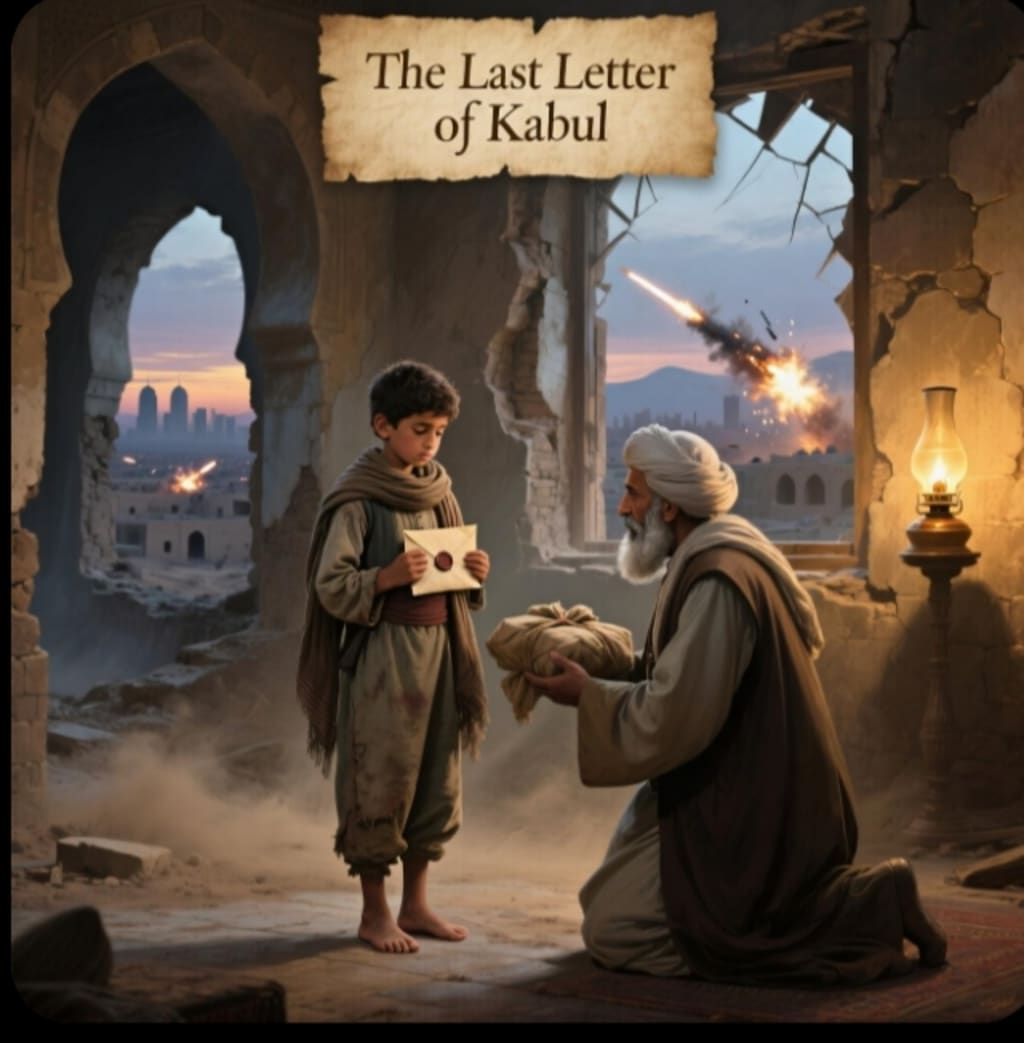
Kabul, 1839 — The air was thick with dust and silence, the kind that settles before a storm. A fifteen-year-old boy named Ameer moved through the narrow alleys of the old city like a shadow, his bare feet quiet against the sun-baked stones. In his hand, pressed tightly against his chest, was a folded sheet of paper sealed with wax—the last words of his father.
His father had been a man of few gestures but deep meaning. Once, he had stood among the advisors of Dost Mohammad Khan, speaking in measured tones about justice, sovereignty, and the soul of a nation. But when the British came with their promises and their cannons, he had refused to bow. “They offer friendship,” he’d told Ameer one evening beneath the mulberry tree, “but their hands are already on our throat.”
That defiance cost him everything.
Now, lying on a thin mat in a dim room, his breath shallow, he had whispered the letter word by word—simple, honest, not a plea for power or revenge, but for protection. For his son.
“Do not read it,” he said, gripping Ameer’s wrist with surprising strength. “Deliver it. That is your duty.”
Ameer nodded, tears caught in the corners of his eyes. He didn’t ask why. He only knew that this letter was more than paper. It was a promise. A thread connecting one generation to the next.
The city had changed. Where once poets recited verses in the courtyards and merchants haggled over saffron and silk, now red-coated soldiers marched with rifles on their shoulders. British flags fluttered above the citadel, alien against the mountain sky. Yet beneath the occupation, life still pulsed—quiet, watchful, waiting.
Ameer passed soldiers who barely glanced at him—a scrawny boy, wrapped in a worn shawl. But rebels in the alleys stopped him. “Dost Mohammad is gone,” one said, bitter. “He fled to the mountains. What good is a letter to a king without a crown?”
Ameer didn’t answer. He kept walking.
At the edge of the city, where the palace once stood in quiet dignity, only ruins remained. The domes were cracked, the gardens trampled. But near the eastern gate, an old man sat on a stone step, wrapped in a tattered coat lined with fur.
“I need to speak to someone who remembers,” Ameer said, holding out the letter.
The man looked at the seal—a falcon in flight, his father’s mark. His eyes softened. Without a word, he rose and led Ameer inside.
In a small chamber lit by a single oil lamp, a few elders gathered. They spoke in low voices, tracking whispers from the north—rumors that Dost Mohammad was not broken, but biding his time.
The commander, a man with silver in his beard and sorrow in his gaze, took the letter. He broke the seal slowly, read it once, then again. Then he looked at Ameer.
“You are Rahim’s son?”
Ameer nodded.
“He was the only man who refused a bribe and still smiled when he left the court. He spoke truth even when it cost him favor.”
Ameer said nothing. He just stood there, feeling smaller than he ever had, yet somehow heavier, as if he carried something vast inside him.
“You’ll stay with us,” the commander said. “You’re not alone.”
Weeks passed. The wind shifted. News came on horseback—Afghan fighters had ambushed British supply lines. Uprisings flared in the hills. Then, one morning, the sound of distant gunfire rolled through the valley like thunder.
By month’s end, the British withdrew in chaos. Kabul was free again—but the cost was written in blood on its streets.
One evening, as the first stars blinked above the mountains, the commander called Ameer to him. He handed him a small cloth bundle.
“This was your father’s letter,” he said. “You were a boy when you delivered it. Now you’re a man. You should read it.”
Ameer’s hands trembled as he unfolded the paper. The ink was faint, the handwriting shaky—but familiar.
> To His Highness, Dost Mohammad Khan,
> If this letter finds you, I will not be here to greet it. But my son, Ameer, walks in my footsteps. I ask not for title or wealth, only that he be allowed to live freely in the land we both loved.
>
> Do not let fear rule our people. Do not let greed wear the mask of peace. I served you not for reward, but because I believed in what Afghanistan could be.
>
> Let my son remember that.
>
> —S. Rahim*
Ameer read it once. Then again. Then he folded it carefully and placed it over his heart, just as he had carried it through the city so many weeks before.
Years later, when Dost Mohammad returned to the throne, Ameer did not seek power. He became a writer, a keeper of stories. He recorded not just what happened, but what it meant—the lives behind the battles, the quiet courage of ordinary people.
And always, in a leather-bound journal beneath his bed, he kept that letter.
Not as a relic.
But as a reminder.
That even when empires fall,
some things remain.
Not in stone.
Not in victory.
But in the hands of those who remember.
About the Creator
meerjanan
A curious storyteller with a passion for turning simple moments into meaningful words. Writing about life, purpose, and the quiet strength we often overlook. Follow for stories that inspire, heal, and empower.
Reader insights
Outstanding
Excellent work. Looking forward to reading more!
Top insights
Compelling and original writing
Creative use of language & vocab
Easy to read and follow
Well-structured & engaging content
Excellent storytelling
Original narrative & well developed characters
Expert insights and opinions
Arguments were carefully researched and presented
Eye opening
Niche topic & fresh perspectives
Heartfelt and relatable
The story invoked strong personal emotions
Masterful proofreading
Zero grammar & spelling mistakes
On-point and relevant
Writing reflected the title & theme
The Year 1979 in Review: Fun Facts, Trivia, and Historic Highlights
This quick read is a collection of fun facts, trivia, and historic events from the year 1979. Discover the year’s top news stories, most influential people, sports facts, the cost of living, erratic weather patterns, entertainment trivia, and much more.
By Gregory DeVictor5 days ago in History



Comments (1)
Good