
The Eternal Embrace Beneath the Earth
A 4,800-Year-Old Mother and Child Reveal a Story of Love, Loss, and an Ancient World Forgotten


The earth has a strange way of holding memories. Some are scattered in fragments, others sealed deep beneath layers of time—waiting for the right hands to uncover them. In Taiwan, a team of archaeologists brushed away centuries of dust and silence to reveal a moment so tender, so profoundly human, that even the passage of 4,800 years could not erase its emotional power.
They found a mother and her infant, locked in an embrace that outlived kingdoms, languages, and civilizations. Their bones rested in quiet stillness, yet their story rose like a whisper from the past, asking the living to pause and listen.
The excavation site had once been a thriving settlement, a place where ancient people fished, crafted tools, and navigated the coastal world with resilience. But history recorded none of their voices. What they believed, how they loved, and how they mourned had been lost in the turning of ages. Until now.
The moment the archaeologists uncovered the pair, the world seemed to hold its breath. The mother’s arms were curved around the small frame of her child, her face turned toward the infant as if in an eternal gesture of protection. It wasn’t just a burial—it was a story carved into the ground, a story that survived without words.
Scientists could identify the approximate era through carbon dating, tracing the burial back nearly five millennia. But beyond the scientific details, this discovery unlocked something far more powerful. It bridged the distance between us and the people who lived in that forgotten settlement. The emotions reflected in the burial were not ancient or foreign—they were universal.
Love. Fear. Grief. Hope.
The mother did not lay her child down and walk away. She held the baby close, even in death. This single detail speaks volumes about the rituals and beliefs of her community. They did not simply bury their dead; they honored the relationships that defined their lives. They preserved bonds, even when the living breath was gone.
Archaeologists studying the site believe that this burial was intentional and meaningful. The positioning of the bodies suggests that the community understood the importance of connection. They may have believed that mother and child should continue their journey together, or perhaps they wished to ease their passage into whatever lay beyond. These ancient people, though long vanished, expressed a depth of care we can still feel today.
As researchers carefully examined the remains, they also began piecing together fragments of the world the pair once knew. The community likely lived near the coast, relying on the sea for food and trade. They crafted pottery, shaped tools from stone, and built simple homes in small clusters. Their days were filled with labor, survival, laughter, and loss—just like ours.
The discovery invites us to imagine what might have happened. Did illness sweep through the village? Was there famine? Or was it a quiet tragedy—a birth that didn’t go as planned, or a sickness that took both mother and child within hours of each other? We may never know. But the embrace tells us that those who buried them cared deeply. They wanted the world to remember the bond between these two souls.
Even after thousands of years, that intention succeeded. Today, as images and reports spread, people across the globe feel the same ache in their hearts when they see the mother’s arms wrapped around her child. It is a shared human response—proof that empathy never expires.
This discovery also reminds us of time’s strange generosity. The earth preserved them not as relics, but as a message. A message that no matter how advanced we become or how far we travel from the world of our ancestors, the core of humanity remains the same. We love fiercely. We grieve deeply. We protect our children. And we hope that even when we leave this world, some part of that love endures.
In a modern age filled with noise and speed, this silent embrace transports us back to a slower, simpler world—a world where the meaning of life was measured not in wealth or progress, but in the connections people forged with one another.
The mother and child found in Taiwan did not leave behind scrolls, carvings, or monuments. Their legacy is their love. And sometimes, love is the most powerful history of all.
Their bones rest now in the hands of scientists, but their story belongs to all of us. It reminds us that the human heart has always known the same language, no matter the century. It tells us that grief and tenderness travel across time, undiminished.
And perhaps most beautifully, it shows that even after 4,800 years, the embrace of a mother can still stop the world.
Author’s Note:
This story is completely mine, written in my own words and style. I only took a little bit of help from AI for polishing and structuring.
About the Creator
Izhar Ullah
I’m Izhar Ullah, a digital creator and storyteller based in Dubai. I share stories on culture, lifestyle, and experiences, blending creativity with strategy to inspire, connect, and build positive online communities.
Keep reading
More stories from Izhar Ullah and writers in History and other communities.
The Stillness in the Clouds: Echoes of Flight 247
The storm was an ancient one, a howling beast of wind and ice that had scoured the peaks of the Andean Cordillera for centuries. It was in the temporary lull of such a storm, in a high valley that saw no human eyes, that a helicopter from a geological survey team found it. Not a wreck, not in the conventional sense. It was a tomb, sealed in glass.
By Izhar Ullah3 months ago in History
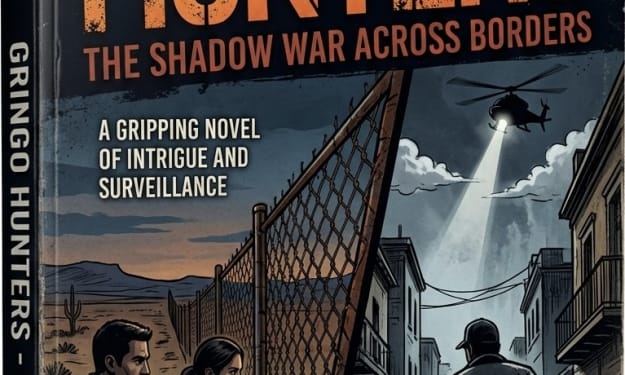
The Shadow War Across Borders
In the hidden corridors of international law enforcement, there exists a group known by a name that inspires fear among fugitives and criminals alike — the Gringo Hunters. They are not celebrities. They don’t give interviews. They don’t chase fame. Their mission is simple but dangerous: track, locate, and capture high-value criminals who cross borders to escape justice.
By Irshad Abbasi 2 days ago in History



Comments
There are no comments for this story
Be the first to respond and start the conversation.