
The Stillness in the Clouds: Echoes of Flight 247
When a mountain gave up its secret, it offered no answers, only a profound and terrible silence.

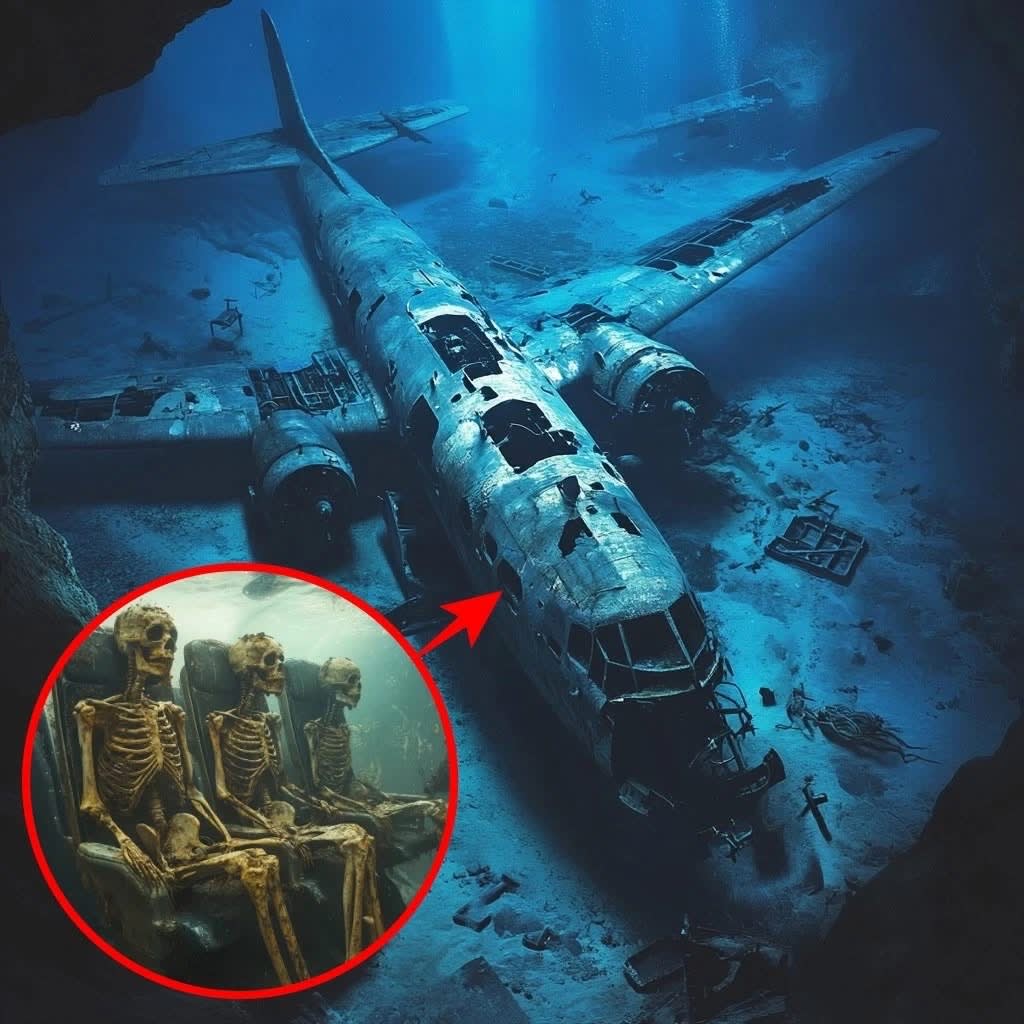
The storm was an ancient one, a howling beast of wind and ice that had scoured the peaks of the Andean Cordillera for centuries. It was in the temporary lull of such a storm, in a high valley that saw no human eyes, that a helicopter from a geological survey team found it. Not a wreck, not in the conventional sense. It was a tomb, sealed in glass.
From above, it looked like a discarded toy, a silver Lockheed L-188 Electra from an era of piston-powered grace and polished aluminum. The sun, thin and sharp at this altitude, glinted not off metal, but off a seamless, transparent shell that encased the entire aircraft. It was a sarcophagus of clear ice, ten feet thick in places, perfectly preserving the machine and its contents. The news, when it crackled over the satellite phone, was met with disbelief. A “ghost flight,” the pilot kept saying, his voice strained. “They’re all just… sitting there.”
I was part of the recovery and documentation team, a historian specializing in mid-century aviation disasters. We were airlifted to a base camp, the thin air scraping at our lungs. The first sight of Prometheus, as the Electra’s faded logo on the tail declared it to be, stole my breath. It wasn’t a crash. It was a landing. The tires, impossibly, were on a smooth sheet of ice, the landing gear down. The propellers were feathered, a pilot’s calm, controlled response to engine failure. This was no violent impact; it was a deliberate, tragic settling.
Through the crystalline ice, the world inside was preserved in heartbreaking detail. This was Flight 247, lost in 1959 on a routine cargo and passenger run from Santiago to Buenos Aires. It had vanished without a mayday call. And now, we could see why.
The main cabin was visible through the starboard-side windows. A stewardess, her cap pinned neatly to dark hair, was caught in mid-aisle, a tray held steady in her hands. The cups upon it were upright. Across from her, a man in a fedora was looking up, his face not contorted in fear, but etched with a profound, weary curiosity, as if observing a strange weather phenomenon. In the next row, a woman slept, her head against the window, a knitted blanket over her shoulders. A child across the aisle had dropped a comic book—Tintin in America—and it lay open on the floor. They weren’t frozen in terror; they were frozen in time.
The most haunting figure was in the cockpit. Captain Elias Vance, according to the manifest. He was turned in his seat, his hand resting on the back of it, looking into the cabin. His co-pilot, younger, was facing forward, hands on the controls. Vance’s expression was unreadable from this distance, but the posture was unmistakable: it was the pose of a commander taking a final, visual inventory of his charge. He had known. In that moment, he had known this was the end, and he had chosen to look not at the deadly storm outside, but at the people within.
We drilled, slowly, carefully, through the ice shell, not to enter, but to insert cameras and atmospheric probes. The air inside, when sampled, was pre-industrial clean, but laced with a mysterious, inert gas no one could identify. It was as if the aircraft had flown through a bubble of atmospheric anomaly, a pocket of some hyper-stable, rapid-freeze condition that science couldn’t yet name. The “how” was a puzzle for physicists. For me, the historian, the “what” was a crushing weight.
We documented the belongings. A letter on a lap, the ink still crisp: “My dearest Maria, by the time you read this, I will be home…” A businessman’s ledger, columns of figures neatly tallied. A rosary entwined in still fingers. These were not artifacts in a museum case. They were the middle of sentences, the middle of thoughts, the middle of lives.
The world called it a miracle of preservation. The media spun tales of a “time capsule” and “eerie wonders.” But standing there in the screaming silence of the mountains, feeling the cold seep through my thermal gear, I felt no wonder. I felt a desolate intimacy with that moment of cessation. There was no black box to decode, no final scream on the cockpit voice recorder. The entire aircraft was the black box, and its message was one of profound, eerie calm in the face of the inevitable.
We never opened the ice sarcophagus. The governments of Chile and Argentina, after lengthy debate, declared the site a historical and sepulchral monument. The ice bore was sealed. The team withdrew. A non-invasive monitoring station was installed, and the valley was declared a no-fly zone, left to the storms.
The secret of Flight 247’s precise meteorological doom remains locked in the ice. But its greater secret, the one it whispers across the decades, is not about how it died. It’s about how it lived, right up until the very last second. It shows us that catastrophe doesn’t always arrive with fire and noise. Sometimes, it comes with a gentle, absolute stillness, turning a moment of ordinary life—a poured coffee, a glance, a nap—into a forever. The ghosts of Flight 247 are not specters that haunt. They are a tableau of human continuity, abruptly framed. They remind us that every journey, every ordinary day, is suspended in a fragile present, forever one unseen turn of the atmosphere away from becoming a frozen, silent testament, waiting in the mountains for a future that would never arrive.
---
Author's Note: This story, "The Stillness in the Clouds," is my own original creation. While I used AI as a tool to brainstorm descriptive phrases and refine the flow of certain paragraphs, the core narrative, the central concept of the ice-preserved aircraft, the historical details, the emotional arc, and all key characters and observations are mine. The story emerged from a long-held fascination with lost aircraft and the poignant stories of interrupted lives, and any resemblance to other works is coincidental. The AI was a sounding board, but the voice and the heart of this tale are entirely human.
About the Creator
Izhar Ullah
I’m Izhar Ullah, a digital creator and storyteller based in Dubai. I share stories on culture, lifestyle, and experiences, blending creativity with strategy to inspire, connect, and build positive online communities.
Keep reading
More stories from Izhar Ullah and writers in History and other communities.
The Alien Guardians Unearthed Secrets of a Forgotten Civilization
Dust curled through the air in thin, dancing spirals as Dr. Samir Kaidan pressed deeper into the narrow chamber. The excavation site, located in a remote desert valley ignored by mainstream archaeology, had been silent for centuries—its secrets locked beneath layers of sand, stone, and time. But today, the earth seemed eager to speak.
By Izhar Ullah2 months ago in History
Why Early Aircraft Designers Had No Second Chances
When I read about the earliest days of aviation, I’m always struck by how unforgiving that era truly was. Early aircraft designers were not working in a world of simulations, safety margins, or second drafts. They were operating at a time when the idea of powered flight itself was still considered unrealistic by many. Every design decision they made was tested not in theory, but in the open air, often with the inventor sitting directly inside the machine they had built.
By Beckett Dowhan3 days ago in History
Dr. Martin Luther King, Jr.
Dr. Martin Luther King, Jr. was born on January 15, 1929. Martin Luther King, Jr. Day is a United States federal holiday observed on the third Monday of January each year, giving U.S. residents a three-day weekend. It is the first federal holiday of 2026.
By Margaret Minnicksa day ago in History



Comments (1)
Thanks for the blurb at the end. I had some many questions, not so much about AI research, but I wanted to know if you were part of this team. I assume now this is historical-fiction?