
The Death of Charlie Kirk
Political Violence, Selective Empathy, and the Weight of History

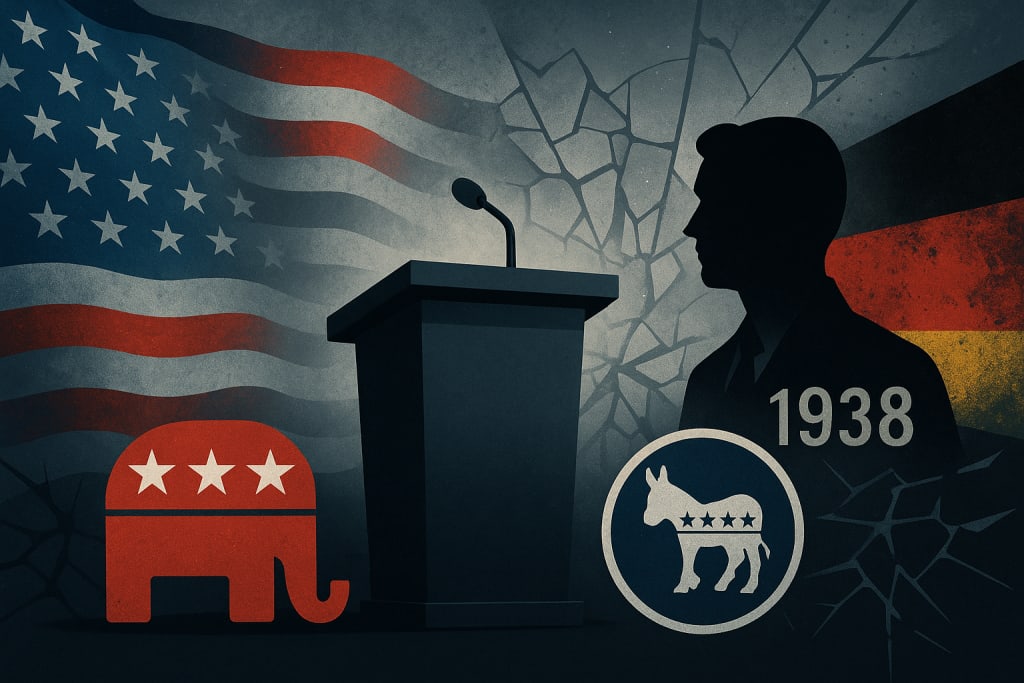
On September 10, 2025, Charlie Kirk the extreme conservative activist and Turning Point USA cofounder was shot and killed while speaking at Utah Valley University (UVU). Authorities say a single round was fired from a nearby campus building, roughly 200 yards from the stage, striking him about twenty minutes into his remarks. Investigators have not yet released a definitive motive.
The facts are stark. The shot reportedly from a high-powered bolt-action rifle was fired from a campus facility, the Losee Center onto the outdoor event space. The shooter was not immediately identified on September 10–11; officials described the investigation and search as ongoing, with law enforcement cautioning against speculation.
As the news spread, the country fractured along familiar fault lines: outrage and grief from supporters; condemnation of violence from leaders across parties; and from many critics, a refusal to mourn a figure who helped mainstream scorn for “empathy” and defended the political status quo on guns even amid a drumbeat of mass shootings.
This is not the first time America has faced political bloodshed. But Kirk’s death lays bare three overlapping crises: the normalization of gun violence; the shrinking of compassion into tribal grief and the weaponization of public tragedy as political theater.
I. A Divided Response

Within hours, official statements landed from every rung of national politics. Democrats, Republicans and Independents alike denounced the attack, framing it as intolerable political violence. Some conservative figures and far-right influencers, however, quickly escalated the rhetoric labeling the killing an act of war; blaming ideological enemies without evidence and calling for retaliation.
For supporters, Kirk’s death is a wound to “their side.” framed the killing as an attack on conservatives, Christianity and free speech. They described Kirk as a casualty of a toxic culture war. For critics, deep ambivalence how to respond to the killing of a man who insisted that some gun deaths were a “price of liberty,” and who derided empathy itself as destructive? Those quotations are not rumors; they are very well documented on tape and verified. Critics pointed to a double standard.
In 2023, Kirk told a church audience that “it’s worth… some gun deaths every single year” to preserve the Second Amendment. In a 2022 episode of his show, he declared, “I can’t stand the word empathy… a made-up, new age term that does a lot of damage.” and these words are ringing louder at his death than they did when he made the controversial commentary about school shootings involving children. Those statements are part of the record and help explain why many Americans struggled to summon grief.
This complicates the tableau of his final exchange before the shot. When an audience member asked about mass-shooting statistics, Kirk interjected, “Counting or not counting gang violence?” a line that circulated widely after the shooting and has been authenticated. When someone uses “gang violence” in public debate without clear data, it often becomes a proxy for racialized fear: “gang violence” is culturally associated in U.S. discourse with Black or brown urban communities. Even asking “Are we counting gang violence?” in relation to mass shootings frames gang violence as something that might inflate or distort mass-shooting statistics and implies that what counts as mass shootings may depend on whether the speaker wants to include cases typically associated with marginalized communities; without ever acknowledging Merton’s Strain Theory, Becker’s labeling theory (while participating in it) or the social disorganization theory.
And then the singular shot rang.
It isn’t that a political murder is any less wrong. It’s that a public figure’s posture toward human pain shapes how the public receives his own.
II. Free Speech, Hate Speech, and Consequences
Freedom of speech in the United States protects people from government punishment for what they say; it does not protect anyone from the social, moral, and reputational consequences of what they say. Kirk built a career on provocation belittling opponents, minimizing suffering and elevating grievance politics. That is speech in a legal sense; it is also a steady moral signal. Over time, it taught many listeners not to expect compassion from him.
This is the line his death forces us to confront. Speech can be legal and still be cruel. And while speech cannot “justify” violence (political murder is categorically wrong), it can condition how a public responds to tragedy. If you spend years dismissing others’ pain, people will not line up to feel yours. Free speech does not come with a guarantee of public empathy.
The tension lies here with the First Amendment which enshrines the right to speak without government interference but it does not sanctify every word uttered. Hate speech, conspiracy theories, and rhetoric that devalues the lives of others may be legal; but they carry social costs. They corrode trust, deepen division, and strip away the reservoir of goodwill that makes communities extend grace in moments of crisis.
Charlie Kirk often conflated criticism with censorship. He framed backlash as proof of persecution, as if disagreement itself were an infringement on his rights. But free speech is not freedom from consequences. When you declare empathy a “made-up word,” when you argue that the deaths of children are an acceptable “cost” of liberty, when you caricature women, immigrants, or Black and Brown communities; those statements do not vanish when tragedy strikes you. They linger, shaping the collective memory of who you were.
That is the paradox his death exposes. Kirk claimed to be a defender of American liberty but much of his rhetoric was about restricting who counted as fully American. He wielded free speech to narrow compassion; not expand it. Now, in the wake of his assassination, the public response reflects that narrowing: some grieve, some rage, and many remain unmoved. His words conditioned that silence as much as they conditioned loyalty.
In the end, free speech is a tool. It can defend dignity, or it can normalize cruelty. Kirk chose the latter path, and his death has made visible the consequences: not legal penalties, but moral isolation.
III. Outcry for “One of Their Own”: Selective Empathy and Tribal Grief
The ferocity of the reaction from certain quarters reveals what grief is often doing in American politics: marking membership. Kirk was a symbol of a tribe; his death is therefore experienced as a direct assault on that tribe’s identity. The inverse is glaring. When victims are not “one of us,” deaths draw fewer tears, less airtime, and quickly become policy talking points or statistics. That’s not universal love of life it’s conditional empathy.
Kirk himself made the logic plain when he framed children’s deaths by guns as a cost we must accept to retain liberty. He didn’t say only their children but the effect of that argument, repeated often enough; is to sort lives into categories of value. It is precisely this sorting that now boomerangs back many who were told empathy is weakness are not inclined to offer it in return.
That double standard has not gone unnoticed. On the very day Kirk was shot, a school shooting in Colorado left students wounded and communities shattered or children praying at school in Wisconsin. In Colorado, a student at Evergreen High School in Jefferson County, Colorado, shot two classmates, then turned the gun on himself. One victim remained in critical condition overnight as the community reeled; schools closed; law enforcement and counselors mobilized. Local details were specific, human, and heartbreaking. National ideological reaction was comparatively muted.
Yet the far-right ecosystem that roared to life over Kirk’s death offered only muted acknowledgment of those children. The juxtaposition is brutal. For many observers, the contrast was stark the death of a “political” influencer triggered wall-to-wall outrage and detonates a media and social media supernova; while the deaths and injuries of children barely registered. Some responsive constructive while much of it incendiary.
This discrepancy is prompting a new kind of question. Children are shot in a school and the response is sorrowful but familiar, almost routinized. If we’re wise, we’ll stop here and ask why is a political symbol more galvanizing than kids bleeding on a playground? What, exactly, do we value? Will those who grieve for Kirk now recognize the broader problem? Will they see that the ease of access to guns, which has long fueled school shootings, domestic violence, and community bloodshed, is the same mechanism that cut down one of their own? Some are hoping that this moment of selective empathy might widen that Kirk’s death could serve as a mirror, showing that the problem is not partisan enemies but the culture of violence itself. No single clip proves “selective empathy,” but the pattern repeats and when the victim fits an ideological story, the volume spikes; when the victims are children with no political capital, the conversation turns, at best, to “safety protocols,” and at worst, to resignation.
Whether that recognition will take root is uncertain. What is clear is that grief, when deployed selectively, only deepens division. To mourn only for “our people” is to admit that other lives are disposable. And when that logic is applied universally, it leaves us all vulnerable because sooner or later, someone else’s “disposable” life will be ours.
IV. Reactionary Abuse: How Harm Breeds Hardness
There is a personal-to-political pipeline in all this. In abusive dynamics, persistent harm calcifies hearts. Victims (and witnesses) detach and they learn to withhold compassion from those who inflict pain. When consequences finally reach the abuser, some feel a grim satisfaction, even relief. That response is not ideal, it is a symptom of damage but it is predictable. It is the body’s and society’s way of saying: enough.
Politics is not so different. When influential figures mock empathy, dehumanize groups, or insist that certain deaths are an acceptable cost for maintaining power; they model cruelty as strength. Over time, the people most targeted by those words stop seeing such figures as human in the fullest sense. Their deaths no longer evoke universal grief, because their lives never extended universal care. This is not justice it is reciprocity of indifference; like Luigi Mangione.
The cycle corrodes everyone. Those who inflict harm often mistake domination for security, only to find that it leaves them isolated when tragedy strikes. Those who absorb harm learn to survive by numbing compassion, which protects them in the short term but also erodes the social fabric. And the broader society watching these exchanges begins to normalize detachment inday by day, caring less about strangers, less about neighbors, less about anyone beyond the tribe.
That is the hidden danger of selective empathy. What begins as a defense mechanism in the face of cruelty metastasizes into a collective habit. We stop expecting compassion from leaders, so we stop offering it to them. We stop believing empathy is possible across political or racial lines, so we stop practicing it. In that environment, violence is no longer shocking—it is expected. And mourning becomes less about the loss of life itself than about signaling allegiance to a side.
Charlie Kirk did not create this cycle, but he amplified it loudly. By deriding empathy as weakness and treating others’ suffering as expendable, he participated in teaching millions that compassion is optional. His death now exposes the cost of that lesson: a culture increasingly unable to grieve universally, increasingly content to divide the world into lives that matter and lives that do not.
V. When Principles Meet Reality

“A well regulated Militia, being necessary to the security of a free State, the right of the people to keep and bear Arms, shall not be infringed.” Ratified in 1791, the Second Amendment was written in a world of muskets and militias; not AR-15s on college campuses. Its compact phrasing has fueled centuries of debate is it about collective defense through militias or about the individual right to own firearms?
For Charlie Kirk, the answer was always clear. He cast the Second Amendment not just as a legal guarantee but as a sacred principle, one that justified almost any cost. When he argued that gun deaths even the deaths of children were the necessary “price of liberty,” he was not tossing off a careless remark. It was his philosophical position, repeated and defended across years of speeches, interviews, and debates. Liberty, to him, was worth blood.
Then, on a September afternoon in Utah, a rifle on a college campus ended his life.
This is not cause for celebration. Political violence is always tragic and always corrosive but it is a mirror. The exact mechanism of violence Kirk accepted in principle claimed him in practice. The philosophy that insulated him from empathy toward others has now become the lens through which many struggle to empathize with him.
For countless observers, the irony is impossible to ignore. His own words echo back the “cost of liberty” he once described abstractly has been made devastatingly concrete in his death. Where he once asked grieving parents to accept their loss as part of the bargain of freedom, the public now asks the same of his supporters. If these are the rules of the world he defended, then why should his death be exempt from them?
This is the terrible symmetry of rhetoric hardened into dogma. When you teach that suffering is acceptable collateral, you cannot be surprised when others apply that logic to you. Kirk did not expect to pay the price himself; he assumed it would always be borne by others. But liberty, as he defined it, proved no respecter of persons. It reached him, too.
VI. The Kristallnacht Echo: What Makes a “Coordinated, Official Response”?

History warns that the most dangerous moment after a symbolic killing is the after. In 1938, Ernst vom Rath a junior German diplomat was assassinated in Paris; Nazi leaders seized on his death to launch Kristallnacht a centrally orchestrated pogrom across Germany and Austria. What made it “coordinated and official” was not rumor or lone-wolf rage but orders:
- Police and fire brigades were instructed not to intervene to save Jewish synagogues and property, except to protect adjacent “Aryan” structures.
- Party and paramilitary units (SA, SS, Hitler Youth) were mobilized by leadership directives, not by spontaneous mobs.
- Arrest quotas and detention instructions went out; approximately 30,000 Jewish men were taken to concentration camps.
This was choreographed and state-sanctioned, later laundered as “spontaneous outrage.” We are already repeating many things from roughly a 100 years ago around a time when most empires over a certain age collapse.
Primary sources show it plainly. Reinhard Heydrich’s “most urgent” telegram (Nov. 10, 1938, 1:20 a.m.) to state police and SD units laid out how to “deal with” the coming “demonstrations,” a bureaucratic veil over orchestrated violence. Yad Vashem preserves the text Facing History provides an accessible translation.
Cautionary echo, not equivalence. America in 2025 is not Nazi Germany; but my are there many parallels. There is no propaganda ministry commanding police to stand down while synagogues burn. But the rhetorical risk is similar to transform one person’s death into a mass-mobilizing pretext, martyrdom narratives, calls for civil conflict, demands to suppress enemies “for security.” We’re already hearing flirtations with that script from parts of the far-right ecosystem.
The lesson of 1938 is less about inevitable repetition than about how quickly grief can be weaponized and how fast legal institutions can be bent to “protect” the in-group against a manufactured, monolithic out-group.
VII. A Note on Faith: “Martyrdom” vs. the Teachings of Christ

Some have already rushed to cast Kirk as a martyr for Christianity and free speech. The language of martyrdom is powerful, but it is also dangerous when misapplied. In Christian tradition, martyrdom is not merely dying while Christian; it is offering one’s life in the service of Christ’s teachings love of enemies, care for the poor, solidarity with the vulnerable, forgiveness in the face of violence. Martyrs are remembered not because they fought culture wars but because they embodied radical compassion in the face of oppression.
It is hard to square that legacy with Kirk’s public record. He often derided empathy, treating it as weakness rather than virtue. He exalted contempt over compassion, division over reconciliation. His speeches framed women’s dignity as submission, mocked school-shooting survivors as political pawns, and caricatured Black and brown communities with distorted statistics about crime and violence. These were not occasional lapses but recurring notes in the music of his career.
That dissonance explains why many believers find themselves torn. On one hand, they pray for his wife, his family, his friends because grief is real, and faith calls for comfort to the mourning. On the other hand, they resist sanctifying his public message as “Christian witness,” because that would be a distortion of the Gospel. To canonize contempt as martyrdom is to confuse culture war with discipleship.
The point is not to deny Kirk’s faith identity, but to recognize that faith without fruit cannot be transformed into sainthood. His declaration that “empathy is a made-up word” (a line confirmed, not apocryphal) stands as a chilling inversion of Christ’s call to compassion. To many Christians, that posture disqualifies his death from being celebrated as martyrdom. Instead, it is a tragedy personal for his family and those who knew him personally, symbolic for his movement but he is not a holy sacrifice.
VIII Grounding the Record: Quotes, Context, and What They Mean Now
“It’s worth… some gun deaths every single year” to preserve the Second Amendment (April 2023, TPUSA Faith, Salt Lake City). Verified transcript and audio exist. The analogy he drew was to car fatalities: society deems the benefits of driving “worth the cost.” He applied the same logic to civilian firearms. After his death by gunfire, that quotation became a moral lens for many Americans evaluating their response.
“I can’t stand the word empathy… made-up, new age term that does a lot of damage” (Oct. 12, 2022, The Charlie Kirk Show). Verified and timestamped, per independent fact-checking. This line is central to understanding why public empathy for him is sharply divided now.
Final exchange before the shot: “Counting or not counting gang violence?” Verified via multiple-angle videos reviewed by fact-checkers. The line underscores how he often reframed discussions of mass shootings around definitions and categories rather than shared mourning.
IX. The Colorado Case, Revisited: Who Counts?
Evergreen High School’s shooting, on the same day, is more than a “contrast example.” It is a mirror held up to our moral priorities. Two students were wounded; the teenage gunman died by suicide; a community was left stunned. Schools closed for healing circles. Families sat in hospital waiting rooms, their lives split into before and after. That is the daily America that exists beneath the glare of our ideological lighting rigs. And yet, outside Colorado, the story barely pierced the national bell jar of performative outrage.
The asymmetry is staggering. A political celebrity’s death was cast within hours as a national wound, a call to arms, a sign of America under siege. Meanwhile, the children of Evergreen were absorbed into the background hum of American violence as another headline, another sigh, another prayer vigil, and then silence. Their suffering was not politicized because it did not serve a ready-made narrative. They were not martyrs or symbols. They were children, and children’s lives, tragically, have become routine casualties in a society too exhausted or too divided to be shocked.
If the life of a political celebrity ignites a national fire while children’s lives flicker and go dim in the news cycle within 24 hours, we do not need a commission to diagnose our crisis. We need the courage to name it plainly: we live inside a hierarchy of concern. Some lives are broadcast as sacred, others treated as expendable. Some losses fuel movements, others are reduced to statistics in policy debates. The deciding factor is not the innocence of the victim or the brutality of the act, but the identity, affiliation, and usefulness of the victim to a tribe’s narrative.
That hierarchy is corrosive. It signals to parents in Colorado that their children’s lives matter less than a pundit’s platform. It tells marginalized communities that grief is conditional that only some deaths are worthy of outrage, solidarity, and sustained remembrance. And it teaches all of us that mourning is no longer a human reflex but a partisan calculation.
X. The Measure of a Life, the Lesson of a Death
Should people mourn Charlie Kirk? “Mourning” is not a single act. His family and friends have suffered a terrible loss; anyone with a human heart can acknowledge that. For others, real grief is hard to summon, not because life is cheap but because his public persona repeatedly cheapened others’ lives and pain; that is the double bind he helped create.
But there’s a larger, sobering point that resists tribal sorting:
Political murder is wrong. Full stop.
Gun violence is intolerable whether it strikes a pundit onstage or a child in a cafeteria.
Words shape worlds. They do not “cause” bullets to fly but they do shape the moral weather in which we decide whom to protect, whom to pity, and whom to forget.
Kirk almost certainly didn’t believe he would pay the price of the politics he advanced; in his calculus, the costs would be borne by others somebodies far away, or unnamed; that’s how public cruelty works until the circle closes.
If there is any redemptive lesson here, it is not about whether you or I cry for him. It is whether we can finally tell the truth about the poisoned tree:
A culture that teaches disdain for empathy will reap callousness in return.
A politics that treats gun deaths as an acceptable cost will eventually find that cost at its own doorstep.
A media ecosystem that converts tragedy into team fuel will take us from condemnation to escalation in a single news cycle.
We don’t need a new Kristallnacht to learn from 1938. We need to watch for the quieter, modern echo: grief turned into mobilization against “enemies,” calls for crackdowns in the name of “security,” and the substitution of symbolic martyrdom for honest reckoning with violence. The historical record is crystal clear about how “spontaneous outrage” can be orchestrated from above; let’s refuse that script instead
The question, then, is not whether Charlie Kirk “deserves” sympathy. It is whether we will learn from the contradictions his career and death expose and insist, at last, that every life, including children’s lives in schools, triggers an equal, urgent will to prevent the next shot.
Citations
AP News. Live Updates: Conservative activist Charlie Kirk fatally shot at Utah Valley University. Associated Press, 10 Sept. 2025. https://apnews.com/live/utah-valley-university-charlie-kirk-shooting-updates
The Wall Street Journal. Live coverage: Charlie Kirk shot while speaking at Utah Valley University. 10 Sept. 2025. https://www.wsj.com/livecoverage/charlie-kirk-shot
Levenson, Eric. Charlie Kirk’s rise from conservative firebrand to MAGA mainstay. CNN, 10 Sept. 2025. https://www.cnn.com/2025/09/10/media/charlie-kirk-tpusa-maga-conservative-activism
Jewish News Syndicate. Conservative activist Charlie Kirk speaks of “eye-opening” stint in Israel. JNS, 7 June 2023. https://www.jns.org/conservative-activist-charlie-kirk-speaks-of-eye-opening-stint-in-israel/
Bedard, Paul. Charlie Kirk: “College is a scam.” Washington Examiner, 20 July 2023. https://www.washingtonexaminer.com/news/washington-secrets/1706961/charlie-kirk-college-is-a-scam/
Gino Spocchia. Charlie Kirk accused Democrats of being “closer to Nazis” than Republicans. Independent, 26 July 2022. https://www.independent.co.uk/news/world/americas/us-politics/charlie-kirk-tpusa-nazis-democrats-b2133533.html
Indy100. Charlie Kirk’s viral comments on gun control resurface after his death. Indy100, 11 Sept. 2025. https://www.indy100.com/politics/charlie-kirk-gun-control-amendment
MSN News. Charlie Kirk’s brave final words before he was assassinated in Utah. MSN, 10 Sept. 2025. https://www.msn.com/en-za/news/other/charlie-kirk-s-brave-final-words-before-he-was-assassinated-in-utah/ar-AA1MiLmj
Yahoo News. Fact check: Did Charlie Kirk once defend gun deaths as “price of liberty”? Yahoo News, 11 Sept. 2025. https://uk.news.yahoo.com/fact-check-charlie-kirk-once-001900786.html
History.com Editors. Kristallnacht started when this diplomat was murdered in cold blood. History, 9 Nov. 2018. https://www.history.com/articles/kristallnacht-started-when-this-diplomat-was-murdered-in-cold-blood
“Ernst vom Rath.” Encyclopaedia Britannica. Accessed 11 Sept. 2025. https://www.britannica.com/biography/Ernst-vom-Rath
The National WWII Museum. Kristallnacht: The Night of Broken Glass. National WWII Museum, 2018. https://www.nationalww2museum.org/war/articles/kristallnacht-night-broken-glass
Dressler, Joshua, and Stephen P. Garvey. Principles of Criminal Law. 7th ed., West Academic Publishing, 2021.
Siegel, Larry J. Criminology: Theories, Patterns, and Typologies. 13th ed., Cengage Learning, 2021.
Walker, Samuel, Cassia Spohn, and Miriam DeLone. The Color of Justice: Race, Ethnicity, and Crime in America. 6th ed., Cengage Learning, 2018.
Pollock, Joycelyn M. Ethical Dilemmas and Decisions in Criminal Justice. 10th ed., Cengage Learning, 2019.
Samaha, Joel. Criminal Law. 12th ed., Cengage Learning, 2017.
Siegel, Larry J., and Brandon C. Welsh. Juvenile Delinquency: The Core. 6th ed., Cengage Learning, 2017.
Walston-Dunham, Beth, and John D. DeLeo Jr. Introduction to Law. 7th ed., Cengage Learning, 2016.
Fox, James Alan, Jack Levin, and David R. Forde. Elementary Statistics in Criminal Justice Research. 4th ed., Cengage Learning, 2014.
Maxfield, Michael G., and Earl R. Babbie. Research Methods for Criminal Justice and Criminology. 8th ed., Cengage Learning, 2018.
About the Creator
Cadma
A sweetie pie with fire in her eyes
Instagram @CurlyCadma
TikTok @Cadmania
Www.YouTube.com/bittenappletv
Is NATO Facing Its Biggest Crisis Yet?
Is NATO Facing Its Biggest Crisis Yet? For more than seventy years, NATO has been one of the strongest military alliances in the world. Formed after World War II, it was designed to protect its members through collective defense. An attack on one was considered an attack on all. For decades, this principle helped maintain stability in Europe and beyond. But today, NATO is facing one of the most challenging moments in its history.
By Wings of Time about 5 hours ago in History
FPS: The Last Flame Challenge Winners
Welcome to our first Winners Announcement of the year and to the final challenge in the Fall Poetry Series. The Last Flame invited writers to sit with endings, using fire as a central image to consider what remains when something burns out: ash, warmth, memory, silence, or the faint promise of what comes next. The strongest pieces treated endings as gradual rather than sudden, allowing them to flicker, dim, and linger.
By Vocal Curation Team5 days ago in Resources


Comments (1)
This is an amazing breakdown of many aspects. That definition of Christian martyrdom that breaks it down on what it really is brings things home. It feels these days that people just want the ability to call themselves something and not put the work in. So now we have “Christians”