
The Day the World Changed Forever: Untold Stories of Revolution
The Freemasons: The Secret Society That Shaped Revolutions and Built the Modern World

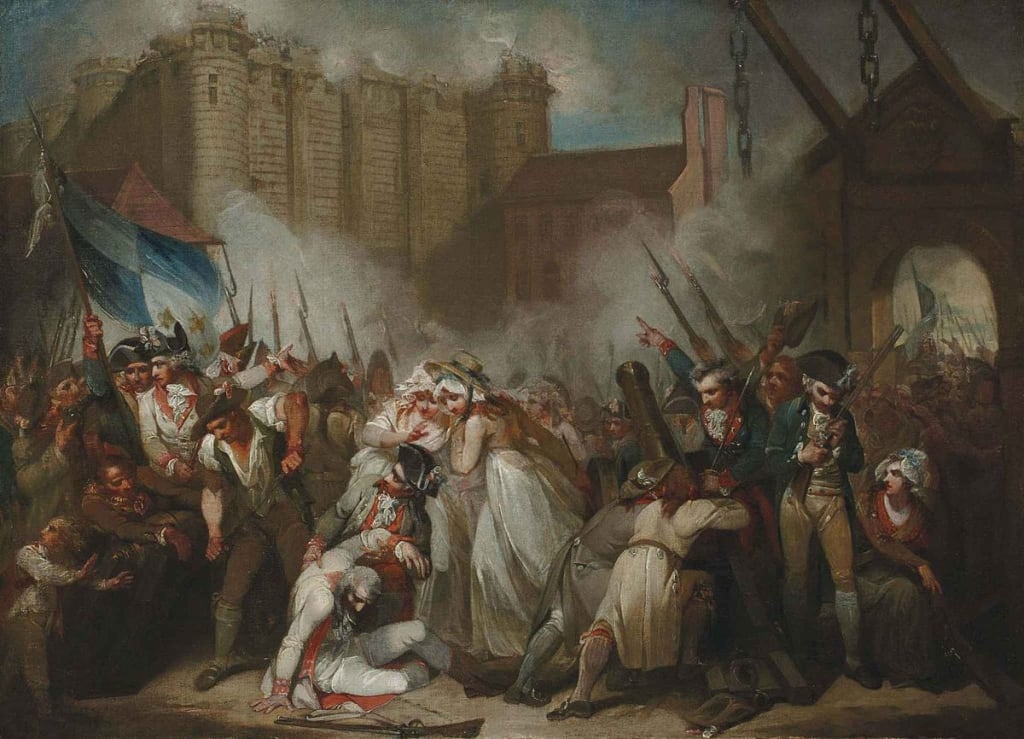
I. Prologue: A City on the Brink
Paris, July 14, 1789. The air reeks of sweat and desperation. A mob of hungry, exhausted citizens, bakers, cobblers, and farmers marches toward the Bastille, a fortress towering over their city like a stone beast. They’re not just angry; they’re terrified. Bread prices have skyrocketed, their children are starving, and whispers of royal troops amassing at the city’s edge have set nerves on edge. When the first stones fly, it’s not just a riot; it’s a cry for survival.
That day, the Bastille didn’t just fall; it shattered. And with it, centuries of monarchy trembled.
II. The World Before the Storm
To grasp why this happened, imagine Europe as a pressure cooker. Kings and queens ruled by “divine right,” the Church controlled minds and wallets, and ordinary folks—80% of France’s population—scratched out a living under backbreaking taxes. But ideas were brewing. Thinkers like Voltaire mocked aristocrats as “painted puppets,” while Rousseau argued that governments should serve the people, not the other way around.
Enter the Freemasons
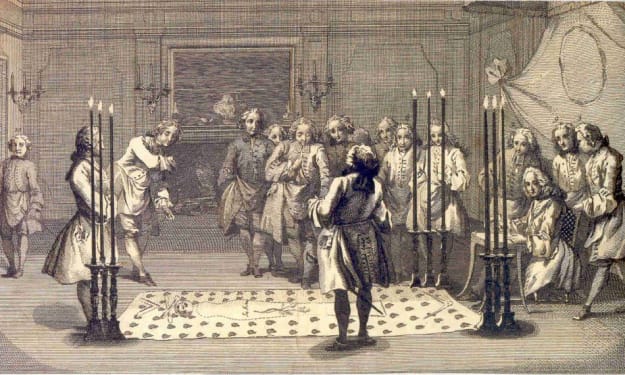
These Enlightenment ideals found a home in dimly lit lodges. Freemasonry wasn’t just about secret handshakes; it was a radical experiment. Nobles rubbed shoulders with blacksmiths, debating equality by candlelight. As historian Margaret Jacob puts it, “Masonry turned taverns into classrooms for democracy.” By 1789, lodges were incubators for revolution.
III. The Spark: Blood, Stone, and Symbolism
The fuse was lit months earlier. When King Louis XVI called the Estates-General to fix France’s finances, commoners (the Third Estate) demanded fair representation. The king refused. On June 17, they declared themselves the National Assembly, vowing to write a constitution.
But the real explosion came on July 14. Fear that the Bastille’s cannons would crush the uprising sent thousands into the streets. Gunfire crackled, stones flew, and by dusk, the fortress lay in ruins. Only seven prisoners were freed, but the message was clear: No king is above the people.
Why the Bastille Mattered
The Bastille wasn’t just a prison—it was a symbol. When revolutionaries mailed their keys to George Washington, they weren’t just sharing a trophy; they were tying their struggle to America’s fight for freedom. Masonic symbols like the “All-Seeing Eye” popped up everywhere, linking the revolution to ancient ideals of wisdom and justice.
IV. Chaos and Brotherhood: The Revolution’s Darkest Days
What followed was messy. The National Assembly abolished feudalism, declared “liberty, equality, and fraternity,” and seized church lands. But hope soured into paranoia. By 1793, France was at war with half of Europe, and internal factions turned on each other.
The Reign of Terror
Maximilien Robespierre, a lawyer with a flair for drama, took charge. The guillotine became a gruesome spectacle. In 18 months, 16,000 “enemies of the revolution” died—including the king and queen. Even Freemasons faced suspicion. “Secret societies corrupt the people!” screamed radicals, banning lodges in 1795.
Women’s Fury, Women’s Silence
Women drove the revolution, too. In 1789, market women marched 12 miles to Versailles, armed with pikes, demanding that the king address bread shortages. Olympe de Gouges, a playwright, penned a Declaration of the Rights of Woman. Both were silenced by the guillotine.
V. Napoleon: The Revolution’s Unlikely Heir
Out of the chaos rose Napoleon Bonaparte, a Corsican officer with a chip on his shoulder. In 1799, he staged a coup, declaring himself “First Consul.” By 1804, he crowned himself emperor—a move dripping with irony for a revolution that killed a king.
Napoleon’s Dance with Freemasonry
Napoleon distrusted secret societies but saw their value. He banned rivals like the Illuminati but kept Freemasons close, using their networks to build loyalty. His Civil Code enshrined revolutionary ideals like meritocracy while stripping rights from women and colonies.
VI. A Legacy That Shook the World
The Revolution had far-reaching consequences outside of France. Africans held in slavery in Haiti rose in rebellion and demanded their freedom under Toussaint Louverture's leadership. The United States doubled in size when Thomas Jefferson bought Louisiana from Napoleon.
Footprints of Masons in Washington, D.C.
The principles of the Freemason Founding Fathers, including George Washington and Benjamin Franklin, were ingrained in the fabric of America. Masonic ceremonies were used to lay the cornerstone of the Capitol and the pyramid and eye of the Great Seal, symbolism that is entirely Masonic.
VII. Echoes Today: The Revolution’s Unfinished Business
Slavery was maintained during the French Revolution despite promises of equality. It championed reason yet drowned in blood. Is that familiar to you? Even now, we continue to grapple with its contradictions.
This duality is also reflected in Freemasonry. Although it has historically marginalized women and people of color, it teaches brotherhood. "Masonry's legacy lies not in its secrets but in the cracks it left in the walls of power," according to author Jasper Ridley.
VIII. Epilogue: The Importance of Now
History is about people, not just dates and conflicts. We are reminded by the French Revolution that change is difficult, messy, and frequently contradictory. However, it is also feasible.
Therefore, keep in mind that revolutions aren't born in palaces the next time you pass a statue or read a slogan about "liberty." The grit and grime of daily struggles—the same struggles that mold our world today—is where they were born.
Hungry for more? Read Citizens: A Chronicle of the French Revolution by Simon Schama or watch the documentary The French Revolution: Tides of Blood. Or better yet, visit Paris’s Musée de la Révolution Française. Touch the past. Feel its weight.
Hungry for more?
Read:
- The Secret Society That Built the Modern World
- The War That Erased a Nation: Paraguay’s 60% population wipeout (and why no one talks about it).
Because understanding history isn’t about memorizing facts, it's about asking, What would I have done?
About the Creator
ChronoCurator
One story at a time, revealing the past. Explore gripping tales that have influenced our world.
Keep reading
More stories from ChronoCurator and writers in History and other communities.
The Secret Society That Built the Modern World
A dark guild of London stonemasons started a revolution in 1717 that would change the world. Instead of chisels or hammers, they used ideas—ideas so powerful that they created nations, overthrew empires, and altered how people thought about freedom. This is the tale of the fraternity of Freemasonry, which transformed medieval workmanship into a model for the contemporary era.
By ChronoCurator9 months ago in History
The Forgotten Flavors: How Ancient Recipes Could Change the Future of Food
Introduction: A Taste of What We’ve Lost Today, food is everywhere—globalized, homogenized, and, in the great majority of cases, severed from its place of origin. A hamburger consumed in New York has virtually the same taste as one consumed in Tokyo or Dubai. Pasta comes in a thousand variations, but the sauces follow the well-known: tomato, cream, or cheese. Supermarkets carry an incredible variety, but all are produced from the same limited list of international commodities: wheat, corn, soy, rice, sugar.
By The Chaos Cabinet5 days ago in History
Alexander the Great’s Body Preservation Method: History, Mystery, and Science
Ancient historians describe Alexander’s corpse as remaining uncorrupted for several days, even weeks, which led many to believe he was divine. The method used to preserve his body has intrigued historians, scientists, and medical scholars for centuries.
By Say the truth 4 days ago in History


Comments
There are no comments for this story
Be the first to respond and start the conversation.