
Alexander the Great’s Body Preservation Method: History, Mystery, and Science
Alexander the Great, one of history’s most influential military leaders, died in 323 BCE at the age of 32 in Babylon. While the cause of his death has long been debated, another fascinating mystery surrounds what happened after his death: the extraordinary preservation of his body.

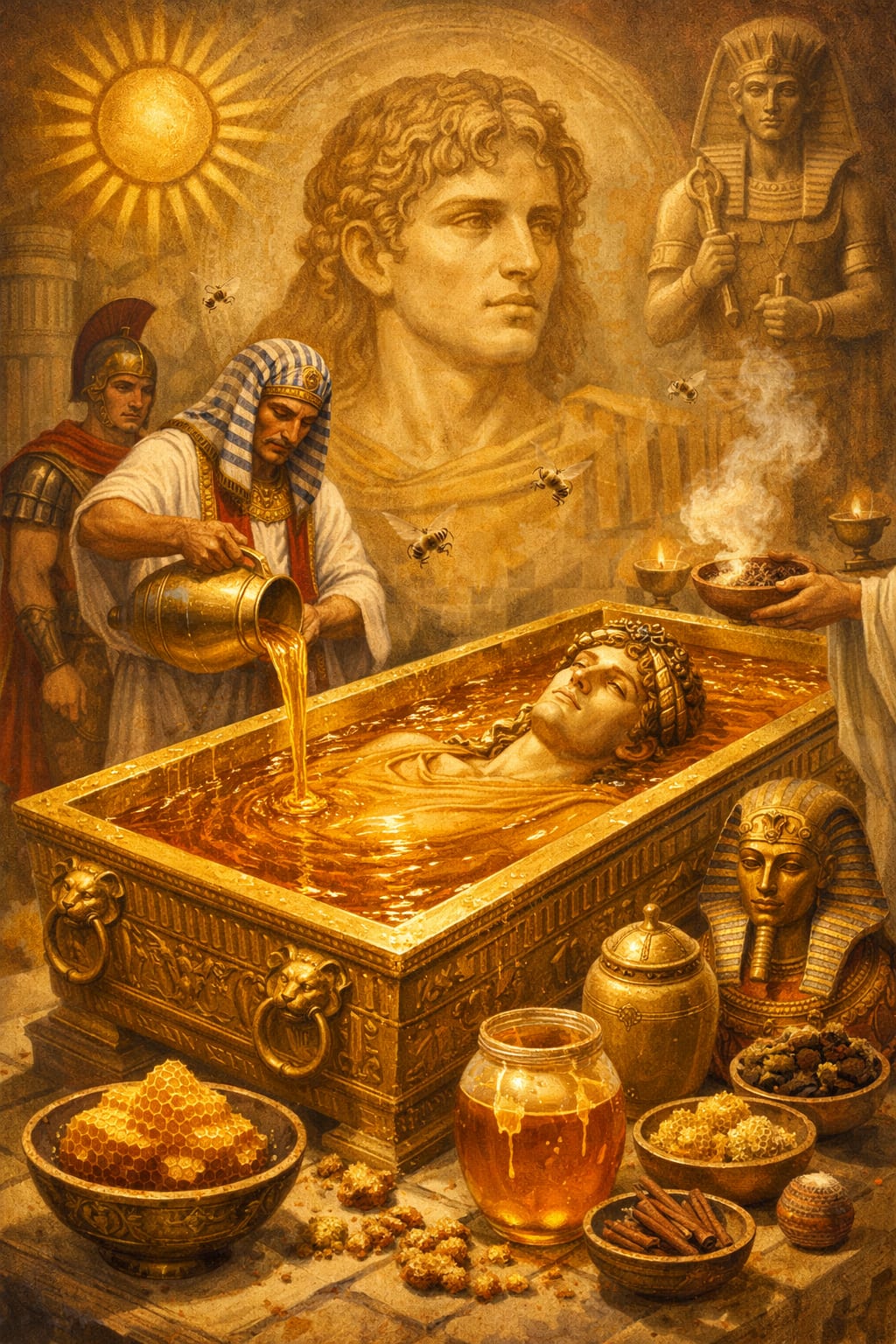
Ancient historians describe Alexander’s corpse as remaining uncorrupted for several days, even weeks, which led many to believe he was divine. The method used to preserve his body has intrigued historians, scientists, and medical scholars for centuries.
Historical Accounts of Preservation
According to ancient sources such as Plutarch, Diodorus Siculus, and Arrian, Alexander’s body showed no signs of decay for an unusually long period. Despite the hot climate of Babylon, decomposition was reportedly absent. This was remarkable in an era without modern embalming techniques. Ancient writers interpreted this phenomenon as proof of Alexander’s divine nature. However, modern scholars suggest practical preservation methods were likely involved.
After his death, Alexander’s body was prepared for transport. It was initially meant to be sent to Macedon, but political struggles led to the body being diverted to Egypt, where it was eventually placed in a grand tomb in Alexandria. The long journey required some form of preservation to prevent decay.
Use of Honey as a Preservative
One of the most widely accepted theories is that Alexander’s body was preserved in honey. Honey has been known since ancient times for its antibacterial and preservative properties. Several ancient cultures, including the Greeks and Persians, used honey to preserve food and even human remains. Some historical texts suggest Alexander’s body was submerged in a golden sarcophagus filled with honey or a honey-based solution.
Scientifically, honey’s low water content and high acidity inhibit bacterial growth, which slows decomposition. This could explain why Alexander’s body appeared lifelike days after death. While complete submersion in honey may sound unusual today, it was a plausible and effective method in the ancient world.
Egyptian Embalming Influence
Another theory points to Egyptian mummification techniques. Since Alexander admired Egyptian culture and was declared a pharaoh, it is possible that Egyptian embalmers were involved in preserving his body. Egyptian embalming involved removing internal organs, dehydrating the body with natron (a natural salt), and wrapping it in linen.
However, classical sources do not explicitly mention full mummification in Alexander’s case. Instead, they describe the body as looking natural rather than mummified. This suggests that partial embalming or temporary preservation methods were used rather than traditional Egyptian mummification.
Possible Use of Aromatic Oils and Spices
Ancient preservation often included aromatic oils, resins, and spices such as myrrh, frankincense, and cinnamon. These substances had antimicrobial properties and were commonly used in funerary practices. Greek and Persian traditions favored anointing the body with oils to delay decay and reduce odor.
It is likely that Alexander’s body was treated with a combination of aromatic substances, further contributing to its preservation. These materials would also have symbolic significance, emphasizing honor and royalty.
Modern Medical Interpretations
Some modern researchers propose that Alexander may not have been truly dead for several days due to conditions such as Guillain-Barré syndrome, which can cause paralysis and slowed bodily functions while the person remains alive. This theory suggests that the lack of decomposition occurred because Alexander’s metabolic processes had not completely ceased.
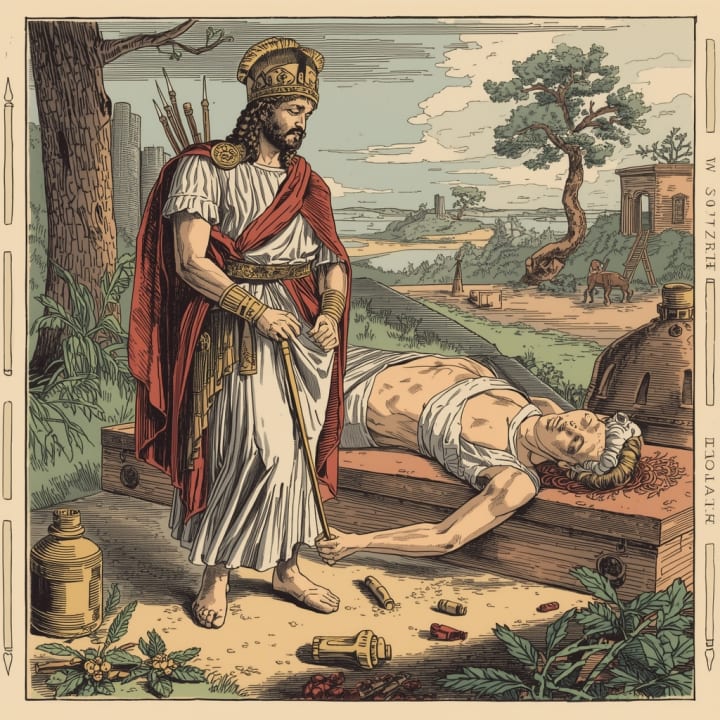
While intriguing, this hypothesis remains controversial and lacks definitive evidence. Nevertheless, it adds another layer of mystery to the preservation of Alexander’s body.
Symbolic and Political Importance
Preserving Alexander’s body was not merely a practical concern—it was politically significant. Whoever controlled Alexander’s remains could claim legitimacy and authority. This explains why his body became the focus of power struggles among his successors, known as the Diadochi.
The remarkable state of preservation also reinforced Alexander’s image as a god-like ruler. In ancient societies, an incorruptible body was often associated with divinity, strengthening his legendary status.
Conclusion
The preservation of Alexander the Great’s body remains one of history’s most fascinating enigmas. While ancient accounts describe a near-miraculous lack of decay, modern explanations point toward honey preservation, aromatic substances, and possible Egyptian embalming techniques. Whether achieved through science, tradition, or a combination of both, the method reflects the advanced knowledge and cultural practices of the ancient world.
Ultimately, the mystery surrounding Alexander’s preserved body enhances his legacy—not just as a conqueror, but as a figure who continues to captivate human curiosity more than two thousand years after his death.
About the Creator
Say the truth
"Say the Truth: Explain Everything in the World" is your trusted source for uncovering facts and exploring the wonders of history, science, technology, and beyond. We simplify complex ideas and reveal truths to inspire curiosity .
Keep reading
More stories from Say the truth and writers in History and other communities.
The Fall of Tibet to a Communist State: History, Causes, and Consequences
The incorporation of Tibet into the People’s Republic of China (PRC) after 1950 was not a single event but a complex process involving military force, political negotiation, ideological conflict, and long-lasting resistance. Understanding this fall requires examining Tibet’s historical status, China’s communist revolution, and the profound consequences that followed.
By Say the truth 6 days ago in History
🅼🅸🅳🅽🅸🅶🅷🆃 🆂🅽🅰🅲🅺🆂
"It's 10 in Tuscon! We all know what that means... It's Time for Midnight Snacks with your man, Gerald Gee! Ready to spend the night together? Me too! I'm full of snacks and can't wait to regurgitate them all back into your hungry ears. Crack a brew! Pop some corn! Anything to get ready for one hell of a show where the talk maybe cheap but the words cut deep...
By Lamar Wiggins2 days ago in Fiction


Comments
There are no comments for this story
Be the first to respond and start the conversation.