
The War That Erased a Nation—And Why We Still Need to Remember
A Nation’s Annihilation and the Shadows of History: The War That Killed 60% of Paraguay’s People, and Why the World Forgot

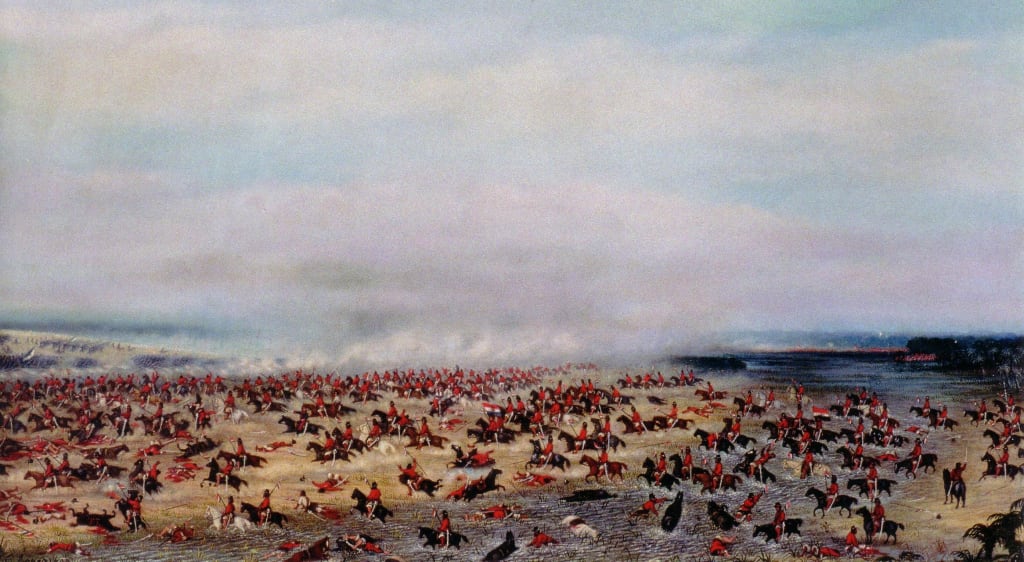
Have you ever stumbled on a story so wild you can’t believe it’s not a movie? Let me tell you about a war that killed over 60% of a nation’s population —more devastating than the Black Death—and yet, outside a handful of history nerds, nobody talks about it. What the hell happened in Paraguay between 1864 and 1870? And why does it feel like the world hit “delete” on this chapter of history?
Buckle up. This isn’t just about battles and borders. It’s about hubris, trauma, and the stories we choose to bury.
Background: The Man, The Myth, The Disaster
Imagine a leader so paranoid, so hungry for glory, he turned his country into a funeral pyre. Francisco Solano López, Paraguay’s dictator, was that guy. Think of him as the 19th-century version of a gym bro who’s never actually fought anyone—constantly flexing his “strongman” muscles while running a country that was, ironically, thriving.
Paraguay in the 1860s was the South American version of a hipster utopia: isolated, self-sufficient, and weirdly proud of it. They made their own steel, educated girls and boys, and didn’t owe money to foreign banks. But López had Napoleonic ambitions. He wanted Paraguay to be the continent’s alpha dog.
Then Brazil stuck its nose into Uruguay’s politics, overthrowing a government friendly to Paraguay. López took it personally. Like, personally. He declared war on Brazil, Argentina, and Uruguay—all at once. It was like challenging the entire Avengers roster to a fistfight… and expecting to win.
The Conflict Unfolds: When Hubris Meets Hell
López’s first move? Invade Brazil. Bold? Sure. Smart? Hell no. The Triple Alliance (Brazil, Argentina, Uruguay) retaliated with 60,000 troops. Paraguay had 20,000. Oops.
The Battle of Tuyutí (1866): Imagine 10,000 men dead in a single day. Not from lasers or drones—just bullets, bayonets, and cholera. Soldiers drowned in swamps, starved in trenches, and rotted alive. One survivor wrote, “The air stank of death. We fought knee-deep in mud and blood”.
López’s Descent into Madness: As Paraguay crumbled, López turned into a tyrant straight out of a horror flick. He executed dissenters, burned villages, and even killed his brothers. His last stand? Dying in a ditch, screaming, “I die with my homeland!” Spoiler: He did.
By 1870, Paraguay’s capital was ash. The country lost 90% of its men and 60% of its women. Let that sink in.
Aftermath: A Nation’s PTSD
Post-war Paraguay wasn’t a country—it was a graveyard. Survivors faced:
The Lost Generation: Women rebuilt the nation, but trauma stuck around. Today, regions hit hardest by the war still report higher domestic violence rates.
Cultural Amnesia: Schools and libraries were rubble. Literacy tanked. Knowledge became oral history—grandma’s stories, not textbooks.
The victors? Brazil and Argentina expanded their turf, while Uruguay finally got some breathing room. But the war’s shadow loomed: militarism became the norm, paving the way for 20th-century dictators like Alfredo Stroessner, who ruled Paraguay for 35 years.
Why It’s Forgotten: Erasure by Design
Three reasons this war’s collecting dust in history’s attic:
Victors Rewrite History: Brazil and Argentina framed the war as a “civilizing mission.” Textbooks glossed over the massacres, focusing on their “glorious triumphs”.
Global Spotlight Elsewhere: The U.S. Civil War and European revolutions were trendier topics. Paraguay’s trauma was dismissed as a “local squabble”.
López Burned the Receipts: His regime destroyed archives, erasing Paraguay’s voice. What’s left are the winners’ sanitized narratives.
As historian Thomas Whigham put it, “This war is the blueprint of modern South America—but nobody wants to admit it.”
Conclusion: Why You Should Care
This isn’t just about Paraguay. It’s about us. About how power corrupts, how trauma lingers, and how easily history gets erased.
Think about María, a Paraguayan woman today. Her great-grandmother survived the war, one of the few women left to rebuild. María’s resilience mirrors her ancestors'—but so does her struggle against cycles of violence. Their stories aren’t ancient history. They’re a warning.
Next time someone says, “History is boring,” remember this: it’s not about dates. It’s about people. People who lived, died, and rebuilt in the face of hell.
If this story gutted you, join my newsletter. I dig up the stories history books ignore—like this one. No algorithms, no fluff. Just raw, human storytelling.
"History doesn’t repeat itself. But it sure as hell rhymes." —Mark Twain (probably)
About the Creator
ChronoCurator
One story at a time, revealing the past. Explore gripping tales that have influenced our world.
Keep reading
More stories from ChronoCurator and writers in History and other communities.
The Day the World Changed Forever: Untold Stories of Revolution
I. Prologue: A City on the Brink Paris, July 14, 1789. The air reeks of sweat and desperation. A mob of hungry, exhausted citizens, bakers, cobblers, and farmers marches toward the Bastille, a fortress towering over their city like a stone beast. They’re not just angry; they’re terrified. Bread prices have skyrocketed, their children are starving, and whispers of royal troops amassing at the city’s edge have set nerves on edge. When the first stones fly, it’s not just a riot; it’s a cry for survival.
By ChronoCurator9 months ago in History
The Deeds of Mullah Nasiruddin
The Deeds of Mullah Nasiruddin (Article No. 1270) Mullah Nasiruddin is a name that almost everyone has heard. His stories are famous across cultures for their humor, wisdom, and clever twists. Although he appeared simple and playful, Mullah Nasiruddin possessed sharp intelligence and deep insight. His actions often carried hidden lessons that made people laugh first and think later. The following incidents from his life highlight his wit, presence of mind, and moral intelligence.
By Sudais Zakwan6 days ago in History
3 Small Lies That Grew Into Massive Disasters
Big disasters don’t always start with big lies. Those are too obvious and too suspicious. The truly dangerous ones begin small, harmless even. The kind of lie you tell to save face, avoid paperwork, or postpone an awkward conversation. The kind that feels temporary.
By Enoch Sagini6 days ago in History


Comments
There are no comments for this story
Be the first to respond and start the conversation.