
The Forgotten Flavors: How Ancient Recipes Could Change the Future of Food
Why digging up 4,000-year-old recipes might be the key to solving our modern food crisis.

Introduction: A Taste of What We’ve Lost
Today, food is everywhere—globalized, homogenized, and, in the great majority of cases, severed from its place of origin. A hamburger consumed in New York has virtually the same taste as one consumed in Tokyo or Dubai. Pasta comes in a thousand variations, but the sauces follow the well-known: tomato, cream, or cheese. Supermarkets carry an incredible variety, but all are produced from the same limited list of international commodities: wheat, corn, soy, rice, sugar.
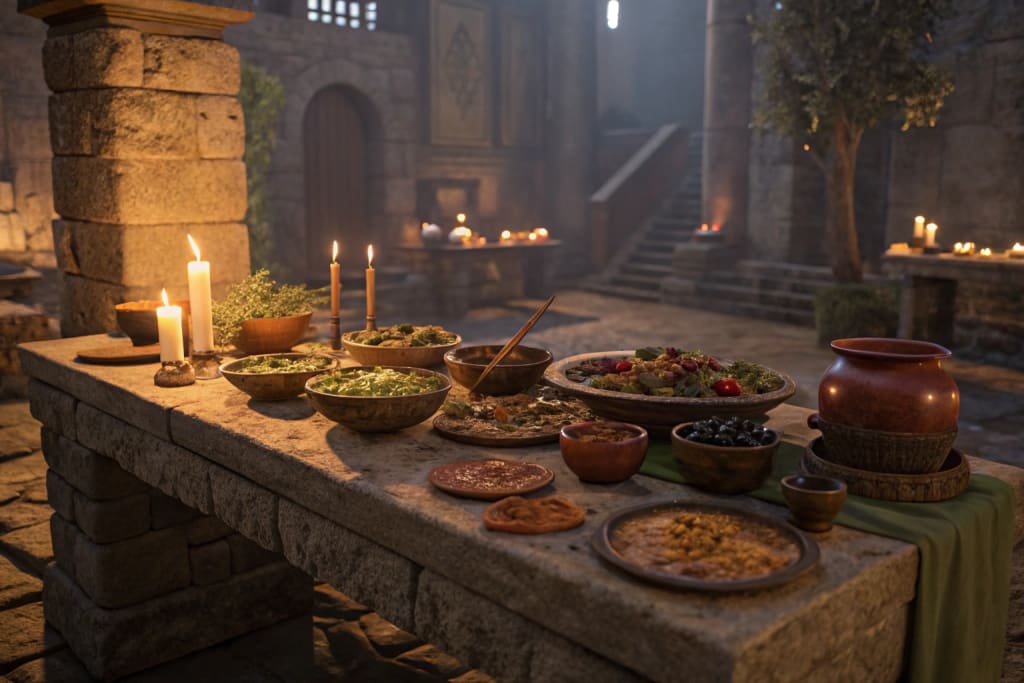
But beneath this modern uniformity lies a hidden truth: the human tongue used to know very much more. Flavors that defined entire civilizations are lost, overwritten by industrial agriculture, imperialism, and the uniforming influence of fast food. The fish sauces of ancient Rome, the bitter chocolate of the Maya, the medicated beers of Mesopotamia—these are not just relics of taste but portals to lost patterns of living.
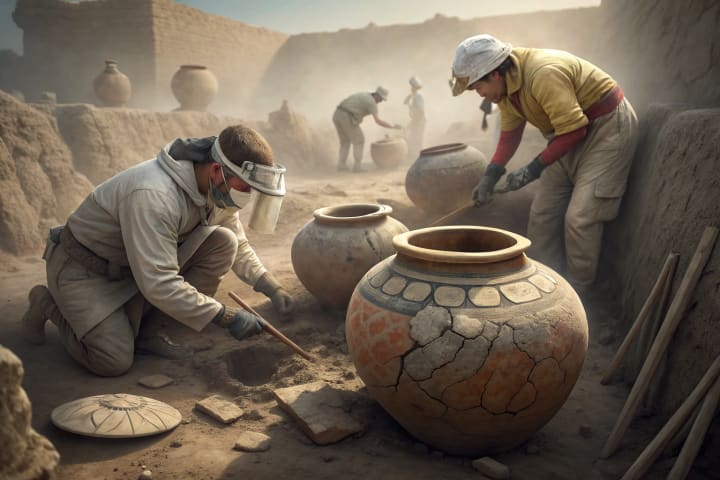
Today, archaeologists, chefs, and scholars are digging up the past—in a literal sense, at times—to bring us these flavors. Clay tablets inscribed with cuneiform recipes, charred seeds discovered in desert tombs, or old cookbooks gathering dust in monastery libraries are bringing the kitchens of the ancient world to life. And with them, they raise profound questions about our own era. What can ancient foods tell us about health, ecology, and culture? Can eating the past dictate a more ideal culinary future?
This is the story of how lost tastes are returning, and why they may be more vital than ever.
Ancient Recipes Uncovered: Dinners Over Centuries
Eating like our great-grandparents is not a new idea. The "paleo diet" sought to transport us back to hunter-gatherer diets of lean meat and foraged greens. But what archaeologists are learning is more than lean nutritional trends—it uncovers rich cuisines based on millennial trial and error.
Take Mesopotamia, the cradle of civilisation. Ancient clay tablets, written around 4,000 years ago, contain the oldest recorded recipes humanity has ever known. On them: beer made from barley with herbs and spices, not only consumed for its taste, but also served as part of the diet. Unlike lagers today, though, they were cloudy, dense, wholesome liquid bread, as opposed to a crisp, cold beverage. Modern-day brewers, in imitation of these tablets, have brewed replicas of this ancient beer that are a tasty entry into Sumerian daily life.
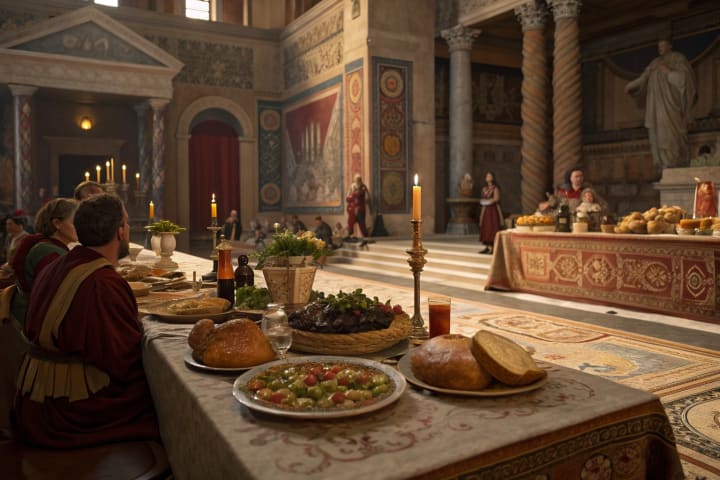
Or consider the Roman obsession with garum, a fish sauce made by fermenting fish guts in alternate layers of salt and leaving them to bask in the Mediterranean sun. Liquid gold to Roman palates, garum was served with stews, drizzled over soups, and even desserts. Amphorae full of the substance traveled across the empire, and factories to make them along its shores. Today's chefs who are experimenting with restored garum describe it as hugely savory, a precursor to soy sauce or Worcestershire, and suggest that Rome already had the umami flavoring we attribute to "modern.
And then there is Mayan cacao. Not those sweet chocolate bars we know, Mayan cacao drinks were bitter and spiced with chili and sometimes with maize. Sipped in rituals, they symbolized wealth, cosmology, and identity. To consume cacao was to not merely taste but to be part of a world vision. And now artisan chocolate producers are reintroducing cacao in its less sweet, more complex state, reminding us of its sacred origins.
These meals remind us: flavor is history in body. Every bite is a bridge over centuries.
Why the Flavors Vanished
But if these meals were once central, then why did they disappear? The reasons are complex and often connected to power.
Colonialism, among other reasons, changed diets on continents. New crops—sugar, wheat, and coffee—were introduced by European conquest, which closed down or displaced indigenous food ways. The bitter cacao was made sweet for European tastes, a sacred ceremony now converted into a commodity. The indigenous crops of amaranth and teff were replaced by wheat and rice, both of which fared better in international commerce.
Industrialization pushed diversity out further. Mass agriculture is based on consistency: crops that grow in a predictable way, store well, and will ship across oceans. Foraged herbs' unusual tastes or native spices were further pushed to the outside. Even recipes got standardized. Fast food establishments refined menus to appeal to the widest audience, reducing millennia of trying to a handful of flavors everybody likes: salty, sweet, fatty.
Finally, cultural amnesia ran its course. Wars destroyed cookbooks, famines forced substitutions, and migrations scattered communities. And in doing so, recipes went through the cracks. What was once bread and butter became a lost artifact.
The result: a world civilization that consumes more than ever, but knows less about what food can be.
What Ancient Recipes Reveal About Civilizations
To learn about a civilization's food is to catch a glimpse of its soul. Cuisine is not just about sustenance; it represents values, hierarchies, and cosmologies.
Mesopotamian beer, for example, was a culture where agriculture, religion, and hedonism converged. Beer was sacrificed to deities and drank in communal settings, highlighting how food brought divine and human worlds together.
Roman garum bore witness to imperial expansion. Its Spanish and North African centres of production demonstrate how Rome transformed conquered territories into producers of delicacies for the capital. Even garum's consumption bears witness to an acceptance of fermentation—a readiness to allow nature transform raw into sublime.
Mayan cacao reveals a world where food was medicine, money, and spirituality simultaneously. Consuming cacao was to act cosmology, fusing the human form with the cycles of maize and the divine.
These tastes remind us that food is never purely neutral. What we crave illustrates what we believe.
Nutritional and Ecological Lessons from the Past
Rediscovering foods of the past is not simply an exercise in cultural nostalgia—it has real uses as well. A great many of the crops and practices of the past were more nutritious and more sustainable than those of today.
Consider grains. These days, wheat and rice are the international agriculture big two, but in old diets there were dozens of grains: einkorn, emmer, spelt, millet. These grains are harder to kill by drought, more nutritious, and require fewer chemical inputs. To bring them back could diversify our diet and relieve ecological pressure.
Fermentation is another ancient knowledge found again. From garum to kimchi, the ancients depended on microbes not only for preservation but also for well-being. Modern science confirms what they intuited: fermented foods contribute to gut health, immunity, and even the mind.
Even lost flavor profiles contain ecological secrets. The Mayan pairing of cacao and chili evokes biodiversity and seasonality. Ancient cuisine honored not the blandness on which industrial food counts, but the bitter, sour, and pungent. Bitter, sour, and pungent were not only medicine's province but also pleasure's. We're reminded that pleasure is not merely the province of sugar and salt but of the full range of nature.
By reclaiming these practices, we may remedy present crises of nutrition and sustainability.
The Modern Chef as Archaeologist
In today’s culinary scene, chefs are increasingly acting like archaeologists, excavating history to create new experiences.
Denmark's René Redzepi at Noma has experimented with historic fermentations, combining Nordic roots with ideas from across the globe. In Mexico, Enrique Olvera and others are reviving native varieties of maize, uncovering near-extinct flavors with industrial corn. Italy's experimental kitchens have reconstructed garum using homegrown seafood, introducing ancient Roman techniques to the 21st century.
These chefs aren't just cooking meals—they're rewriting remembrance. Each meal is an exchange between then and now, forcing people to consume not only what's in front of them, but what has been lost.
And beyond high-end restaurants, social movements are doing the same thing. Farmers are cultivating heritage grains, communities are reclaiming fermentation, and activists are preserving native foodways. These movements bring old flavors to the masses, reminding us that they have a place not only in fine dining but in everyday life.
The Cultural and Philosophical Value of Tasting the Past
Why should it be important that we taste what Mayans consumed or what Romans ate? Beyond novelty, the experience is deeply cultural and philosophical.
Plugging us back into continuity, tasting the past reminds us that we are not alone, that we are part of a tradition that is thousands of years old. Food is a time machine, compressing centuries into a sip or a bite.
It also produces empathy. To eat as others ate is to glimpse their world. When we sip bitter cacao or reeky garum, we enter at least for a moment the other culture's sensory world. Food becomes a repository not of text but of body.
Finally, food is a reminder of death. As with the mandalas of the past, meals are meant to vanish. To restore fading flavors is to confront impermanence—not to preserve eternally but to enjoy while it lasts.
Tasting the past, in this manner, is an act of philosophy. It resists forgetting, honors weakness, and demands that what is lost can still nourish us.
Case Study: The Sumerian Feast
In 2019, chefs and archaeologists collaborated to cook a full Sumerian meal based on cuneiform recipes. The meal included barley stews flavored with leeks, coriander and garlic-flavored lamb, and strong beer poured into communal bowls.
Participants did not just remark on pleasure in the flavors but on wonder—on being transported for an instant. Cooking and eating was a test of historical empathy, blurring the border between "then" and "now."
Such projects show just how lost recipes can enhance not just gastronomy but the cultural imagination.
Social Media and the Rediscovery of Forgotten Flavors
Ironically, among the drives resuscitating old food is the most modern of technologies: social media. Clips of archaeologists fermenting Mesopotamian beer or chefs cooking Aztec tamales go viral, welcoming millions of viewers into the world of forgotten flavors.
On TikTok, artists manipulate medieval bread or ancient Greek honey cakes. On YouTube, TV programs like Tasting History introduce us to meals that have spanned centuries. Despite being fleeting, these going-viral experiences bring the past into the present, rendering history edible.
The medium also poses challenges. Is it entertainment at its core, or does it facilitate actual cultural preservation? Does documentation and putting it up on the internet dilute the sanctity of rediscovery?
But despite such tensions, the internet has become a most unlikely partner in the preservation of culinary memory.
Conclusion: The Future of Forgotten Flavors
We live in an era of abundance, but also of forgetfulness. Our plates are fat, but our palettes lean. To bring back old recipes is more than curiosity—it is a way of reclaiming knowledge lost to conquest, industrialization, and convenience.
These flavors remind us that food is history, ecology, and philosophy on a plate. They challenge futures to be more varied, sustainable, and meaningful meals. And they raise a question: can engagement with the past help us imagine better futures for ourselves today?
Maybe the lesson is this one: lost flavors are not truly lost. They cling in seeds, in books, in mouths, in memory. All it takes is curiosity—and hunger—to remember them.
In an era of mass-produced sameness, to decide to savor the lost is rebellious. To eat what was lost is to discover again not flavor, but ourselves.
About the Creator
The Chaos Cabinet
A collection of fragments—stories, essays, and ideas stitched together like constellations. A little of everything, for the curious mind.
Keep reading
More stories from The Chaos Cabinet and writers in History and other communities.
The Age of Solitude: Why More People Are Choosing to Be Alone—and What It Means for Society
Introduction: The Quiet Revolution of Being Alone Being alone has never been easy. Throughout history, solitude has been conceived as loneliness—something to be pitied or feared, a condition of the rejected or unwanted. It was the opposite of belonging, an shadow cast by human failure to connect.
By The Chaos Cabinet5 days ago in Psyche
Albert Einstein: The Mind That Changed the Universe
Albert Einstein was not born a legend. When he entered the world on March 14, 1879, in the quiet German city of Ulm, nothing about his early life suggested that he would one day transform science forever. In fact, his beginnings were remarkably ordinary—and in some ways, difficult. As a child, Einstein spoke slowly, so slowly that his parents worried something might be wrong. Teachers considered him distracted and stubborn, a boy who questioned too much and obeyed too little. Yet hidden beneath that quiet exterior was a restless, powerful curiosity that would later reshape the universe itself.
By The best writer 7 days ago in History




Comments
There are no comments for this story
Be the first to respond and start the conversation.