
The Secret Society That Built the Modern World
From Secret Rituals to Shaping Nations: The Untold Story of Freemasonry’s Global Influence

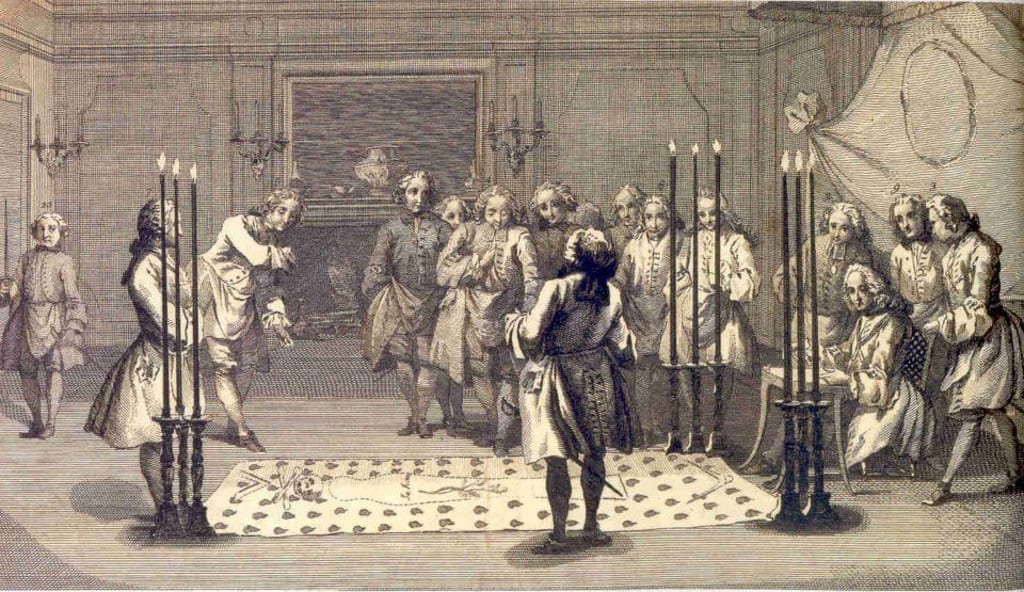
A dark guild of London stonemasons started a revolution in 1717 that would change the world. Instead of chisels or hammers, they used ideas—ideas so powerful that they created nations, overthrew empires, and altered how people thought about freedom. This is the tale of the fraternity of Freemasonry, which transformed medieval workmanship into a model for the contemporary era.
---
Freemasonry's Beginnings in Shadow
The origins of Freemasonry can be seen in the hazy cathedrals of medieval Europe, when stone was chiseled into flying buttresses and lofty arches by operative masons. But by the 17th century, these craftsmen began welcoming speculative masons, thinkers, nobles, and artists into their ranks. These new members were less interested in building churches than constructing a new world order.
The Code of Secrecy
Masonic symbols—the square, compass, and the letter “G” (for Geometry or God)—weren't just decorative. They were a clandestine language, allowing members to recognize one another across borders. Initiates swore a blood oath of secrecy, a tradition borrowed from medieval guilds terrified of rivals stealing their trade secrets. But Freemasonry’s true genius lay in its mythos: it claimed descent from the builders of King Solomon’s Temple, wrapping itself in the mystique of ancient wisdom.
The Lodge as a Refuge
Masonic lodges turned into shelters for intellectual bombs during a time when kings governed by divine right and dissension meant death. Here, a Jewish banker could have a drink with an atheist scientist, and a Protestant merchant could argue with a Catholic poet. Historian Margaret Jacob calls these lodges “the Enlightenment’s incubators,” where Voltaire’s wit and Locke’s philosophy mingled with the clink of ale mugs.
The Invisible Architects: Freemasonry’s Role in the Enlightenment
By the 18th century, Freemasonry had evolved into a shadow network of revolutionaries. Its lodges disseminated radical ideas across continents like the pre-Internet internet.
Important People and Their Legacy
During the American Revolution, Benjamin Franklin obtained French assistance through his Masonic ties. Masonic proverbs concerning independence were common in his Poor Richard's Almanack.
Masonic symbolism was ingrained in American culture when devoted Mason George Washington used a silver trowel to lay the cornerstone of the U.S. Capitol.
A Mason, the Marquis de Lafayette, fought for liberty in both Philadelphia and Paris, bridging the Atlantic Revolutions. Masonic principles are reflected in the French motto "Liberté, Égalité, Fraternité."
The Lodge as a Networking Hub
Masons didn’t just talk revolution—they funded it. French lodges bankrolled the American War of Independence, while Simón Bolívar leveraged Masonic alliances to liberate South America. Historian David Stevenson argues that Freemasonry turned “local malcontents into global insurgents.”
The Scientific Brotherhood, Masonry and the Rise of Modern Science
Freemasonry’s obsession with geometry and “the Grand Architect of the Universe” made it a haven for scientists.
Masonic Scientists and Innovators
Joseph Priestley, discoverer of oxygen, used lodges to share research banned by the Church.
Edmond Halley (of comet fame) saw astronomy as a way to decode God’s blueprint.
Pierre L’Enfant, the architect of Washington, D.C., designed the city as a Masonic allegory, with the Capitol’s dome symbolizing the All-Seeing Eye.
The Architecture of Power
Masonic influence is etched into landmarks: the Statue of Liberty’s torch (a gift from French Masons), the $1 bill’s pyramid, and the layout of Berlin’s Unter den Linden. Even the metric system owes a debt to Masons who championed universal measurement.
Controversy and Conspiracy: The Darker Side of Influence
Freemasonry’s secrecy made it a lightning rod for fear.
Persecution and Paranoia
The Catholic Church condemned it as “a synagogue of Satan,” issuing papal bulls that excommunicated members.
The 1826 Morgan Affair —where a rogue Mason allegedly drowned after threatening to expose rituals—sparked America’s first “conspiracy theory” panic.
Nazis sent 200,000 Masons to concentration camps, branding them “enemies of the Aryan race.”
Modern Misinterpretations
Dan Brown’s The Da Vinci Code and Alex Jones-style conspiracists distort Masonic history, blaming it for everything from the Illuminati to the moon landing. Yet as historian Jasper Ridley notes, “The less the world understands Freemasonry, the more it demonizes it.”
The Legacy: How Freemasonry Shapes the Modern Era
Freemasonry’s fingerprints are everywhere, even as its membership wanes.
Political Systems
The separation of church and state, a Masonic ideal, underpins modern democracies.
Susan B. Anthony, though not a Mason, drew inspiration from the lodges’ egalitarian rhetoric during her suffrage crusade.
Cultural Symbols
The “Brotherhood of Man” ethos echoes in national anthems like La Marseillaise.
The U.S. $1 bill’s pyramid and eye, a nod to Masonic cosmology, were added by FDR, a 32nd-degree Mason.
Global Networks
Rotary Clubs and the UN borrowed Freemasonry’s structure, emphasizing charity and unity. Prince Hall lodges, founded by Black Masons in 1775, became civil rights hubs.
Why Freemasonry Still Matters
Freemasonry’s story is one of contradictions: a fraternity that championed liberty yet excluded women and people of color for centuries. Today, it grapples with its legacy.
The Unfinished Work
While Masonic charities donate $3 million daily to global causes, the Craft’s core dilemma remains: How to honor its revolutionary past while adapting to a world that no longer trusts secret societies.
---
Freemasonry’s legacy isn’t in its secrets but in the frameworks of modern life, democracy, science, and the audacious belief that humanity can build a better world. As the Masonic ritual declares, “We work to perfect humanity.”
About the Creator
ChronoCurator
One story at a time, revealing the past. Explore gripping tales that have influenced our world.
Keep reading
More stories from ChronoCurator and writers in History and other communities.
Apollo 11: The Mission That Almost Crashed the Moon Party (And the Wild Details They Never Taught You)
July 20, 1969: 650 million people watched a man step onto the moon, while 400,000 others held their breath, praying a computer glitch wouldn’t kill him live on TV. This is the story of how duct tape, a stolen sandwich, and a 26-year-old saved humanity’s greatest adventure… and why we’re still obsessed 55 years later.
By ChronoCurator9 months ago in History
Historical Story
For many years, battles continued between Sultan Salahuddin Ayyubi and the Crusader warriors. Finally, after various military campaigns and confrontations, a battle took place that proved decisive in history—one that brought an end to the Christian Kingdom of Jerusalem in Palestine and sealed the fate of the Crusaders. This was the Battle of Hattin, which occurred on Saturday, 24 Rabi‘ al-Akhir 385 AH. In this battle, the Muslims achieved a decisive victory.
By Sudais Zakwan3 days ago in History
The Lost City of Dreams
The Lost City of Dreams Aisha, Max, and Leo had always been the kind of friends who thrived on adventure. Growing up in the bustling city of Mumbai, they'd explored every nook and cranny, from the crowded streets of Old Delhi to the serene beaches of Goa. But nothing could have prepared them for the discovery that would change their lives forever.
By Talhamuhammadabout 22 hours ago in History

Comments
There are no comments for this story
Be the first to respond and start the conversation.