
The Cost of Victory: Analyzing the True Winners and Losers of Modern Warfare
A Case Study Analysis of Five Major Wars After 1900 – Costs, Consequences, and Lessons Learned

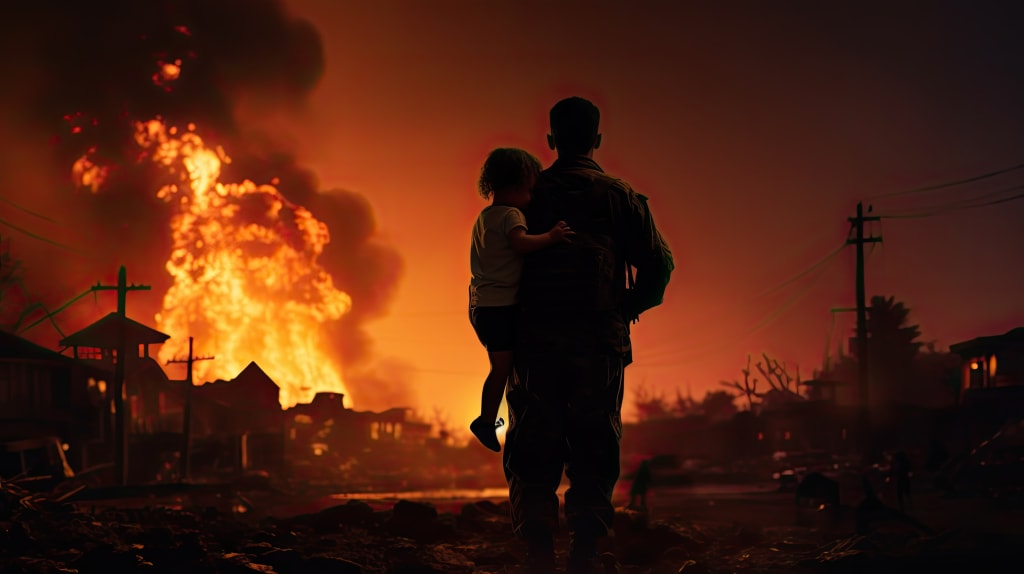
Imagine two neighboring nations, X and Y, that share the same language, culture, and lifestyle. To an outsider, distinguishing between their people is nearly impossible. Yet, one day, a war erupts between them over a disputed territory. Nation X loses 3,000 soldiers and approximately $1 billion (today’s value), while Nation Y suffers the loss of 5,000 soldiers and $600 million. After weeks of intense fighting, the war ends—but the borders remain unchanged. Despite this, both nations declare victory, and the territorial dispute continues to this day.
Who is the real winner?
Did either nation truly gain anything, or did they only sacrifice thousands of lives and drain their resources for an unresolved conflict?
This is not a hypothetical scenario. These two nations are India and Pakistan, and the war in question is the 1965 Indo-Pak War. This report analyzes the cost and consequences of this war—military, economic, environmental, and geopolitical—to determine whether wars like these bring any real gains or merely leave behind loss and destruction.
let's discuss few more examples
1. Iraq War (2003–2011) – A War of Unfinished Business
It was 2003. The world watched as U.S. President George W. Bush declared that Iraq, under Saddam Hussein, possessed weapons of mass destruction (WMDs)—a threat that could not be ignored. The U.S. and its allies (UK, Australia, Poland) launched a full-scale invasion, toppling Saddam's regime within weeks.
However, the war did not end with his capture. Instead, Iraq descended into chaos. Sectarian violence erupted, Sunni and Shia militias fought for power, and the rise of groups like Al-Qaeda in Iraq (later ISIS) turned the nation into a battlefield.
- Total War Cost: Over $2.1 trillion for the U.S.
- U.S. & Allies: 4,500+ killed
- Iraqi Military & Insurgents: 30,000+ killed
- Civilians: 200,000–500,000+ killed
- Economic Damage: Iraq’s oil production collapsed for years.
- Environmental Cost: Oil fields set on fire, farmlands destroyed, air and water pollution surged.
After eight years, the U.S. withdrew in 2011, leaving Iraq deeply unstable. The war failed to bring democracy or stability—instead, it fueled more violence and paved the way for ISIS.
2. Second Congo War (1998–2003) – The African World War
The Second Congo War was not just another African conflict—it was the deadliest war since WWII, involving nine nations and dozens of armed groups. It started in 1998 when Rwanda and Uganda invaded the Democratic Republic of the Congo (DRC) to overthrow President Laurent-Désiré Kabila. Soon, Angola, Zimbabwe, and Namibia entered the war on Kabila’s side.
The war became a battle for resources—gold, diamonds, and minerals fueled warlords and foreign armies alike. Civilians suffered the most—massacres, rape, famine, and disease killed over 5.4 million people.
- Total War Cost: Impossible to estimate, but billions lost in destruction.
- Direct deaths: ~1 million
- Indirect deaths (disease, starvation): 5.4 million+
- Economic Damage: Congo’s economy collapsed; rebels and foreign companies looted minerals.
- Environmental Cost: Rainforests cleared, wildlife poached, rivers poisoned.
The war ended in 2003, but violence continues today, proving that war does not always bring peace.
3. Korean War (1950–1953) – The War That Never Ended
It was 1950. North Korea, backed by the Soviet Union and China, invaded South Korea, hoping to unite the peninsula under communist rule. The United States and United Nations rushed to defend the South. For three years, the Korean Peninsula became a killing field, with both sides pushing back and forth in a brutal stalemate.
- Total War Cost:U.S.: $67 billion (equivalent to $700+ billion today)
- North Korea & China: Unknown but heavily supported by the USSR
- U.S. & UN forces: 178,000+ killed
- North Korea & China: ~1.5 million killed
- Civilians: 2.5+ million killed
- Economic Damage: Both North and South Korea suffered complete devastation.
- Environmental Cost: Bombing destroyed forests, farmland, and rivers.
In 1953, the war ended without a peace treaty—only a ceasefire. North and South Korea remain divided, and the war technically never ended.
4. Vietnam War (1955–1975) – A Lesson in Failure
The Vietnam War started as a Cold War battle—North Vietnam, backed by China and the Soviet Union, sought to unite Vietnam under communism. South Vietnam, backed by the U.S., fought to stop it.
The U.S. believed it could win with superior firepower. But jungle warfare, guerrilla tactics, and the determination of the Viet Cong proved otherwise. The U.S. bombed Vietnam relentlessly, dropping 7.5 million tons of bombs—more than all of WWII combined. Yet, victory never came.
- Total War Cost:U.S.: $168 billion ($1+ trillion today)
- North Vietnam: ~$6–8 billion (with Soviet & Chinese aid)
- U.S.: 58,220 killed
- South Vietnam: 250,000+ killed
- North Vietnam: 600,000–1.1 million killed
- Civilians: 2+ million killed
- Economic Damage: Vietnam was left in ruins, the U.S. faced recession.
- Environmental Cost: The use of Agent Orange poisoned land, water, and generations of Vietnamese.
In 1975, North Vietnam won, unifying the country under communism. The U.S. left in humiliation, proving that even a superpower cannot always win.
5. Gulf War (1990–1991) – The 100-Hour War
In 1990, Iraqi dictator Saddam Hussein invaded Kuwait, claiming it as Iraq’s 19th province. The world reacted swiftly. The U.S.-led coalition of 35 nations launched Operation Desert Storm—one of the most technologically advanced wars in history.
In just six weeks, U.S. and allied forces crushed Iraq’s army, forcing Saddam to withdraw from Kuwait. But the war did not end Saddam’s rule—it only set the stage for the Iraq War in 2003.
- Total War Cost:U.S.: $61 billion
- Iraq: Lost billions in destroyed infrastructure
- Human Loss:
- Coalition forces: 292 killed
- Iraq: 20,000–35,000 killed
- Civilians: 3,000+ killed
- Economic Damage: Iraq faced crippling sanctions, Kuwait’s oil fields burned for months.
- Environmental Cost: Oil fires, toxic smoke, destroyed water sources.
Despite the quick victory, Saddam remained in power, leading to further conflict.
Final Thoughts – Who Truly Wins a War?
These wars reveal a harsh truth—war rarely brings lasting victory. Even the “winners” pay a devastating price:
Iraq War: U.S. spent $2.1T, Iraq fell into chaos.
Congo War: 5.4 million dead, Africa still struggles.
Korean War: No winner—war never truly ended.
Vietnam War: U.S. lost despite spending $1T.
Gulf War: Quick victory, but Iraq remained a threat.
War may redraw maps, but it rarely solves problems. In most cases, the real losers are the civilians, who suffer the most in terms of death, displacement, and destruction.
About the Creator
InkForChange
InkForChange explores global issues through well-researched blogs on climate, society, economy, and technology. Our mission is to inform, inspire, and drive change by raising awareness and promoting solutions for a better future solutions.
Keep reading
More stories from InkForChange and writers in History and other communities.
Corporate Exploitation and Global Conflicts: How Big Companies Destabilize Nations and Fuel Civil Wars
Introduction Big corporations and multinational companies have played significant roles in destabilizing nations, sometimes pushing them into civil wars. Their influence often stems from their pursuit of profits, control over natural resources, and political manipulation. Below are some key ways corporations have contributed to civil wars, along with detailed examples:
By InkForChange10 months ago in Criminal
Best Men Clergy Shirts for Pastors and Church Leaders?
When it comes to serving in the ministry, appearance matters. Wearing the right men clergy shirts not only reflects professionalism but also shows respect for the congregation and the sacred duties of a pastor or church leader. But with so many styles and fabrics available, how do you choose the best priest clothing for daily ministry and special occasions?
By Sameera eclergys7 days ago in History
3 Completely Normal Jobs With Disturbing Hidden Histories
Every job has a backstory. Some are boring, some are inspiring, and some are better left buried. While modern versions of certain professions look harmless—sometimes even respectable—their origins tell a much darker story.
By Enoch Sagini6 days ago in History




Comments
There are no comments for this story
Be the first to respond and start the conversation.