
Corporate Exploitation and Global Conflicts: How Big Companies Destabilize Nations and Fuel Civil Wars
A Deep Dive into Corporate Greed, Resource Wars, and Economic Manipulation Leading to Global Instability

Introduction
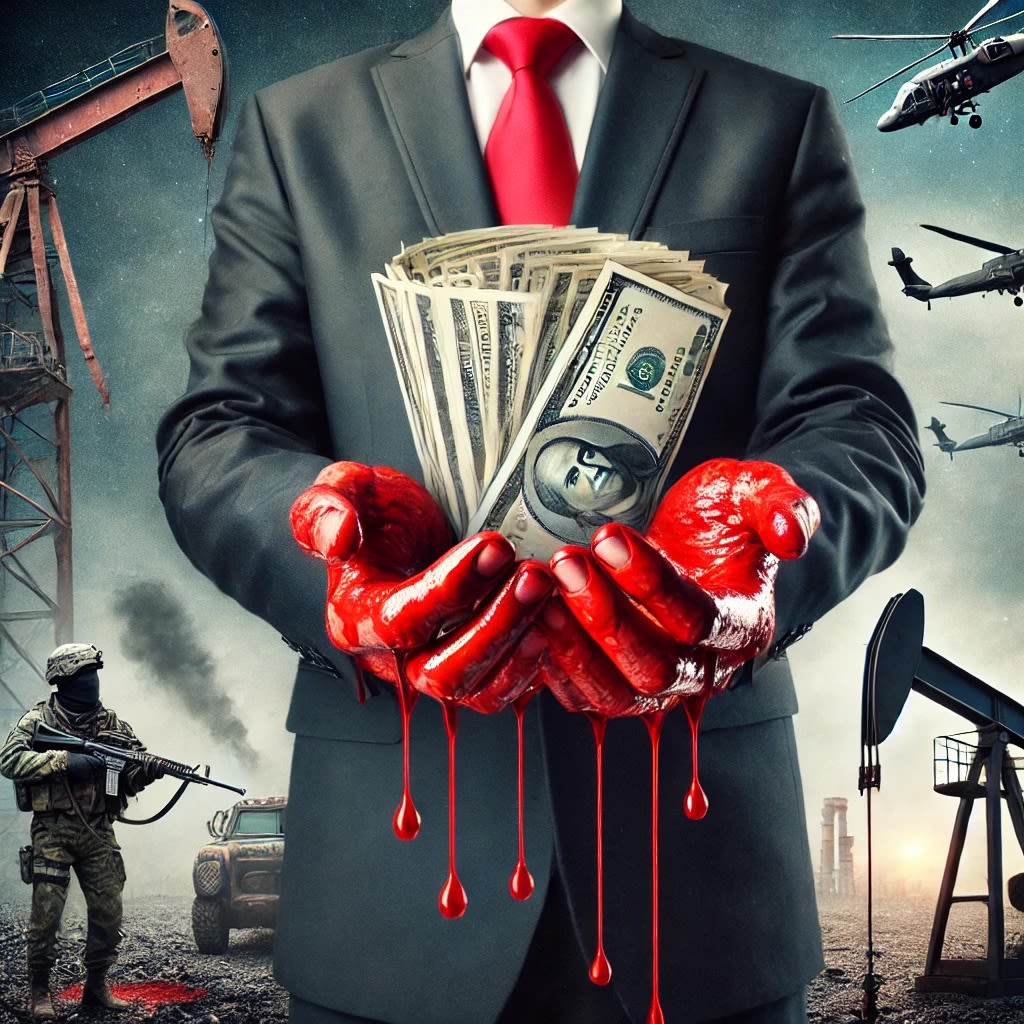
Big corporations and multinational companies have played significant roles in destabilizing nations, sometimes pushing them into civil wars. Their influence often stems from their pursuit of profits, control over natural resources, and political manipulation. Below are some key ways corporations have contributed to civil wars, along with detailed examples:
1. Exploitation of Natural Resources Leading to Conflict
Many corporations extract valuable resources from unstable regions, often fueling corruption, funding armed groups, and displacing local populations.
Blood Diamonds and the Sierra Leone Civil War (1991-2002)
- Sierra Leone has rich diamond reserves, and companies like De Beers historically controlled much of the trade.
- During the civil war, the Revolutionary United Front (RUF) used diamonds to fund their operations, buying weapons and sustaining their brutal campaign.
- Western and Middle Eastern companies purchased these "blood diamonds," directly funding violence.
- The war resulted in 50,000 deaths and countless atrocities, including child soldiers and mass amputations.
Shell and the Ogoni Conflict in Nigeria (1990s-Present)
- Royal Dutch Shell and other oil companies exploited Nigeria’s oil reserves, especially in the Niger Delta.
- The Nigerian government, backed by oil interests, violently suppressed environmental and human rights activists like Ken Saro-Wiwa.
- Armed groups, such as the Niger Delta Avengers, emerged in response, leading to ongoing conflicts.
2. Corporate-Backed Coups and Regime Changes
Corporations have often supported or orchestrated coups to install governments that favor their business interests.
United Fruit Company and the 1954 Guatemalan Coup
- The American-based United Fruit Company (now Chiquita) controlled vast banana plantations in Guatemala.
- When democratically elected President Jacobo Árbenz attempted land reforms to redistribute unused land to peasants, UFC lobbied the U.S. government to intervene.
- The CIA staged a coup, replacing Árbenz with a military dictatorship, leading to decades of civil war (1960-1996) and the deaths of over 200,000 people.
ITT Corporation and the Chilean Coup (1973)
- ITT (International Telephone & Telegraph) feared that Chilean President Salvador Allende’s socialist policies would nationalize American businesses.
- ITT worked with the CIA to support General Augusto Pinochet’s coup, leading to mass human rights abuses and economic control by multinational corporations.
3. Arms Trade and Private Military Companies (PMCs)
Corporations involved in arms manufacturing often fuel conflicts by supplying weapons to warring factions.
Arms Corporations in the Iraq War (2003-Present)
- Companies like Halliburton and Blackwater (now Academi) made billions from military contracts.
- The U.S. invasion, driven in part by oil interests, led to a power vacuum that fueled sectarian conflict, eventually leading to ISIS's rise.
Wagner Group and Corporate Interests in Africa
- Russia’s Wagner Group, a private military company, operates in countries like the Central African Republic (CAR) and Mali, protecting Russian and Chinese corporate interests in gold and diamond mining.
- Their presence has worsened civil wars by backing dictatorships and suppressing opposition.
4. Economic Policies that Worsen Inequality and Lead to Revolts
Neoliberal policies imposed by corporations and international financial institutions (like the IMF and World Bank) have worsened economic conditions, sparking civil wars.
Haiti and IMF Structural Adjustments (1980s-Present)
- The IMF forced Haiti to remove tariffs on imported rice, allowing American agribusiness to flood the market.
- This destroyed local farming, increased unemployment, and fueled gang violence, leading to political instability and multiple coups.
Venezuela’s Economic Collapse (2000s-Present)
- U.S. oil companies and economic sanctions exacerbated Venezuela’s economic crisis.
- Hyperinflation, poverty, and government corruption led to violent protests and a humanitarian disaster.
5. Media Manipulation
Corporate-controlled media and advertising have been used to manipulate public opinion, destabilizing nations.
Facebook and the Rohingya Crisis in Myanmar (2017)
- Facebook allowed military-backed misinformation campaigns to spread hate speech against the Rohingya Muslims.
- This led to mass killings, rape, and a refugee crisis as Myanmar's army conducted ethnic cleansing.
Cambridge Analytica and Political Destabilization
- Cambridge Analytica, a data firm, manipulated elections worldwide using psychological warfare, influencing conflicts in countries like Kenya and Nigeria.
6. Resource Wars and Corporate Greed
Corporations often exploit natural resources in war-torn regions, fueling violence and prolonging conflicts.
The Democratic Republic of Congo (DRC) – The Coltan and Cobalt Wars (1996-Present)
- The DRC is rich in coltan, cobalt, and gold, essential for electronics and batteries.
- Western, Chinese, and Middle Eastern companies source these minerals from war zones, often financing militias.
- Companies like Apple, Samsung, and Tesla rely on these materials, often without full transparency on ethical sourcing.
- The war in the DRC has killed over 6 million people, with child labor and mass rapes being used as tools of war.
BP and the Anglo-Iranian Coup (1953)
- British Petroleum (BP) controlled Iran's oil resources but refused to share profits with the Iranian government.
- When Prime Minister Mohammad Mossadegh nationalized oil in 1951, BP lobbied for a coup.
- The CIA and MI6 orchestrated Operation Ajax, installing the pro-West Shah, leading to decades of oppression and eventually the 1979 Iranian Revolution.
7. Corporate Control Over Water and Food Supplies
When corporations gain control over essential resources like water and food, it can lead to severe social unrest.
Bolivia’s Water War (1999-2000)
- The Bolivian government privatized water, granting control to Bechtel Corporation, a U.S.-based firm.
- Prices skyrocketed, forcing poor communities to choose between water and food.
- The people revolted, leading to the Cochabamba Water War, in which the government violently suppressed protests.
- After nationwide strikes and police mutiny, the government was forced to reverse privatization.
Nestlé and Water Privatization in Africa and Pakistan
- Nestlé has been accused of depleting groundwater in poor countries like Pakistan, Ethiopia, and Nigeria, leaving locals without clean water.
- In some cases, this has worsened conflicts, such as in Nigeria, where water shortages have fueled tensions between farmers and herders.
8. Corporate-Backed Slave Labor and Human Rights Abuses
Corporations have been involved in exploiting forced labor, sometimes funding violent groups in war zones.
Firestone’s Role in Liberia’s Civil War (1989-2003)
- Firestone (now Bridgestone) controlled vast rubber plantations in Liberia.
- In 1990, Firestone negotiated with warlord Charles Taylor, who later became president.
- The company provided Taylor’s rebels with financial support in exchange for protecting its rubber plantations, indirectly funding war crimes.
- The Liberian civil war resulted in 250,000 deaths.
Walmart and Bangladesh Factory Exploitation
- Walmart has been accused of using factories in Bangladesh that forced workers into near-slavery conditions.
- In 2013, the Rana Plaza factory collapse killed over 1,100 garment workers who were producing goods for Western brands.
9. The Role of Big Pharma in Fueling Crises
Pharmaceutical companies have also destabilized nations by prioritizing profits over ethics.
Purdue Pharma and the Opioid Crisis in the U.S. (1990s-Present)
- Purdue Pharma aggressively marketed OxyContin, despite knowing its highly addictive nature.
- This fueled the opioid crisis, leading to mass addiction and social collapse in many American towns.
- The company made billions while the U.S. government struggled with drug overdoses, crime, and mental health issues.
Johnson & Johnson and the HIV Drug Crisis in Africa (1990s-2000s)
- Western pharmaceutical companies like Johnson & Johnson and GlaxoSmithKline refused to provide affordable HIV/AIDS medication to Africa.
- Millions died because companies prioritized profits over human lives.
- South African activists eventually forced the companies to lower prices, but only after millions had perished.
10. Tech Corporations and the Surveillance State
Big Tech companies have helped authoritarian regimes spy on and suppress their citizens, leading to internal conflicts.
Google and Project Dragonfly (China, 2018)
- Google secretly developed Dragonfly, a censored search engine for China.
- It would have helped China surveil and suppress dissent, leading to more political oppression.
- After global backlash, Google was forced to shut down the project.
NSO Group and Pegasus Spyware (2010s-Present)
- Israel’s NSO Group developed Pegasus spyware, which has been used to spy on journalists, activists, and opposition leaders.
- Governments like Saudi Arabia, UAE, and Mexico used it to crush protests, often leading to increased state violence.
11. The War on Terror and Corporate Profiteering
Several corporations made billions by prolonging the War on Terror.
Halliburton and the Iraq War (2003-Present)
- Dick Cheney, the former U.S. Vice President, was the CEO of Halliburton before taking office.
- Halliburton won no-bid contracts to rebuild Iraq after the U.S. invasion.
- The war resulted in hundreds of thousands of deaths, while corporations profited from reconstruction.
Boeing, Raytheon, and the U.S. Military-Industrial Complex
- Every war or conflict (Iraq, Afghanistan, Syria, Yemen) benefits companies like Boeing, Raytheon, and Lockheed Martin.
- These companies lobby governments to increase military spending, ensuring endless wars.
12. Corporate-Driven Climate Change Causing Wars
Climate change caused by corporations has contributed to conflicts over resources.
ExxonMobil Covering Up Climate Change (1970s-Present)
- ExxonMobil scientists knew about climate change in the 1970s but covered it up.
- Rising temperatures have contributed to civil wars in Sudan, Syria, and the Sahel region.
- Water shortages, desertification, and food crises are directly linked to corporate pollution.
13. Banking and Financial Manipulation Wrecking Economies
Big banks and financial corporations have caused severe economic crises, leading to political instability and civil wars.
Wall Street and the 2008 Global Financial Crisis
- Goldman Sachs, Lehman Brothers, and JP Morgan Chase engaged in reckless subprime mortgage lending.
- When the system collapsed, millions lost their homes, and countries like Greece, Spain, and Argentina faced economic turmoil.
- Austerity measures imposed by the IMF and EU led to mass protests, riots, and the rise of extremist political movements.
HSBC and Drug Cartel Money Laundering (2000s-Present)
- HSBC was caught laundering billions of dollars for Mexican drug cartels.
- These cartels were responsible for brutal violence, with over 300,000 people killed in Mexico’s ongoing drug war.
- Despite being caught, HSBC paid a small fine and continued operating.
14. Oil Companies Fueling Wars and Dictatorships
Oil corporations have supported dictators and suppressed democracy to maintain their profits.
ExxonMobil and the Chad-Cameroon Pipeline (2000-Present)
- ExxonMobil built an oil pipeline from Chad to Cameroon.
- Instead of helping Chad’s economy, the profits went to the corrupt dictator Idriss Déby.
- Déby used the money to buy weapons and suppress opposition, leading to civil war and military coups.
Chevron and Human Rights Abuses in Nigeria (1990s-Present)
- Chevron has been accused of working with the Nigerian military to suppress protests by the Ijaw and Ogoni people.
- The military massacred villagers protesting against pollution and oil theft.
- Chevron allegedly provided transport, funding, and logistical support to the military during the attacks.
15. Mining Corporations Funding War Crimes
Many mining companies exploit conflict zones, displacing people and funding rebel groups.
Glencore and the Katanga Mining Conflict (DRC, 2000s-Present)
- Glencore, a Swiss mining company, has been linked to corrupt deals in the Democratic Republic of Congo.
- Armed groups fight over control of copper and cobalt mines, displacing thousands.
- Workers are often subjected to slave-like conditions in the mines.
Barrick Gold and Massacres in Papua New Guinea (2000s-Present)
- Barrick Gold, a Canadian company, runs gold mines in Papua New Guinea.
- Security forces have been accused of mass rapes, killings, and forced displacements of local communities.
16. U.S. Corporate Influence in Latin American Coups
American corporations have repeatedly supported military coups in Latin America to protect business interests.
Coca-Cola and Union Assassinations in Colombia (1990s-Present)
- Coca-Cola was accused of working with paramilitary death squads to assassinate trade union leaders in Colombia.
- Unions fighting for better wages were labeled "terrorists" and eliminated.
- Despite lawsuits, Coca-Cola continued its operations without consequences.
Ford and the Argentine Military Dictatorship (1976-1983)
- During Argentina’s Dirty War, Ford reportedly allowed its factories to be used as detention centers.
- Workers suspected of leftist views were kidnapped, tortured, and killed.
17. The Role of Big Agriculture in Conflicts
Agribusiness corporations exploit farmers, push policies that destroy local economies, and worsen conflicts.
gill and Land Grabs in Brazil (2000s-Present)
- Cargill, a U.S. agribusiness giant, has been accused of illegally grabbing land in the Amazon rainforest.
- Indigenous communities were displaced, and the rainforest was destroyed for soybean plantations.
- This has led to violent clashes between corporate-backed armed groups and locals.
18. The Role of Media Conglomerates in Spreading Propaganda
Large media companies have manipulated public opinion, promoting wars and corporate interests.
Rupert Murdoch’s Fox News and the Iraq War (2003)
- Murdoch’s Fox News spread false information about Iraq having Weapons of Mass Destruction (WMDs).
- This led to the U.S. invasion of Iraq, killing hundreds of thousands and causing decades of war.
- Weapons manufacturers and oil companies made billions from the war.
Cambridge Analytica and Election Manipulation (2010s-Present)
- The UK-based Cambridge Analytica collected personal data from Facebook to manipulate elections in multiple countries.
- It played a role in spreading misinformation in Kenya, Nigeria, and Brexit campaigns.
- This manipulation increased ethnic tensions and political violence.
19. Pharmaceutical Companies Experimenting on Poor Nations
Big Pharma has a history of using people in developing nations for dangerous drug experiments.
Pfizer’s Illegal Drug Trials in Nigeria (1996)
- Pfizer conducted an illegal drug trial for Trovan, an antibiotic, in Kano, Nigeria.
- The drug caused brain damage, paralysis, and deaths in children.
- Pfizer was later sued but paid only a small settlement.
Bayer and HIV-Infected Blood Scandal (1980s)
- Bayer knowingly sold HIV-contaminated blood to hemophilia patients in Latin America and Asia.
- Thousands of people were infected before the company stopped distribution.
20. Tech Companies and Digital Colonialism
Big Tech companies dominate global markets, suppressing local businesses and controlling user data.
Facebook’s Free Basics Program in Africa (2010s-Present)
- Facebook introduced Free Basics, a program offering free internet access.
- However, it only allowed access to Facebook-approved websites, controlling what people could see.
- Critics call it "digital colonialism", where corporations dominate online spaces in developing nations.
Conclusion
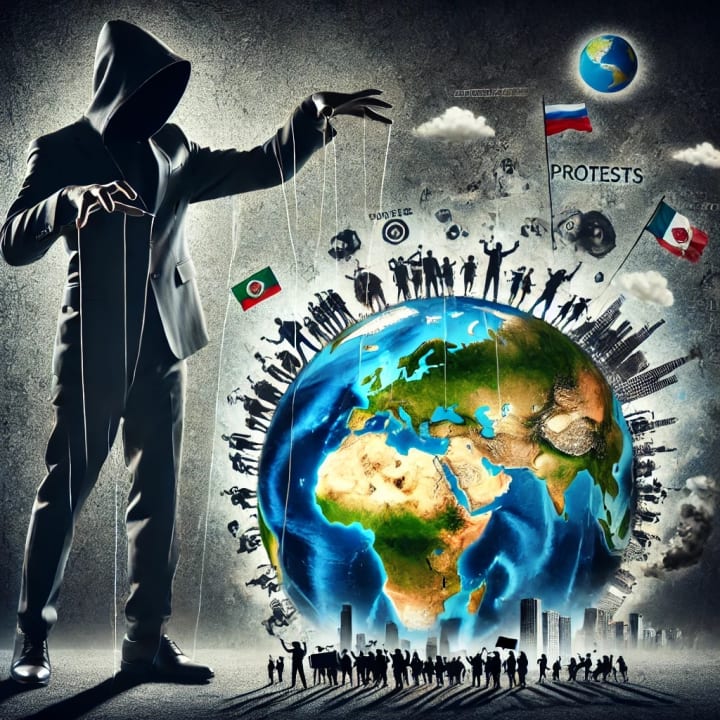
Corporate greed, resource exploitation, arms sales, and economic manipulation have fueled civil wars across the globe. While some companies claim they only pursue profits, their actions often create long-term instability, displacing millions and leading to untold suffering. Many of these conflicts could have been avoided if corporations prioritized ethical practices over profits.
What Can Be Done?
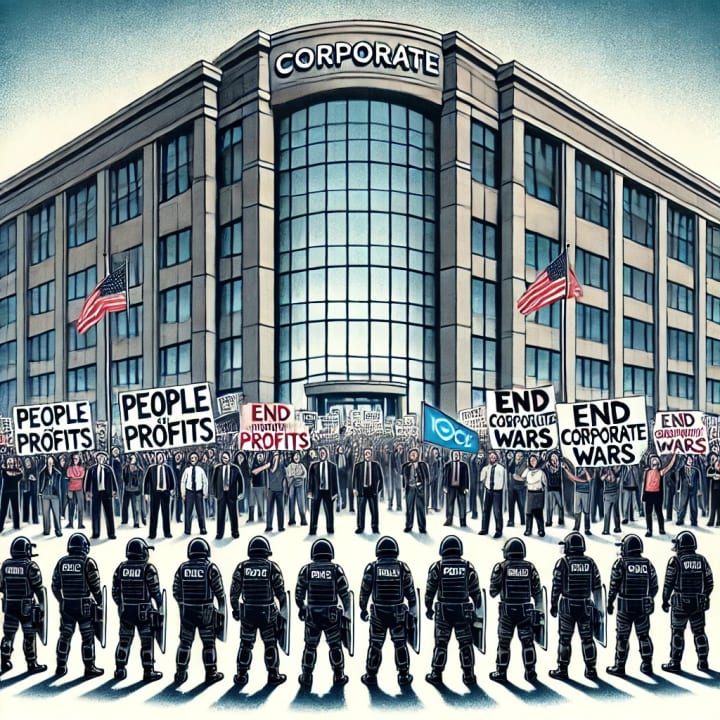
Stronger Regulations: Governments must regulate corporations and prevent exploitation.
Transparency & Accountability: Companies should be held legally responsible for war crimes and unethical practices.
Consumer Awareness: People must be informed about how corporations operate to demand ethical business practices.
If history has taught us anything, it's that unchecked corporate power can destroy entire nations perfect example is east india company
About the Creator
InkForChange
InkForChange explores global issues through well-researched blogs on climate, society, economy, and technology. Our mission is to inform, inspire, and drive change by raising awareness and promoting solutions for a better future solutions.
Keep reading
More stories from InkForChange and writers in Criminal and other communities.
The Hidden Winners of War: Who Truly Benefits from Conflict?
Wars have profound and multifaceted impacts on societies, economies, and geopolitical landscapes. While the devastating consequences for civilians and infrastructure are well-documented, it's equally important to examine the entities that derive significant benefits from conflicts. This report delves into the various beneficiaries of war, supported by data, examples, and case studies.
By InkForChange11 months ago in Criminal
The Mayor’s Silence: Thomas Reinhold, Jonathan Gerlach, and Ephrata's 'House of Skulls'
The Promotion to Failure Thomas G. Reinhold isn’t a newcomer to Ephrata’s power structure; he is its architect. After spending over a decade (2012–2025) as Council President—rubber-stamping police budgets and prioritizing quick, unanimous meetings over deep scrutiny—Reinhold finally ascended to the Mayor’s office in January 2026.
By Sunshine Firecracker5 days ago in Criminal



Comments (1)
Corporate greed is wrong! Great work